



What is the Gaganyaan Mission?
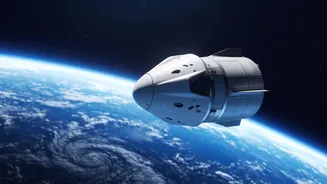
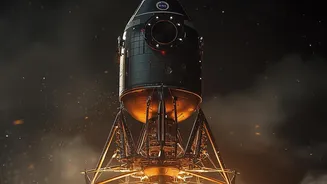
At its heart, Gaganyaan is India's flagship human spaceflight programme. The primary goal is to demonstrate the capability to launch a crew of three astronauts into a low Earth orbit of about 400 kilometres. After spending up to three days in space, the mission
plan involves their safe return to Earth, with a splashdown in the Indian Ocean. A successful Gaganyaan mission will make India only the fourth country in the world—after the United States, Russia, and China—to possess independent human spaceflight capability. This is not just a technological milestone; it represents a monumental leap in India's scientific prowess and its ambition to become a major player in space exploration, laying the groundwork for future projects like an Indian space station.
Why Uncrewed Tests are Crucial
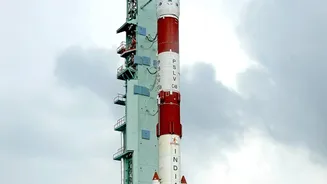
Before any astronaut straps into the Gaganyaan capsule, ISRO is committed to a rigorous series of uncrewed test flights. The mantra is simple: safety above all else. When dealing with human lives, there is no room for error. A satellite can be replaced, but a human life cannot. These uncrewed missions, starting with the G1 flight, are designed to validate every single system in the most realistic conditions possible without risking a crew. ISRO plans for at least three such uncrewed missions to test the performance of the human-rated LVM3 rocket, the orbital module, life support systems, and re-entry and recovery operations. Only after all three rehearsals demonstrate that every component works flawlessly will a crewed flight be cleared for launch.
The Anatomy of a Safety Test
The safety tests are exhaustive and multifaceted. ISRO has already conducted thousands of ground tests, including vibration tests that simulate the violent forces of a launch and heat tests that mimic the scorching temperatures of atmospheric re-entry. Key flight tests include the Integrated Air Drop Test (IADT), where a full-scale crew module is dropped from a helicopter to test the complex parachute deployment system that slows it down for a safe landing. Another critical test is the Pad Abort Test (PAT), designed to prove that the crew can be safely ejected from the rocket in case of an emergency on the launchpad. The upcoming uncrewed orbital flights will test the entire mission profile from launch to splashdown, ensuring the crew module's life support systems and the service module's propulsion perform perfectly in the vacuum of space.
Meet Vyommitra: The Humanoid Stand-In
The first uncrewed Gaganyaan flight, G1, will have a special passenger: Vyommitra. The name, derived from the Sanskrit words for 'space' and 'friend', belongs to a sophisticated half-humanoid robot developed by ISRO. Vyommitra is designed to simulate human functions inside the crew module during the flight. She can monitor module parameters, alert ground control, and perform life support system checks. By flying Vyommitra, ISRO can gather invaluable data on how the spacecraft's environment, including microgravity and radiation, affects a 'body' inside the cabin. This allows engineers to fine-tune the environmental control and life support systems to ensure they are perfectly suited for the human crew that will follow.
The Road to a Crewed Launch
The path to sending Indians into space is methodical and deliberate. Following recent successes in satellite launches, ISRO Chairman V Narayanan has reaffirmed that the agency is pushing ahead with the first uncrewed Gaganyaan mission, targeted for late 2026. This will be followed by two more uncrewed missions. Astronauts, including Group Captain Angad Pratap, have acknowledged that delays are a natural part of such a complex, prototype program, emphasizing the need for patience to ensure total success. The first crewed mission is now anticipated for 2027, contingent on the successful completion of all preceding uncrewed validation flights. As these tests progress, India moves step by step, closer to writing a new chapter in its space history.