





The Universal Tang of Tamarind
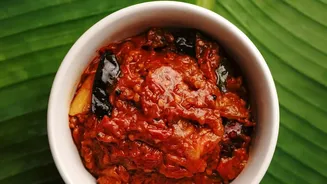
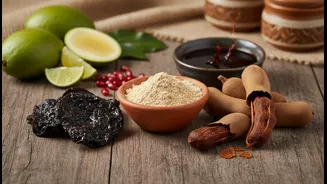
Across the subcontinent, particularly in the south, tamarind is the undisputed king of sour. This sticky, dark fruit pulp lends a deep, sweet-sour complexity to countless dishes. It forms the soulful base of rasam and sambar, where its tangy character
balances lentils and spices. Unlike the sharper, quicker hit of citrus, tamarind offers a robust, mellow acidity that melds seamlessly into gravies and chutneys, making it a cornerstone of South Indian flavour. Its widespread availability in India's tropical climate has cemented its role in everything from marinades to rice dishes.
The Coastal Kiss of Kokum
Travel to India's western coast, especially the Konkan region of Goa and Maharashtra, and you'll find kokum. This small, reddish-purple fruit, a relative of the mangosteen, is most often used in its dried form. When added to curries, especially those with coconut milk or fish, the dried rind imparts a delicate, bright tang and a beautiful pinkish hue. It's less aggressive than tamarind, providing a clean sourness that refreshes the palate. Kokum is also the star of solkadhi, a cooling pink-hued beverage made with coconut milk, cherished for its digestive properties.
The Smoky Pucker of Coorg’s Kachampuli
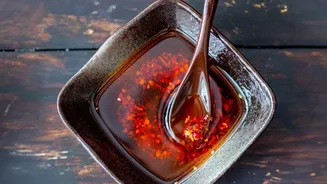
Deep in the forests of Coorg, Karnataka, the Garcinia gummi-gutta fruit yields a legendary souring agent: kachampuli. This is no ordinary ingredient; it's a dark, viscous, almost black vinegar made by collecting the juice of ripe fruits and boiling it down. The result is a potent, smoky, and intensely sour liquid that is the signature flavour of Kodava cuisine. A few drops are added towards the end of cooking, transforming dishes like the iconic Pandi Curry (pork curry) and other meat preparations. With a flavour profile sometimes likened to balsamic vinegar, kachampuli is a unique element that defines an entire regional food identity.
The Fruity Zing of Amchur
In North Indian kitchens, where a dry souring agent is often preferred, amchur reigns supreme. Made from sun-dried, unripe green mangoes, this fine powder delivers a distinctly fruity and sharp tang without adding any liquid. It’s a key component in chaat masala, the spice blend that gives Indian street food its characteristic zing. Amchur is used to flavour samosa fillings, brighten up lentil dishes (dals), and act as a tenderizer in marinades for kebabs, thanks to its enzymes that help break down proteins.
The Fermented Funk of the Northeast
Head to Northeast India, and sourness takes on an entirely different, pungent dimension through fermentation. Fermented bamboo shoots, known by various local names like khorisa in Assam and soibum in Manipur, are a beloved staple. The fermentation process not only preserves the bamboo but also develops a strong, tangy, and uniquely aromatic flavour. This ingredient is central to the cuisines of Nagaland, Manipur, Assam, and Meghalaya, where it's added to pork, fish, and vegetable curries, providing a depth and funk that is deeply cherished. It's a taste that speaks of the landscape and ancient preservation techniques.
The Leaf and the Lassi
The diversity doesn't end there. In Andhra Pradesh and Telangana, the sourness often comes from gongura, or sorrel leaves. These leaves have a powerful tartness that is cooked down into iconic dishes like Gongura Mutton or a fiery pickle (pachadi). Meanwhile, across India, dahi (yogurt) serves as an everyday souring agent. It adds a creamy, mild tang to curries, is the base for cooling raitas and lassis, and is used as a tenderizing marinade for everything from paneer to chicken. Its lactic acid provides a gentle sourness that balances the heat of spices beautifully.