








The Science of a Sunny Mood
Our bodies are naturally tuned to the rhythm of the sun. Exposure to bright, natural light is linked to the production of serotonin, a neurotransmitter that helps regulate mood. On dark, rainy days, the lack of sunlight can disrupt this process, leaving
us feeling sluggish or blue. While artificial light can't replace the full benefits of the sun, the right kind can trick our brains into feeling more comfortable and content. Warm, yellowish light is associated with feelings of comfort, relaxation, and happiness, mimicking the soothing glow of a sunrise or sunset.
Decoding 'Warm' Light: Understanding Kelvin
The warmth or coolness of a light bulb is measured in Kelvin (K). It is a simple scale: the lower the Kelvin number, the warmer and more yellow the light. A flickering candle is around 2000K, while harsh, blue-white light typical of an office or hospital can be 5000K or higher. To fake sunshine and create a cozy, inviting atmosphere, you should look for bulbs in the 2700K to 3000K range. This is often labelled "Warm White" or "Soft White" on the packaging. A 2700K bulb will give you a soft, amber glow reminiscent of an old incandescent bulb, perfect for living rooms and bedrooms. A 3000K bulb is slightly crisper but still warm, making it ideal for kitchens and bathrooms where you need a bit more clarity.
It’s Not Just Warmth, It’s Quality: The CRI Factor
Have you ever noticed how some artificial lights can make colours look dull or washed out? That is where the Color Rendering Index (CRI) comes in. CRI is a scale from 0 to 100 that measures how accurately a light source reveals the true colours of objects compared to natural sunlight. For the most convincing sunshine effect, warmth alone is not enough; you need quality. A low CRI can make your home feel unnatural and can even contribute to eye strain. Look for LED bulbs with a CRI of 90 or higher. This ensures that the warm light not only feels good but also makes your furniture, artwork, and even your skin tone look vibrant and natural, just as they would on a sunny day.
Creating Pockets of Sunshine in Your Home
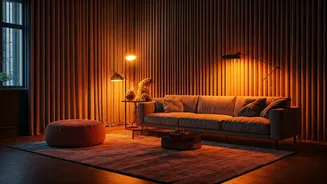
Instead of relying on a single, harsh overhead light, think in layers. Use a combination of ambient (overall), task (focused), and accent lighting to create depth and warmth. On a rainy day, turn off the main ceiling fixture and switch on your layers. Place floor lamps and table lamps with warm, high-CRI bulbs in corners and next to seating areas to create inviting 'pockets' of light. This strategy, known as zonal lighting, is far more effective at creating a cozy mood than flooding a room with uniform light. Using lampshades made of linen or frosted glass can also help diffuse the light, creating a softer, more natural glow. Consider installing dimmer switches, which allow you to adjust the intensity for the perfect evening ambience.