




The Fundamental Tool: One Blade or Two?
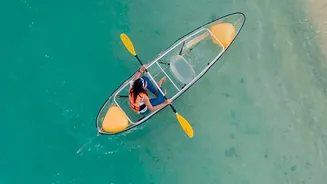
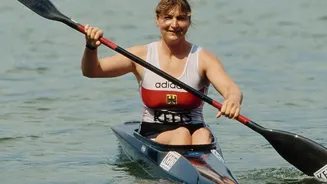
The most obvious difference lies in the paddle. A kayaker uses a double-bladed paddle, while a stand-up paddleboarder uses a single-bladed one. This is more than a simple design choice; it dictates the entire rhythm and biomechanics of the sport. The kayak paddle allows
for an alternating push-and-pull motion on both sides of the body without switching hand positions. The SUP paddle, on the other hand, requires the paddler to switch the paddle from one side of the board to the other, creating a distinct sequence of reach, catch, and pull on a single side before repeating on the opposite.
The Kayak Stroke: A Rotational Push and Pull
Proper kayaking technique is less about pulling with your arms and more about rotating your torso. The power for a forward kayak stroke should come from your core muscles. As you plant one blade in the water near your feet, you 'unwind' your torso, pushing with your top hand while pulling with your bottom hand. This push-pull dynamic engages the latissimus dorsi (lats), deltoids, and pectorals. A common mistake for beginners is to rely solely on their arms, which leads to rapid fatigue and places significant strain on the smaller, more vulnerable rotator cuff muscles in the shoulder. To avoid injury, kayakers should focus on sitting up straight and powering the stroke with their larger back and abdominal muscles.
The SUP Stroke: Reach, Catch, and Core Power
Stand-up paddleboarding is a full-body workout, but like kayaking, the power shouldn't originate from the shoulders. The stroke begins with a 'reach', extending the paddle forward and 'catching' the water by planting the blade fully. The power phase is driven by engaging the core and back muscles—primarily the lats—to pull the paddle through the water. The arms should remain relatively straight, acting as levers rather than the primary engines. Inexperienced paddlers often use too much arm and shoulder action, leading to inefficiency and a greater risk of shoulder strain or impingement. The standing position also recruits leg and glute muscles for stability, making it a comprehensive workout that distributes effort across the entire body.
Shoulder Strain: A Tale of Two Motions
Both sports carry a risk of shoulder injury if performed with poor technique, often due to overuse or muscle imbalance. In kayaking, a common cause of injury is over-rotation or placing the paddle too far behind the body, which puts the shoulder in a vulnerable, extended position. The repetitive push-pull motion can strain the front of the shoulder and biceps tendon. In SUP, the risk often comes from overreaching on the catch or an improper pulling motion that relies on the shoulder rather than the core. Keeping the top hand below eye level and the elbow below the shoulder helps reduce stress on the rotator cuff. Studies have shown that inexperienced paddleboarders tend to use a much greater range of motion in their shoulders compared to experienced ones, who rely more on their hips and core.
The Verdict: Technique is Everything
Neither sport is inherently 'worse' for your shoulders; rather, the risk is tied directly to the quality of your technique. Kayaking involves a constant, bilateral push-and-pull rotation, while paddleboarding is characterized by a unilateral reach-and-pull motion combined with the challenge of maintaining balance. For some, the seated, stable position of a kayak may feel more secure, allowing them to focus purely on torso rotation. For others, the full-body engagement of SUP might feel more athletic and distribute the workload more broadly. In both cases, the golden rule is the same: power your paddle with your core, not your arms. Engaging your torso protects the smaller, more delicate muscles of the shoulder joint from repetitive strain.