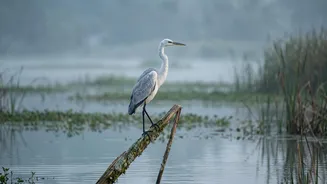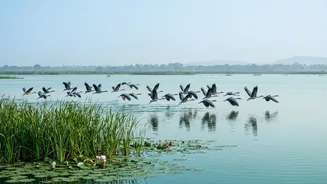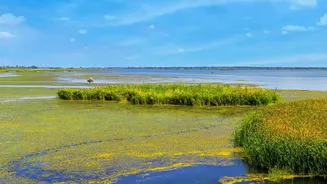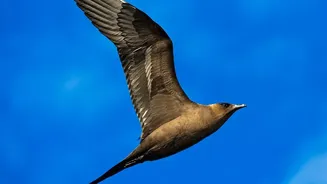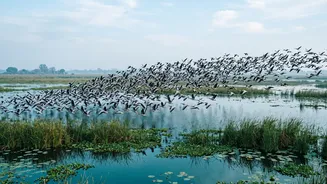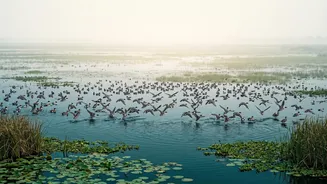




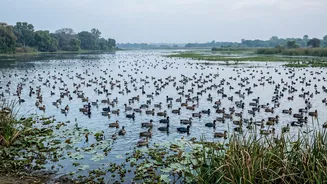
Each winter, India’s skies and water bodies come alive with millions of winged visitors. But this breathtaking natural spectacle is fragile, depending entirely on the health of our wetlands, which serve as crucial pit stops for these travellers.
Nature’s Vital Service Stations
For countless
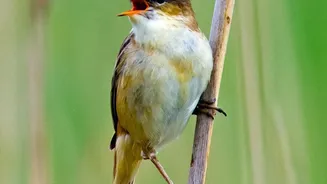
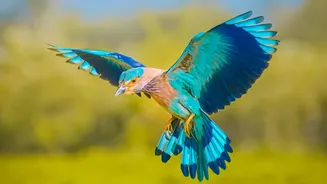
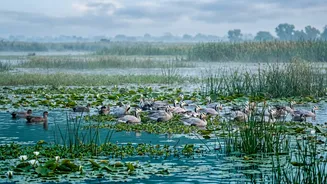
migratory birds, such as the Bar-headed Goose that soars over the Himalayas and the Amur Falcon on its epic journey from Siberia to Africa, India’s wetlands are not just a destination but a lifeline. These areas—lakes, marshes, estuaries, and mangroves—function as critical refuelling stations. After travelling thousands of kilometres along the Central Asian Flyway, birds arrive exhausted and need these habitats to rest, feed, and shelter. More than a third of North American bird species, and over 90% of bird species on the CAF route, depend on wetlands at some point in their life cycle. These ecosystems offer a rich buffet of fish, insects, molluscs, and aquatic plants, allowing birds to build up the energy reserves needed for their return journey and breeding season.
What Makes a Wetland 'Clean'?
A 'clean' wetland is about much more than just clear water. It is a complex, balanced ecosystem. Healthy wetlands have stable water levels, a diverse range of native vegetation, and high oxygen levels. This environment supports a robust food web, from microorganisms and invertebrates to the fish and amphibians that birds prey on. Crucially, a clean wetland is free from high levels of pollutants. Chemical runoff from farms, untreated sewage from cities, and industrial effluents can completely devastate this delicate balance. Even invasive plant species like the water hyacinth can choke a wetland by blocking sunlight and depleting oxygen, rendering it inhospitable.
The Cascade of Degradation
Across India, wetlands are facing an unprecedented crisis. It is estimated that the country has lost nearly a third of its natural wetlands in the past three decades alone due to rapid urbanisation, agricultural expansion, and pollution. For migratory birds, the consequences are direct and severe. When a wetland is polluted, the food chain collapses. Pesticides and heavy metals accumulate in fish and insects, which are then consumed by birds. This bioaccumulation can lead to reproductive failure, illness, and death. Habitat loss from encroachment for construction and agriculture shrinks the available space for birds to rest safely, leaving them vulnerable to predators and human disturbance. Noise and light pollution from expanding cities can also disrupt their resting and feeding patterns.
A Barometer for Environmental Health
The declining number of migratory birds in certain areas is a clear warning sign of deeper environmental problems. Birds are excellent bioindicators; their presence signals a healthy, functioning ecosystem. When they disappear from a traditional wintering site, like the dwindling numbers seen at Pallikaranai marsh in Chennai or Santragachi Jheel in Kolkata, it indicates that the wetland's health is failing. This has consequences that extend to human populations. Healthy wetlands act as natural filters for our water, recharge groundwater tables, protect coastal communities from storm surges, and sequester vast amounts of carbon. Their degradation not only threatens wildlife but also compromises our water security and resilience to climate change.
A Path Toward Restoration and Hope
Despite the challenges, there is a growing movement to protect and restore India's wetlands. India's designation of 75 'Ramsar sites'—wetlands of international importance—has brought global attention to their value. Conservation is increasingly a collaborative effort. Government bodies, nonstprofit organisations like the Environmentalist Foundation of India (EFI), and local communities are joining forces to clean up polluted lakes, restore water flow, and plant native vegetation. Citizenstled initiatives, from cleanup drives at Pune's Mutha river to communitymanaged mangrove forests in Odisha and Gujarat, show the power of local action. These 'Wetland Champions' are proving that it is possible to reverse the damage and create havens for both biodiversity and people.