





Understanding the Energy Rollercoaster
To understand why some foods leave us feeling energised and others lead to a slump, we need to talk about the Glycemic Index (GI). The GI is a scale from 1 to 100 that measures how quickly a carbohydrate-containing food raises your blood sugar levels
after you eat it. Foods with a high GI are digested quickly, causing a rapid spike in blood sugar, followed by a sharp crash. This crash is what brings on feelings of fatigue, irritability, and hunger soon after a meal. Conversely, low-GI foods are digested and absorbed more slowly, leading to a gradual rise in blood sugar and a steady, sustained release of energy.
Khapli: The Ancient Grain Advantage
Khapli, also known as emmer wheat, is an ancient variety of grain that is making a major comeback in Indian kitchens. Unlike modern, hybridised wheat, khapli has remained largely unchanged for centuries. Nutritionally, this is its greatest strength. Khapli wheat has a low glycemic index, with sources placing it between 40 and 55. This means it releases sugar into the bloodstream slowly, preventing the sharp spikes and crashes associated with high-GI foods. Furthermore, it is packed with higher amounts of protein and dietary fibre compared to regular wheat. This high fibre content not only aids digestion but also slows down glucose absorption, further contributing to stable energy levels and a feeling of fullness that can help manage weight.
The Problem with Refined Flour and Cereals
On the other end of the spectrum is refined flour, or maida, and many processed breakfast cereals. Maida is made by stripping wheat of its bran and germ, which removes most of the fibre and nutrients. What's left is a starchy powder with a very high glycemic index (often above 70), which can cause rapid blood sugar spikes. Similarly, many popular breakfast cereals, despite being marketed as healthy, are highly processed and loaded with added sugars. These products deliver a quick, sweet hit of energy, but it's short-lived and often followed by a slump, leaving you reaching for another snack well before lunchtime.
The Paratha Transformed
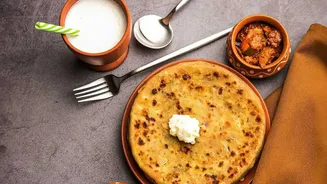
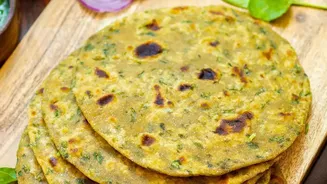
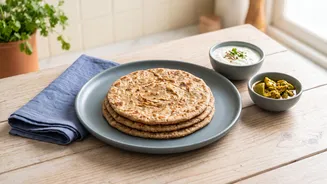
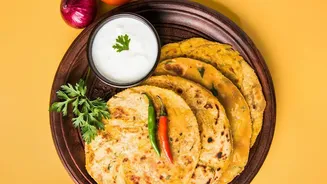
A standard paratha made from refined flour (maida) or even some whole wheat flours can be a high-GI meal, especially when consumed on its own. But when you swap the flour, you change the food's entire metabolic effect. A paratha made from 100% khapli wheat atta is a fundamentally different breakfast. Thanks to khapli's low GI and high fibre and protein content, the energy from the paratha is released steadily. This ancient grain is also rich in essential minerals like magnesium and iron, which support overall health and energy metabolism. This swap doesn't require you to give up a beloved breakfast staple; it simply upgrades it into a more functional, nourishing meal that works with your body, not against it.