




The Grand Arrival of Demoiselle Cranes in Rajasthan
In the small, dusty village of Khichan, near Jodhpur, a wildlife spectacle unfolds every year. Thousands of Demoiselle Cranes, the smallest species of crane, arrive from their breeding grounds in Mongolia and Eurasia. Known locally as 'kurja', these elegant
grey birds with long black neck feathers and striking red eyes descend upon the Thar Desert, creating a noisy, crowded, and breathtaking scene. The story of Khichan is one of unique conservation, where the local community began feeding the birds decades ago, turning a small stopover into a massive wintering site. Visitors can witness thousands of cranes gathering in designated feeding grounds, a truly unforgettable sight against the desert landscape. The best time to see them is early in the morning as they circle the sky before landing.
A Sea of Pink: Flamingos in Gujarat and Maharashtra
While often associated with Africa, India hosts its own magnificent flamingo migrations. November sees large flocks of both Greater and Lesser Flamingos congregating in the wetlands of the western states. The Greater Rann of Kutch in Gujarat is a prime destination, where the birds arrive to feed in the rich salt pans and shallow waters from November to March. But perhaps the most accessible and surreal sighting is in the heart of Mumbai. The Sewri mudflats and Thane Creek Flamingo Sanctuary become a temporary home for tens of thousands of flamingos, creating a stunning contrast of vibrant pink against the urban backdrop. These birds are local migrants, likely travelling from Gujarat. Watching them feed with their unique upside-down beaks is a treat for city-bound nature lovers.
The High-Fliers: Bar-headed Geese Across Wetlands
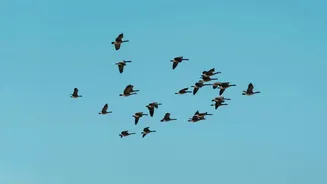
The Bar-headed Goose undertakes one of the most extreme migrations in the world, flying over the Himalayas to reach their wintering grounds in India. These resilient birds, easily identified by the two black bars on their heads, leave the freezing conditions of Central Asia and Tibet for the warmer wetlands of the Indian subcontinent. Come November, they can be found in large numbers in various locations. Key spots include the wetlands of Keoladeo National Park in Rajasthan and Pong Dam Lake in Himachal Pradesh. They are also found in the wetlands of Kaziranga National Park in Assam. Their arrival is a testament to endurance, having flown at altitudes where oxygen is scarce, making them a marvel for birdwatchers.
The Waterfowl Metropolis at Chilika Lake, Odisha
Asia's largest brackish water lagoon, Chilika Lake, transforms into an avian metropolis every winter. The first waves of migratory birds begin to arrive in October and November, and by the peak season in December and January, the lake hosts millions of birds. Coming from as far as the Caspian Sea, Siberia, and Central Asia, countless species of waterfowl, waders, and other birds find refuge here. On a boat ride through the lake, you can expect to see Northern Pintails, Gadwalls, Eurasian Wigeons, and a huge variety of ducks and geese. The Nalabana Bird Sanctuary, an island within the lake, is a protected area that offers a safe haven and is a hotspot for sightings. November marks the perfect time to witness the beginning of this grand gathering.
Predators on the Plains: Raptors of the Little Rann of Kutch
The vast, arid salt flats of the Little Rann of Kutch in Gujarat are not only famous for the Asiatic Wild Ass but are also a crucial wintering ground for a variety of birds of prey. From November, the cooler, pleasant weather makes it ideal for exploring this unique landscape. Birdwatchers can spot several migratory raptors that arrive to hunt over the open terrain, including the Imperial Eagle, Greater Spotted Eagle, and Pallid Harrier. The abundance of other migratory birds, like cranes and waterfowl, makes the Rann a rich hunting ground. An open-jeep safari at dawn or dusk provides the best opportunity to see these majestic hunters in action, soaring against the starkly beautiful backdrop of the salt desert.