






The Core Challenge: A Nation of Heat
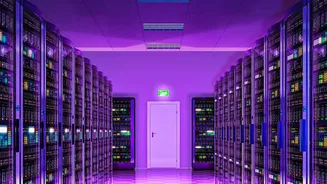
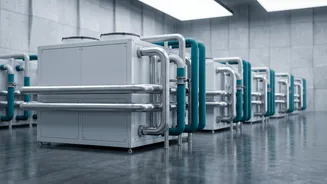
At its simplest, a data centre is a building packed with powerful computers that run 24/7. This constant operation generates an enormous amount of heat. If left unchecked, this heat would cause servers to fail, bringing digital services to a halt. Cooling
is not just a utility; it is the lifeblood of a data centre, often accounting for 30-40% of its total energy consumption. In India, this challenge is magnified by high ambient temperatures. Many of the country's major data centre hubs—Mumbai, Chennai, Hyderabad, and Bengaluru—are in regions that experience extreme heat for large parts of the year. Some reports indicate that most of India's data infrastructure already operates in regions where extreme heat is becoming the norm. This means cooling systems must work harder and longer, driving up electricity costs and putting a strain on local power grids.
Humidity’s Corrosive Impact
In coastal cities like Mumbai and Chennai, which host a significant share of India's data centre capacity, high heat is compounded by high humidity. Humidity poses a dual threat. Firstly, it can lead to condensation and corrosion on sensitive electronic components if not properly managed, increasing the risk of equipment failure. Secondly, it complicates the use of certain cooling methods. Evaporative cooling, which relies on the evaporation of water to lower air temperature, becomes less effective in humid conditions. This forces operators in these high-humidity zones to rely more on energy-intensive refrigeration-based systems, such as chillers, further increasing operational expenditure.
The Water-Energy Nexus
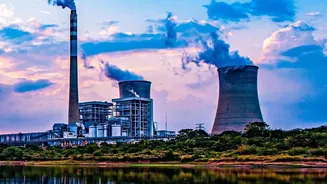
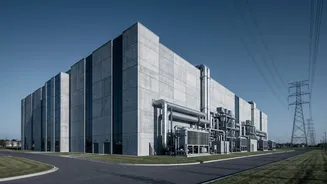
While air-based cooling is common, many large-scale facilities rely on water-based cooling systems for greater efficiency. These systems, using technologies like cooling towers, are very effective at dissipating large amounts of heat. However, they consume vast quantities of water. It's estimated that India's data centres consumed around 150 billion litres of water in 2024, a figure projected to more than double by 2030, driven by the growth in AI infrastructure. This creates a significant dilemma in a country where many urban centres already face water stress. Building a water-intensive data centre in a city like Bengaluru or Chennai, both of which have experienced severe water crises, presents a major operational and social challenge. A single mid-sized facility can use millions of litres of water per day, competing directly with residential and agricultural needs.
A Shift Toward Smarter Solutions
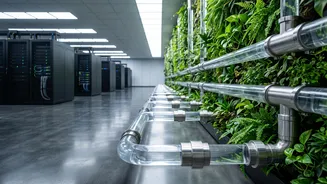
Given these constraints, data centre operators in India are being forced to innovate. There is no 'one-size-fits-all' solution; the choice of cooling technology is now highly site-specific, taking into account local climate and water availability. In response, the industry is moving towards more advanced and sustainable cooling solutions. Liquid cooling is emerging as a key technology, especially for the high-density server racks required for AI and machine learning workloads. Methods like direct-to-chip cooling, where a liquid coolant is circulated in a closed loop directly to the processor, are far more efficient at heat removal and use virtually no water. Other strategies include using recycled wastewater, rainwater harvesting, and designing facilities with hot and cold aisle containment to manage airflow more effectively.