

Independence Day Special: How Dhoni started a new revolution in Indian cricket bringing glory to the nation
On Independence Day, we look back at how MS Dhoni's revolutionary captaincy transformed Indian cricket, ushering in an era of unprecedented glory.
A New Leader for a New Generation
The mid-2000s were a challenging time for Indian cricket. A disastrous exit from the 2007 ODI World Cup had
left fans disheartened. The team was brimming with individual stars but often faltered on the biggest stages. What India needed was not just a captain, but a cultural architect. In 2007, the selectors made a bold choice, handing the T20 World Cup captaincy to a young, long-haired wicketkeeper-batsman: MS Dhoni. Senior players had opted out of the inaugural tournament, giving Dhoni a young, hungry squad. It was a decision that would not just win a trophy, but fundamentally alter the trajectory of Indian cricket.
The Revolution of Calmness
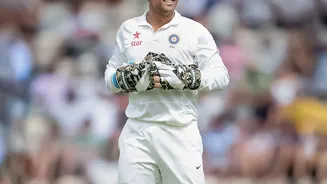
Dhoni's most defining trait was his extraordinary composure. In a sport where tempers flare and pressure crushes the strongest, he was an oasis of calm. Nicknamed 'Captain Cool', his unflappable demeanor became the team's new identity. He rarely showed frustration, and his ability to think clearly in high-stakes moments was legendary. This cool-headed approach trickled down to the entire team, allowing them to handle pressure situations with a newfound resilience. He taught the team that panic was not a strategy and that the most chaotic moments could be controlled with a clear mind.
Trust in Youth, Belief in Process
One of Dhoni's most significant contributions was his unwavering faith in young players. While previous captains had also nurtured talent, Dhoni made it a core philosophy. Players like Rohit Sharma, Suresh Raina, Virat Kohli, and Ravindra Jadeja were given a long rope and the confidence to express themselves without fear of being dropped after a few failures. He famously promoted a struggling Rohit Sharma to open the innings, a move that transformed Rohit's career and gave India one of its greatest white-ball batsmen. This process-oriented approach, focusing on building a strong core for the future, was a revolutionary step.
The Master of Unconventional Genius
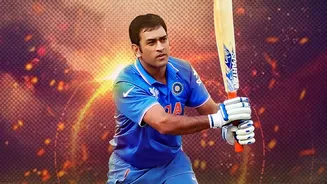
Dhoni's captaincy was never by the book. He relied on a deep, intuitive understanding of the game to make decisions that often baffled experts but yielded incredible results. The most famous example is giving the final over of the 2007 T20 World Cup final to the inexperienced Joginder Sharma, a gamble that won India the trophy. In the 2011 ODI World Cup final, he promoted himself up the batting order ahead of the in-form Yuvraj Singh, backing himself to handle the Sri Lankan spinners. His unbeaten 91-run knock to win the cup is now part of Indian sporting folklore. These weren't just gambles; they were calculated risks from a master tactician.
An Era of Unprecedented Glory
Under Dhoni's leadership, India's trophy cabinet filled up at an astonishing rate. He is the only captain in cricket history to win all three major ICC trophies. The revolution began with the thrilling 2007 T20 World Cup victory. It was followed by the crowning achievement: the 2011 ICC Cricket World Cup, won on home soil after a 28-year wait, a moment that brought a billion people to their feet. The treble was completed with the 2013 ICC Champions Trophy in England. These wins didn't just bring glory; they cemented India's status as a dominant force in world cricket and instilled a winning habit that persists to this day.