






America's Ambitious Lunar Return: The Artemis Program
At the heart of America's new lunar ambition is the Artemis program, named after the twin sister of Apollo. Its goal is far more expansive than the missions of the 1960s and '70s. NASA isn't just planning a visit; it aims to establish a sustainable human
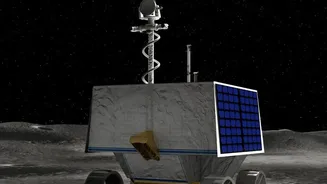
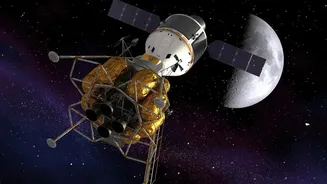
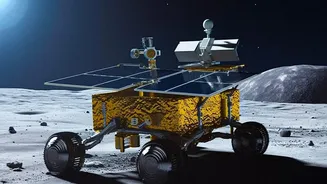
presence on the Moon, specifically a base camp near the resource-rich South Pole. This lunar outpost, which will include habitats, rovers, and power systems, is designed to serve as a hub for long-term scientific research and, crucially, as a proving ground for the technologies and strategies needed for the next giant leap: sending astronauts to Mars. The program is unfolding in phases, using the powerful Space Launch System (SLS) rocket and the Orion crew capsule. Following the successful uncrewed Artemis I flight in 2022 and the crewed Artemis II lunar flyby in 2026, subsequent missions aim for a lunar landing and the gradual construction of the base.
Why Build a Moon Base?
The purpose of the Artemis Base Camp is twofold: science and strategy. Scientifically, the Moon's South Pole is a geological goldmine. Its permanently shadowed craters are believed to hold vast quantities of water ice. This ice can be harvested and converted into drinking water, breathable air, and even rocket propellant, dramatically reducing the cost and complexity of deep space missions. Strategically, establishing the first permanent outpost on another celestial body is a goal of immense geopolitical significance. It allows the U.S. and its partners to set precedents for space governance and resource utilization, ensuring that the exploration of space is guided by principles of openness and peaceful cooperation. This isn't just a science project; it's about shaping the future of humanity's presence in the cosmos.
The Artemis Accords: A 'Team Up' for Space
A project of this magnitude cannot be shouldered by one nation alone. Recognizing this, the U.S. established the Artemis Accords in 2020. These are a set of non-binding principles grounded in the 1967 Outer Space Treaty, designed to guide civil space exploration. The Accords cover everything from the peaceful use of space and transparency of operations to providing emergency assistance and releasing scientific data. By signing, nations agree to a common framework for responsible behavior. This diplomatic effort has been a resounding success, with over 60 countries joining the coalition as of mid-2026. It transforms the Artemis program from a solely American endeavor into a global one, creating a powerful alliance of nations committed to a shared vision for lunar exploration.
Enter ISRO: Why India Got the Invite
In August 2026, NASA formally invited the Indian Space Research Organisation (ISRO) to participate in developing the Moon Base, a significant step beyond India merely signing the Accords in 2023. The invitation is a testament to India's rising stature as a formidable and innovative space power. ISRO has a stellar track record of cost-effective and technologically sophisticated missions, most notably the successful Chandrayaan-3, which made India the first nation to land a craft near the lunar South Pole. This expertise is invaluable. For NASA, partnering with ISRO means gaining access to India's proven engineering prowess and a fresh perspective on deep-space challenges. A specific contribution has not been finalized, but possibilities range from developing scientific instruments and robotics to contributing elements of the base's infrastructure.
A New Kind of Space Race
The invitation to ISRO also carries significant geopolitical weight. The modern era of space exploration is not a bipolar race but a multi-sided competition of alliances and ideologies. While the U.S. builds its Artemis coalition, China and Russia are collaborating on their own rival project, the International Lunar Research Station (ILRS). Bringing India, the world’s largest democracy and a key player in the Indo-Pacific, into the Artemis fold is a strategic move. It strengthens the U.S.-led bloc of democratic nations and signals a shared commitment to an open, rules-based order in space. This collaboration is about more than just technology transfer; it's about aligning strategic interests for the coming century, both on Earth and beyond.