







Why Market Cadence Matters
Before diving into specific markets, it's crucial to understand why their operating hours are so significant. Market timings dictate liquidity—the ease with which you can buy or sell an asset. When a market is open and active, there are more participants,
leading to higher liquidity, tighter bid-ask spreads, and a lower risk of price slippage. The opening and closing hours are often the most volatile periods, presenting both opportunities and risks. A trader's strategy must align with these cycles. An intraday equity trader operates on a minute-by-minute timeframe, while a commodities investor might focus on broader seasonal trends.
The Daily Beat: Indian Stock Markets
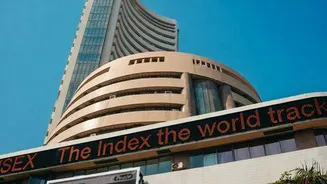
For most people in India, "the market" refers to equity exchanges like the National Stock Exchange (NSE) and the Bombay Stock Exchange (BSE). These markets operate on a strict daily schedule, typically from Monday to Friday. Regular trading hours are from 9:15 AM to 3:30 PM IST. This session is preceded by a pre-opening session from 9:00 AM to 9:15 AM, which helps in price discovery and minimizes extreme volatility at the open. Similarly, a post-closing session exists to help participants settle obligations. The defined hours mean all significant company announcements and economic data releases are digested within this window, creating a predictable daily rhythm for traders.
The 24-Hour Market: Foreign Exchange (Forex)
Unlike stock markets, the global foreign exchange (Forex) market operates 24 hours a day, five days a week. This is because forex trading is decentralized, passing through major financial centers as their business days begin. The cycle starts with the Sydney session, followed by Tokyo, London, and finally New York. For Indian traders, this means opportunities exist almost around the clock. The currency derivatives segment in India for pairs involving the Rupee (INR) runs from 9:00 AM to 5:00 PM IST. However, the most liquid periods, especially for major pairs like EUR/USD, occur during session overlaps, such as when the London and New York sessions are open simultaneously (approximately 5:30 PM to 9:30 PM IST).
Always Open: The World of Cryptocurrency
Cryptocurrency markets take the concept of continuous trading to the extreme. They are open 24 hours a day, 7 days a week, 365 days a year. This is possible because they are decentralized and not tied to any single country or regulated exchange. While this offers ultimate flexibility, it also presents unique challenges. The market never sleeps, meaning significant price movements can happen at any time, including weekends. While trading is constant, activity still tends to peak during traditional business hours in Asia, Europe, and the US, as more institutional and retail traders are active. Trading outside these peak hours can sometimes mean lower liquidity.
Weekly Reports and Seasonal Swings: Commodities
The commodity market in India, primarily handled by the Multi Commodity Exchange (MCX) and National Commodity and Derivatives Exchange (NCDEX), has its own unique timings. Trading often runs in two sessions, with a morning session from around 9:00 AM to 5:00 PM and an evening session that can extend until 11:30 PM or later to overlap with international markets. Agricultural commodities on NCDEX often stick to the morning session. Beyond daily and weekly schedules, commodities are heavily influenced by seasonal factors. Agricultural commodities like wheat, rice, and cotton are tied to harvest cycles and monsoon performance, which can cause predictable price patterns. For instance, a strong monsoon can lead to bumper crops and lower prices, while a weak one can cause shortages and price spikes. This seasonality is a critical factor for anyone trading in the agri-commodity space.