

The Ultimate Logistical Nightmare
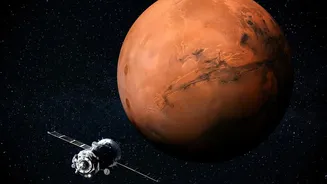
A trip to Mars takes months, and a long-term settlement would require years of support. Relying solely on resupply missions from Earth is not just economically unfeasible; it's a strategic risk. A single failed launch could endanger an entire colony.
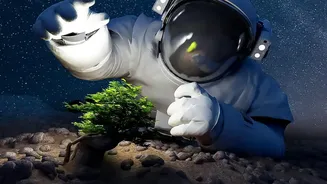
The sheer mass of pre-packaged food needed for a crew over years is staggering. A self-sustaining food source on Mars isn't a luxury; it's a mathematical and logistical necessity for any permanent human presence. This shifts the problem from simply transporting supplies to creating a completely independent agricultural ecosystem, a challenge that is driving significant innovation.
A Hostile Martian Garden
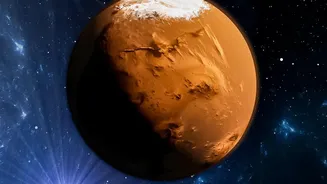
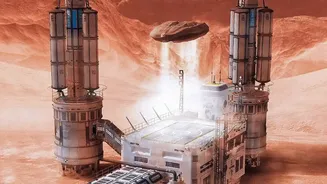
Mars is not an easy place to farm. Its 'soil,' more accurately called regolith, is fundamentally different from Earth's. It's essentially fine, dead dust with no organic matter or helpful microbes. Worse, it’s laced with toxic chemicals called perchlorates, which are harmful to both plants and humans. Beyond the soil, the challenges mount. Mars has a thin atmosphere composed mostly of carbon dioxide, punishingly cold temperatures, and receives intense solar radiation due to its lack of a global magnetic field. Liquid water is not readily available on the surface; it's mostly locked away as ice or is extremely salty. Any Martian farm would need to be a highly controlled, artificial environment.
Laboratories in Space and on Earth
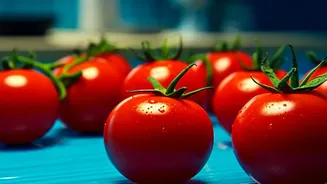
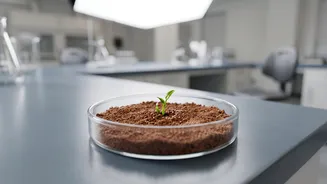
Scientists are tackling these problems from multiple angles. Aboard the International Space Station (ISS), NASA's Veggie experiment has successfully grown crops like lettuce, cabbage, and even tomatoes. These tests provide crucial data on how plants react to microgravity and space environments, showing that while plants can grow, they sometimes experience stress which can alter their taste and nutritional content. Back on Earth, researchers use 'Mars regolith simulants'—materials created from volcanic rock—to replicate Martian soil. Experiments at institutions like Wageningen University in the Netherlands have successfully grown crops like tomatoes, rye, and peas in this simulated soil, often by adding fertilizers or organic matter to boost nutrient levels.
Engineering the Perfect Martian Crop
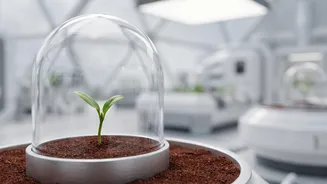
Simply building a greenhouse isn't enough; the plants themselves may need to be adapted. Scientists are exploring hydroponic and aeroponic systems, which grow plants without soil using nutrient-rich water or mist. These methods are water-efficient and bypass the problem of toxic regolith. Furthermore, the field of genetic engineering offers powerful tools. Using technologies like CRISPR, scientists could develop crops that are more resistant to radiation, require less water, or grow more efficiently in lower light. The focus is on calorie-dense and nutrient-rich plants like potatoes, sweet potatoes, wheat, and protein-rich legumes to form the basis of a Martian diet. Some researchers are even studying how to use microbes to treat the regolith, removing harmful perchlorates and adding vital nutrients to make it viable for farming.
Surprising Benefits for a Greener Earth
The quest to farm on Mars has a significant, and perhaps more immediate, benefit for our own planet. The technologies being developed—closed-loop water recycling, ultra-efficient vertical farming, and crops engineered to thrive in harsh conditions—are directly applicable to challenges on Earth. Research into sustainable agriculture for Mars can help us tackle food security in arid regions, reduce water usage in farming, and cultivate crops on degraded soils. In essence, by solving for the extreme environment of Mars, we are creating innovative solutions that can make agriculture on Earth more resilient and sustainable in the face of climate change.