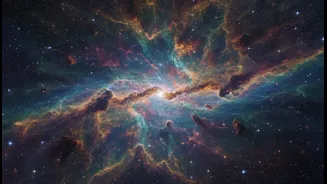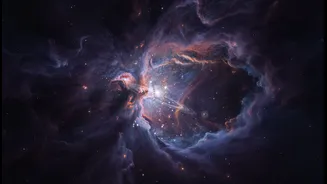





From Raw Data to Cosmic Art
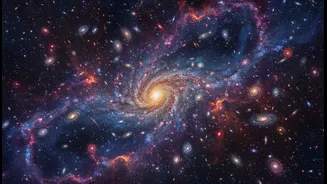
The spectacular images from missions like the James Webb Space Telescope (JWST) don't start as photographs. Instead, the telescope's instruments measure energy, often in infrared wavelengths that are invisible to us. This data is sent back to Earth as a stream
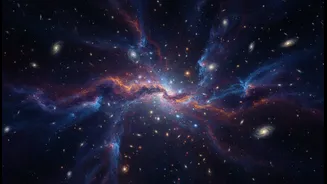
of binary code—just ones and zeros. Scientists and visual artists then work together to translate this information into an image. They assign different colors to represent different wavelengths of light, temperatures, or chemical compositions. This process, often called 'false color' or 'representative color,' isn't about making things up; it's a scientific method for visualizing data that would otherwise remain unseen, much like a doctor uses dye to highlight features in a medical scan.
A New Look at a Galactic Collision
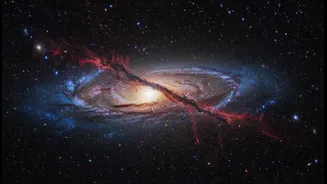
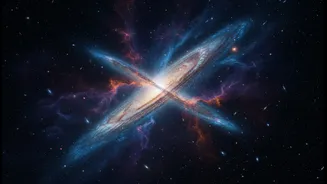
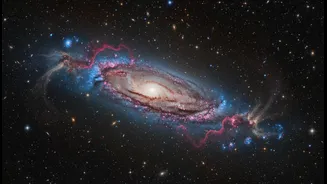
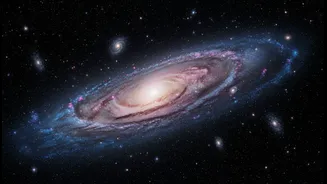
To mark its fourth anniversary of science operations in July 2026, the JWST released a stunning new view of Centaurus A, a galaxy located about 11 million light-years away. This galaxy is the result of a violent collision between two other galaxies billions of years ago. Previous telescopes like Hubble were blinded by the thick dust obscuring the galaxy's heart. But Webb's infrared vision cuts through the haze, revealing a densely packed tapestry of millions of individual stars. What looks like 'grain' in the image is actually a field of countless stars, each one a clue in a vast work of 'galactic archaeology' that helps scientists reconstruct the timeline of this galaxy's dramatic evolution.
Mapping the Invisible Universe
While Webb excels at detailed portraits, the ESA's Euclid mission is a wide-angle surveyor on a quest to map the 'dark universe'. Launched in 2023, its primary goal is to understand the mysterious forces of dark matter and dark energy that shape the cosmos. In a recent image of the Milky Way's core, Euclid captured an unprecedented view packed with over 60 million stars. While dazzling, the image's true power is scientific. By observing the subtle ways starlight is bent by gravity—a phenomenon called gravitational microlensing—Euclid can help detect exoplanets. This vast cosmic map is helping scientists trace the hidden scaffold of dark matter and measure the accelerating expansion of the universe.
Why Visual Storytelling Matters
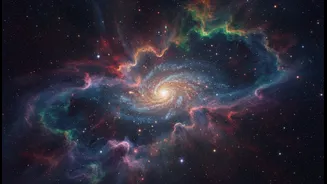
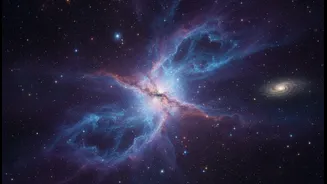
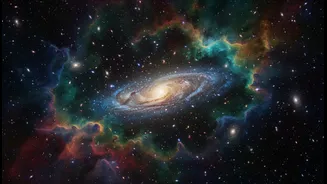
These images do more than just illustrate scientific papers; they are a vital form of communication. By turning abstract data into relatable, awe-inspiring visuals, space agencies make the frontiers of human knowledge accessible to everyone. An image of a stellar nursery or a dying star can convey the story of the cosmic lifecycle in a way that text alone cannot. This approach inspires public curiosity and support for science, encouraging the next generation of explorers and researchers. It bridges the gap between complex empirical data and the universal human desire to understand our place in the universe.