




The Ultimate Safety Parachute
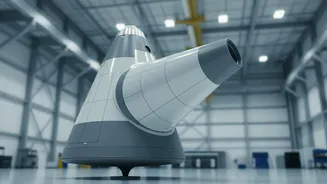
Before we talk about high altitudes, let's understand the core concept: the Crew Escape System (CES). Think of it as a powerful, high-tech ejection seat for the entire astronaut capsule, officially called the Crew Module. Its sole purpose is to pull the module
and its crew away from the rocket in a split second if a major problem is detected during launch or ascent. The initial moments of a space flight are among the most dangerous, as the rocket is loaded with fuel and under immense stress. The CES is designed to out-accelerate the main rocket, ensuring the crew can be yanked to a safe distance from a potential catastrophe.
Why High-Altitude Tests Are Crucial
ISRO has already proven its escape system works on the launchpad in a 2018 test. However, an emergency at 17 kilometres in the sky, traveling faster than the speed of sound, is a completely different challenge. High-altitude abort tests are designed to simulate this very scenario. At this height, the rocket is experiencing significant aerodynamic pressure. The test must prove that the escape system can not only fire successfully but also steer the Crew Module away from the malfunctioning rocket's path and handle the extreme forces and speeds. This is why missions like the Test Vehicle Abort Mission-1 (TV-D1) are so important; they test the system's performance under the most challenging atmospheric conditions it might face.
Anatomy of an Abort Test
So, what actually happens during a high-altitude abort test? A specially designed single-stage liquid rocket, the Test Vehicle, launches with the Crew Module and Crew Escape System on top. It ascends to a predetermined altitude and speed—for TV-D1, this was about 17 km high at Mach 1.2. At that point, an abort is deliberately triggered. The powerful, fast-acting solid motors of the CES ignite, pulling the Crew Module away from the rocket. Once at a safe distance, the CES detaches, and a complex sequence of parachutes begins to deploy to slow the module down for a gentle splashdown in the sea, where naval recovery teams are waiting.
Validating the Entire Sequence
These tests are about more than just the escape motors. They validate the entire life-saving sequence from start to finish. This includes the automated systems that detect the failure, the explosive bolts that separate the module, the deployment of smaller drogue parachutes to stabilize the capsule at high speed, and finally, the main parachutes that ensure a soft landing. In parallel, ISRO also conducts Integrated Air Drop Tests (IADT), where a full-size module is dropped from a Chinook helicopter to specifically test the parachute system's reliability and sequence under controlled conditions. Each test provides invaluable data, allowing engineers to refine every component.
Building Confidence, One Test at a Time
Every successful abort test is a monumental step towards the final crewed Gaganyaan mission. These demonstrations are part of a 'human rating' process, which certifies that the launch vehicle and all its systems are safe enough to carry people. The successful completion of the TV-D1 test made India only the fourth country to demonstrate this critical in-flight abort technology. It proves that the complex interplay between hardware, software, and sequencing works as designed under immense pressure. By repeatedly and successfully testing these worst-case scenarios, ISRO builds the confidence needed to ensure that when Indian astronauts finally launch, they are protected by one of the most robust safety systems in the world.