






The End of the 'Real or Fake' Binary
The dream of a perfect AI image detector—a tool that could instantly and accurately tell us if an image was human-made or generated by AI—is fading. As generative AI models become exponentially more sophisticated, detection tools are locked in a losing
battle. Studies have shown that even the best detectors can be unreliable, frequently producing false positives (flagging human work as AI) and false negatives (missing AI-generated content entirely). Even OpenAI, a leader in the field, discontinued its own public classifier due to low accuracy rates. This technological arms race has prompted a strategic pivot among the platforms where we see this content. They're moving away from the impossible promise of a simple verdict and toward a more nuanced approach: transparency.
From Detection to Disclosure: The Platform Pivot
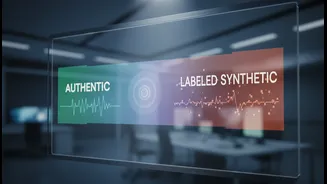
Major tech companies are shifting their focus from solely detecting AI to ensuring it's disclosed. Meta, the parent company of Facebook and Instagram, announced that starting in May 2026, it would require labels for AI-generated content. By July 2026, it will stop removing most manipulated media, opting instead to label it, unless it violates other community standards like election interference. Similarly, Google and TikTok now require creators to label content made with AI tools. This change acknowledges a simple truth: if you can't always catch the fakes, the next best thing is to create a system where authentic content can prove itself and creators are encouraged—or required—to be honest about their use of AI. This approach focuses on giving users context, not just a ruling.
C2PA: A Digital 'Nutrition Label' for Media
Underpinning this new strategy is a technical standard called C2PA, which stands for the Coalition for Content Provenance and Authenticity. Founded by companies like Adobe, Microsoft, and Google, C2PA works like a secure, digital 'nutrition label' for media files. When a C2PA-enabled camera or AI tool creates an image, it cryptographically binds metadata to the file. This metadata—called a Content Credential—acts as a tamper-evident log, showing who created the content, what tools were used, and any edits made along the way. Platforms like Meta, TikTok, and Google can then read this embedded information and automatically apply a label like “Made with AI,” ensuring the provenance information travels with the image wherever it's shared.
How the Labels Actually Look and Work
On platforms like Instagram, Facebook, and YouTube, users are beginning to see these disclosures appear in various forms. For ads, Google and Meta have rolled out a “How this ad was made” section in the ad's information panel, which states if AI was used. TikTok places an “AI-generated” label directly on videos. YouTube is making its labels more prominent, placing them below the video player for long-form content and as an overlay on Shorts. The goal of these labels isn't to pass judgment on the content's quality or truthfulness, but simply to provide a layer of transparency. It shifts the power to the viewer, giving them a crucial piece of context to consider as they evaluate what they're seeing. This move is also driven by emerging regulations like the EU AI Act, which will mandate such disclosures starting in August 2026.
The Gaps in the System
This new ecosystem of transparency is a significant step forward, but it's far from foolproof. The biggest challenge is that it relies on a combination of technology and good faith. Malicious actors can still attempt to strip metadata from images, although the C2PA standard is designed to make this tampering evident. Furthermore, the system's effectiveness depends on widespread adoption. If AI tools don't embed the C2PA credentials or if platforms don't enforce labeling, gaps will remain. For third-party ads, for instance, Google is largely relying on an honor system where advertisers must manually declare their use of AI, a loophole that bad actors could exploit. Detection is also compromised when images are compressed, screenshotted, or have their quality altered, as these actions can remove the subtle digital footprints detectors look for. Ultimately, the system is only as strong as its weakest link.