




What Exactly Is a Super-Earth?
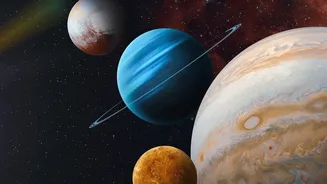
The term 'super-Earth' might conjure images of a bigger, better version of our own planet, but in astronomy, it simply refers to a planet's size and mass. These are worlds larger and more massive than Earth but smaller than our own ice giants, Neptune
and Uranus. They are a common type of planet in our galaxy, yet our solar system, curiously, has none. This makes them a fascinating mystery. Super-Earths can be rocky, gaseous, or a mix of both, and this latest discovery focuses on a rocky one, making it a prime target in the search for planets that could potentially harbour life.
How Webb 'Sees' an Atmosphere Light-Years Away
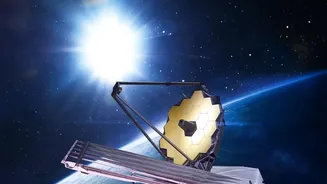
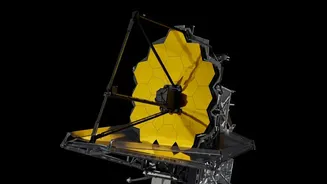
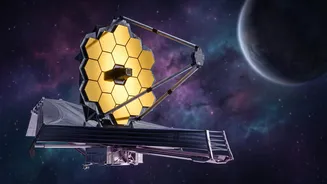
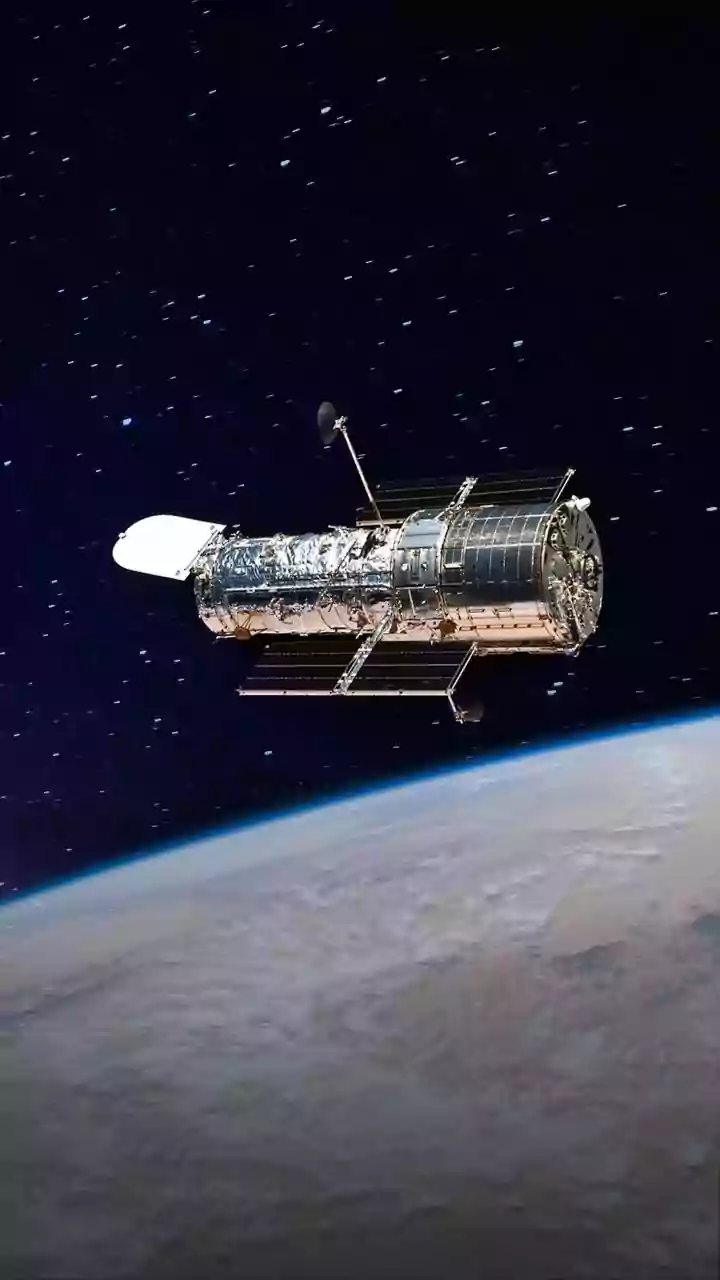
Detecting the chemical makeup of an atmosphere hundreds of light-years away sounds like science fiction, but the JWST is purpose-built for the task. The technique is called transit spectroscopy. When an exoplanet passes in front of its host star from our perspective, a tiny fraction of the starlight filters through the planet's atmosphere. Different gases and molecules absorb specific colours, or wavelengths, of this light. By analysing the starlight that reaches its sensitive instruments, the telescope can identify the 'fingerprints' of molecules like water vapour, methane, and carbon dioxide. This provides a detailed chemical menu of a distant world's sky, a feat previously impossible at this level of detail for a rocky planet.
Water Vapour: A Key Ingredient for Life
The detection of water vapour is a monumental step. Water is essential for life as we know it, so finding its chemical signature in the atmosphere of a rocky world is a critical milestone. While previous detections have been made on gas giants, finding it on a rocky super-Earth is a different game entirely. It suggests that the building blocks for a habitable environment could exist on worlds other than our own. This discovery confirms that if rocky planets are forming in these distant systems, water is available to them right from the start.
A Note of Scientific Caution
While immensely exciting, it's important to frame this discovery correctly. Finding water vapour does not mean we've found a lush water world with oceans and rivers. The planet in question may be far too hot for liquid water to exist on its surface. Astronomers are careful to note that the water signal could, in some cases, originate from cool spots on the host star itself, rather than a planetary atmosphere. More observations are needed to confirm the water is definitively part of the planet's atmosphere. Even if it is, an atmosphere needs to be constantly replenished, perhaps by volcanic activity, to survive the harsh radiation from its star. So, while this is not proof of a habitable world, it is proof of our technological ability to find one.
The Next Frontier in Planet Hunting
This discovery is more than just a single finding; it's a powerful demonstration of the JWST's capabilities. It opens a new chapter in exoplanet research. Having proven they can detect the atmosphere of a rocky world, scientists will now use the telescope to hunt for other key molecules. The goal is to build a complete profile of these atmospheres, searching for combinations of gases that might indicate biological activity — so-called 'biosignatures'. Each discovery like this one refines our understanding of how planets form and evolve. It helps scientists narrow down which of the thousands of known exoplanets are the most promising candidates in the ongoing search for life beyond Earth.