
Gathering Your Materials
Before you begin your creative journey, it's essential to gather all the necessary tools and materials. This preparation will make the entire process smoother and more enjoyable. For most projects, you'll need sharp fabric scissors, a measuring tape,
pins, and thread that matches your fabric. If you plan to sew, a sewing machine is helpful but not essential; many of these items can be hand-stitched. For no-sew options, have some strong fabric glue or iron-on hem tape ready. Of course, the stars of the show are your old drapes and sarees. Finally, you'll want some cushion inserts and any decorative embellishments you fancy, such as tassels, beads, or ribbons.
Choosing and Preparing Your Fabric
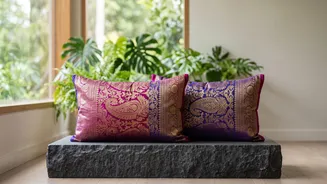
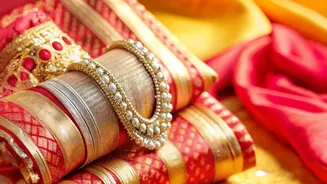
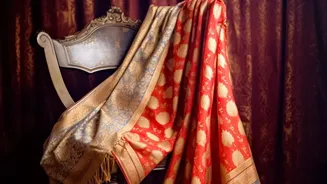
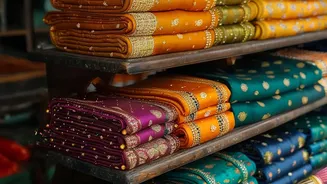
The first step is selecting the right fabric. Old silk sarees, with their rich colours and intricate 'zari' borders, are perfect for creating a luxurious, festive look. Cotton drapes or sarees offer a softer, more casual feel. Before you start cutting, it's crucial to prepare the fabric. Wash and iron the material to ensure it is clean and wrinkle-free. Carefully inspect the saree or drape for any tears or heavily worn sections. The strongest parts of the fabric should be used for items that will get more use, while more delicate, embroidered sections are perfect for decorative fronts. When working with a treasured saree, plan your cuts to make the most of beautiful 'pallus' or borders, which can become the stunning focal point of a cushion or the elegant edge of a runner.
Creating Simple Cushion Covers
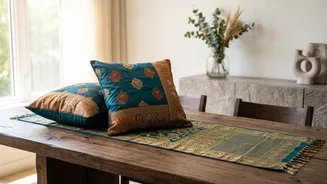
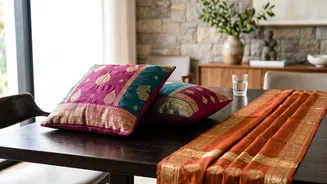
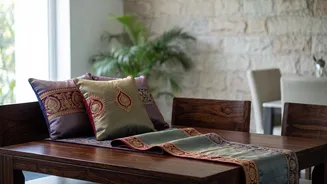
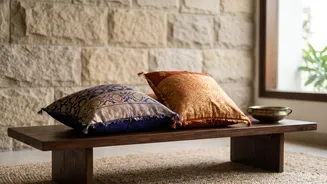
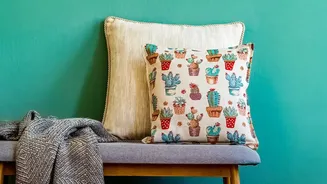
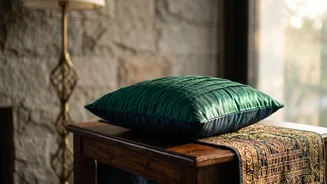
One of the easiest ways to upcycle fabric is by making envelope-style cushion covers, which don't require zippers or buttons. For a standard 16x16 inch cushion, you'll need one front piece (17x17 inches) and two back pieces (17x12 inches). Place the front piece right-side up. For the back pieces, hem one of the long edges of each piece. Then, place them right-side down on top of the front piece, overlapping them in the middle to create the envelope opening. Pin everything in place and sew around all four outer edges. Trim the corners, turn the cover right-side out, and insert your cushion. For a no-sew alternative, you can use iron-on adhesive tape along the seams instead of sewing. Simply place the tape between the fabric layers and press with a hot iron according to the package directions.
Crafting an Elegant Table Runner
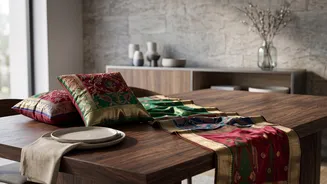
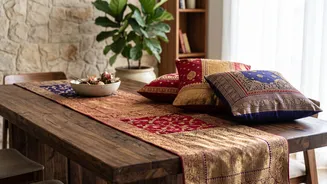
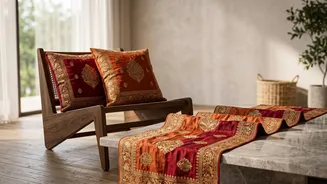
Making a table runner is even simpler. First, measure your table's length and decide how long you want your runner to be, including any overhang. Cut a strip of fabric from your old drape or saree to the desired length and width, adding about an inch on all sides for the hem. The beautiful border of a saree is perfect for the long edges of the runner. To finish the edges, you can simply fold them over twice, press with an iron, and stitch them down for a clean hem. Alternatively, use fabric glue or iron-on hem tape for a no-sew finish. For lightweight fabrics like chiffon or georgette, consider adding a plain fabric lining to give the runner more weight and durability.
Adding a Festive Finishing Touch
With your basic covers and runners complete, it’s time for the fun part: embellishment. This is where you can truly infuse a festive spirit into your creations. Adding tassels or pom-poms to the corners of cushion covers is a simple way to add a playful, decorative element. You can buy these ready-made or make them yourself from embroidery thread. If you've used a saree, its intricate border or 'pallu' might be all the decoration you need. You can also stitch on sequins, beads, or small mirrors for extra sparkle. For table runners, consider adding larger tassels to the pointed ends. Another idea is to use fabric glue to attach a contrasting ribbon or a piece of 'zari' from another fabric along the edges.