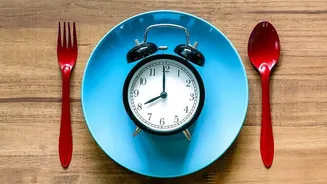







The Challenge of Night-Time Eating
Working and eating at night throws the body a curveball. Our bodies are hardwired to follow a 24-hour cycle known as the circadian rhythm. This internal clock tells us when to sleep, wake, and, importantly, when to digest food. During the day, our digestive
system is primed for action. But at night, it naturally slows down, preparing for rest. When shift workers eat late-night meals, they are essentially asking their digestive system to work overtime when it expects to be off-duty. This mismatch can lead to digestive discomfort and, over time, more significant health issues.
Your Body’s Master Clock
Think of your circadian rhythm as a master conductor for an orchestra of bodily functions. Managed by a cluster of cells in the brain, this master clock syncs with light and dark cues from the environment. However, it doesn't just control sleep. Nearly every organ, from the liver to the gut, has its own internal clock. These peripheral clocks look to the master clock—and to meal times—for their cues. When you eat at odds with your natural day-night cycle, it creates a kind of internal jet lag, confusing your metabolism and digestive processes.
The Link to Metabolic Health
This internal confusion has real metabolic consequences. Night shift work is consistently linked to an increased risk of developing metabolic syndrome, diabetes, and heart disease. A key reason is how the body handles sugar. Studies show that eating at night impairs the body's ability to process glucose, leading to higher blood sugar levels. One study found that night-shift participants who ate at night saw their glucose levels rise by over 6%, whereas a group that ate only during the day saw no significant increase. This disruption throws metabolic balance out of whack, contributing to long-term health risks.
Daylight Eating as a Powerful Fix
This is where daylight eating, a form of time-restricted eating (TRE), comes in. The strategy is simple: confine all your meals and snacks to a consistent window during daytime hours, and fast overnight. For a shift worker, "daytime" might mean the hours they are typically awake before heading into a night shift. The goal is to create a predictable daily eating window and a substantial fasting period, aligning food intake with the body's natural active phase as much as possible. Research shows this approach can help resynchronize the body's internal clocks, even when sleep schedules are unusual.
Making Daytime Eating Work for You
Adopting a daylight eating pattern doesn't have to mean fasting for your entire shift. The key is to shift the bulk of your calories to your main waking hours. A practical approach could be having a substantial, nutrient-dense meal before your night shift begins. During the shift, if you must eat, opt for small, light, and easily digestible snacks rather than a heavy meal. Things like yogurt, fruit, nuts, or a simple soup are better choices than high-fat, sugary, or heavily processed foods. The most important step is to avoid large meals in the middle of the night when your digestive system is at its slowest.