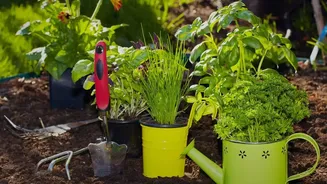







Beyond fresh produce and beautiful blooms, gardening offers a surprising wealth of mental benefits. When practiced with intention, it becomes a powerful tool for sharpening your mind and brightening your day in ways you might not expect.
1. It's a Workout for Your Attention Span
In a world of
constant digital pings and notifications, our ability to concentrate is often under siege. Mindful gardening acts as a natural counterbalance. It gently demands your full attention, pulling you into the present moment. According to the attention restoration theory, engaging with nature helps replenish our cognitive resources. Simple, focused tasks like distinguishing a weed from a seedling, checking leaves for pests, or carefully placing a seed in the soil require a gentle, 'effortless attention'. This practice helps you resist distractions, allowing your mind to enter a calmer, more focused state that can translate to other areas of your life, reducing symptoms often associated with attention-deficit issues.
2. Rhythmic Tasks Become a Form of Active Meditation
You don't need to sit cross-legged to meditate. The repetitive, physical motions of gardening—weeding, digging, watering, pruning—can induce a calming, meditative state. This is often called a 'flow state', where you become so immersed in an activity that you lose track of time and your mind quiets down. This form of active meditation reduces stress and anxiety by lowering levels of cortisol, the body's primary stress hormone. Unlike passive screen time, these rhythmic tasks engage your mind and body in a purposeful way, which helps reduce overthinking and promotes a sense of deep relaxation.
3. It Cultivates Patience and Acceptance
Gardening is a powerful teacher of patience in an impatient world. You can't force a seed to sprout or a fruit to ripen faster. This process encourages you to let go of the need for instant gratification and accept the natural rhythms of growth and decay. Tending to plants through their entire life cycle—from a fragile seedling to a flourishing plant and, eventually, its decline—provides a tangible lesson in accepting what you cannot control. This fosters resilience and a more flexible mindset, which can be incredibly helpful for managing daily frustrations and unexpected setbacks outside of the garden.
4. It Provides a Sense of Purpose and Accomplishment
The simple act of nurturing a living thing and watching it thrive can provide a profound sense of purpose and accomplishment. This is particularly beneficial for boosting self_esteem. Successfully growing a plant from seed to harvest, or reviving a wilting houseplant, provides positive feedback to the brain and releases dopamine, the 'feel_good' neurotransmitter. This cycle of care and reward builds confidence and can help counteract feelings of helplessness or low motivation, improving your overall mood and sense of effectiveness in the world.
5. Engaging Your Senses Grounds You in the Present
Mindful gardening is a full sensory experience that pulls you out of your head and into your body. The feeling of soil on your hands, the distinct smell of tomato leaves or fragrant flowers, the sound of a watering can, the sight of a vibrant petal—these sensations anchor you firmly in the here and now. This practice is a form of 'grounding', a technique used to calm anxiety by reconnecting you with the physical world. Engaging all your senses is a powerful way to interrupt loops of negative thoughts and worries, providing an immediate and effective mood boost. Some research even suggests that contact with soil microbes can increase serotonin levels, acting as a natural antidepressant.