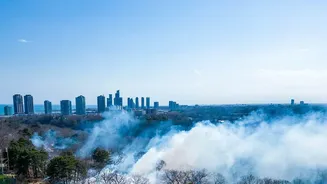








The Daily Pollution Cycle
City air isn't equally polluted throughout the day. Air quality typically follows a predictable pattern, largely driven by traffic and weather. In the early morning, before the city fully awakens, pollution levels for certain harmful particles are often
at their lowest. As morning rush hour begins, emissions from cars, buses, and trucks flood the streets, causing pollutants like particulate matter (PM2.5) and nitrogen oxides (NOx) to spike. This is often compounded by a weather phenomenon called a temperature inversion, common in the early morning. An inversion occurs when a layer of warm air traps cooler, denser air near the ground, preventing pollutants from dispersing. This lid effect means that everything emitted during the morning commute stays concentrated at street level, right where you breathe.
Know Your Pollutants
The smoggy haze you see isn't just one thing; it's a cocktail of harmful substances. The main culprits for a cyclist are PM2.5, NOx, and ground-level ozone. PM2.5 refers to fine inhalable particles so small they can penetrate deep into your lungs and enter your bloodstream, causing cardiovascular and respiratory problems. Nitrogen oxides, primarily from vehicle exhaust, can irritate your respiratory system. Ground-level ozone is a bit different. It's not directly emitted but is formed when sunlight reacts with NOx and other volatile organic compounds. Because it requires sunlight, ozone levels are lowest in the morning and peak in the hot afternoon, making it another hazard to avoid during midday exercise.
The Danger of Exercising in Smog
Exercising in polluted air is significantly more harmful than just being in it. When you work out, your breathing rate and depth increase dramatically—you might inhale up to 18 times more air per minute than when you're at rest. This means you're pulling a much larger volume of pollutants deep into your lungs. This increased exposure can lead to immediate effects like coughing, shortness of breath, and asthma attacks. Long-term, consistent exposure to high levels of pollution during exercise has been linked to impaired lung function and increased cardiovascular stress. Studies show that while the benefits of exercise are immense, its protective power can be reduced in areas with heavy air pollution.
The 'Golden Hour' for Urban Fitness
This all points to a 'golden hour' for urban exercise: the early morning. Typically, before 10 a.m., you can take advantage of a window where traffic-related pollution has not yet peaked and afternoon ozone has not had a chance to form. By getting your ride in early, you minimise your intake of harmful pollutants. Beyond cleaner air, morning cycling has its own set of proven benefits. It can kickstart your metabolism, helping you burn calories more efficiently throughout the day. It also releases endorphins, which can improve your mood, reduce stress, and leave you feeling energised and accomplished before your workday even begins. Furthermore, establishing a morning exercise routine can help regulate your body's internal clock, leading to better sleep quality.
Tips for a Smarter Morning Ride
To make the most of your morning cycle, a little planning goes a long way. Before you head out, check a reliable Air Quality Index (AQI) app to confirm that conditions are favourable. On days with particularly poor air quality forecasts, it might be wiser to opt for an indoor workout. When you do ride, try to choose routes that take you through parks or along quieter, residential streets, away from the direct line of heavy traffic. Even a small distance from a major road can significantly reduce your exposure to fresh emissions. Consistency is key, not just for fitness but for building a healthy habit that shields you from the worst of the city's air.