







Beyond the Border Basics
When thinking about a country’s trade, it's natural to assume its biggest partners are the ones next door. While neighbours like Afghanistan and Iran are part of Pakistan's commercial network, they are not the main players shaping its import landscape.
The real story of what Pakistan buys, and from whom, is written thousands of kilometres away. The country's top import partners are consistently China, the United Arab Emirates (UAE), and Saudi Arabia. This trio accounts for a massive share of the country's inbound goods, painting a clear picture of an economic strategy that prioritises strategic alliances and resource security over regional proximity. This isn't a recent shift but a long-standing pattern that has only deepened, reflecting both economic necessity and deliberate foreign policy choices that have steered the nation’s supply chains towards specific global hubs.
The Lifeline of Fuel
A significant driver of Pakistan's trade with non-border countries is its immense energy requirement. The nation is heavily dependent on imported petroleum products, crude oil, and liquefied natural gas (LNG) to power its industries and keep its economy moving. The bulk of these energy supplies comes from the Gulf states, with the UAE and Saudi Arabia serving as primary sources. This dependency is not just a line item in the trade budget; it's a cornerstone of Pakistan’s economic survival and a major factor in its foreign policy in the Middle East. These relationships ensure a steady flow of fuel, but they also create a significant vulnerability. Fluctuations in global oil prices directly impact Pakistan’s import bill, contributing to a persistent trade deficit and putting pressure on its foreign currency reserves. This energy lifeline, therefore, comes with strategic strings attached, binding Pakistan's economic health to the stability and goodwill of its Gulf partners.
The All-Weather China Connection
No country looms larger in Pakistan's import ledger than China. While the two nations share a border, the scale and nature of their trade go far beyond simple neighbourhood commerce. The China-Pakistan Economic Corridor (CPEC), a flagship project of Beijing's Belt and Road Initiative, has fundamentally reshaped this relationship. A substantial portion of Pakistan's imports from China consists of machinery, electronics, steel, and other industrial goods required to build the massive infrastructure projects under CPEC, from power plants to highways and ports. This has effectively made China the primary supplier for Pakistan's national development ambitions. While this has accelerated development, it has also deepened economic reliance. The trade balance is heavily skewed in China's favour, and the financing for many of these imports comes in the form of loans, creating long-term debt obligations that further cement the strategic alignment between the two 'all-weather friends'.
A Global Supermarket for Essentials
Beyond the giants of China and the Gulf, Pakistan's import basket is filled from a truly global supermarket, underlining its integration into complex international supply chains. A critical import, palm oil, which is essential for cooking oil production, primarily comes from distant Indonesia and Malaysia. These two Southeast Asian nations are vital partners in ensuring Pakistan's food security. Similarly, the country turns to developed economies for high-value goods. Germany and the United States, for instance, are key suppliers of advanced machinery, pharmaceutical products, and medical equipment that are not produced locally. This diverse sourcing highlights the reality of modern trade: securing essential goods often requires looking far beyond one's immediate region. It also demonstrates that while strategic partnerships with China and the Gulf dominate the headlines, a web of other crucial trade links keeps the country running.
Strategic Implications for the Region
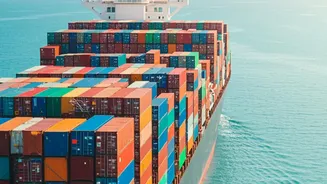
Pakistan's import patterns are not just an economic curiosity; they have profound strategic implications for South Asia. The heavy reliance on a few powerful, non-border countries for energy and industrial development shapes its foreign policy, granting its key partners significant influence. For India, this dynamic is particularly noteworthy. Pakistan's deep economic integration with China, its primary strategic rival, reinforces their geopolitical alignment and provides Pakistan with a powerful economic and diplomatic backer. Furthermore, the focus on seaborne trade from the Gulf and China, rather than land-based trade with neighbours like India, reflects the political realities of the region. The existing trade architecture shows that historical tensions and political priorities have consistently trumped the economic logic of robust intra-regional commerce. As a result, Pakistan's trade routes serve as a barometer of its strategic leanings, pointing firmly east to Beijing and west to the Middle East, rather than towards its immediate geographical neighbours.