


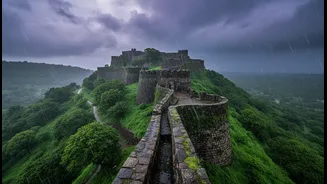


Sinhagad, Maharashtra: The Lion's Fort
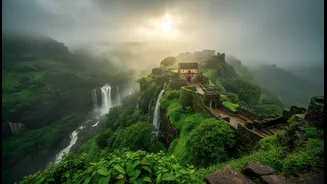
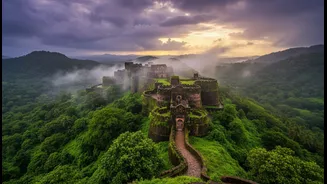
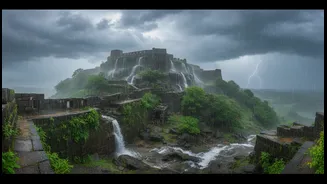
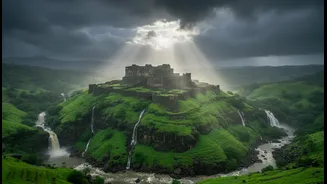
Just a short drive from Pune, Sinhagad becomes a trekker's paradise during the monsoon. The once-dry hills of the Sahyadris erupt in a carpet of impossible green, with clouds often sweeping right across the fort's historic ramparts. Originally known as
Kondhana, the fort was renamed by Chhatrapati Shivaji Maharaj in honour of his trusted general, Tanaji Malusare, who laid down his life to capture it in the legendary Battle of 1670. As you climb its stone steps, often with streams of rainwater running alongside, you can feel the echoes of its valiant past. The view from the top, a panorama of mist-filled valleys, is a reward in itself, best enjoyed with a hot cup of chai and crispy bhajis from the local stalls.
Lohagad, Maharashtra: The Iron Fort
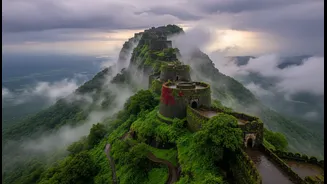
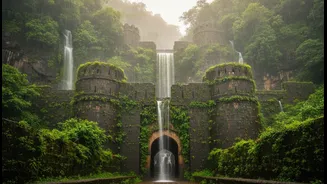
A UNESCO World Heritage site, Lohagad, or the 'Iron Fort', is another gem of the Western Ghats that truly shines in the monsoon. Its easy, well-defined trail makes it a favourite for families and beginners. During the rains, the fort's four massive gates feel even more imposing, and its cisterns fill with water, just as they were designed to centuries ago. The highlight is the Vinchu Kata, or 'Scorpion's Tail'—a long, narrow ridge that juts out from the main fort. Walking along this path with clouds swirling beneath you is an exhilarating experience. The fort's strategic location offers stunning views of the Pawna reservoir and its twin, Visapur Fort, making it a perfect blend of history and natural splendour.
Rajmachi, Maharashtra: The Twin Strongholds
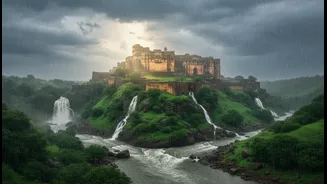
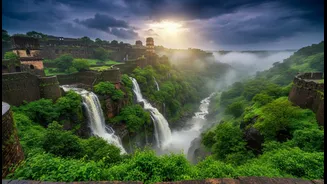
Nestled between Lonavala and Karjat, Rajmachi consists of two fortified peaks: Shrivardhan and Manaranjan. The trek to Rajmachi is an adventure in itself, with the route from Lonavala being a long, gentle walk through dense forests that become lush and alive with waterfalls during the monsoon. Historically, the fort was a strategic trade route controller. The reward for the trek is not just the historical ruins but also the stunning view of the Kataldhar waterfall, which roars to life in the rainy season. Staying overnight in the base village of Udhewadi offers a chance to experience rustic hospitality and wake up to the forts shrouded in morning mist.
Kumbhalgarh, Rajasthan: The Great Wall in Green
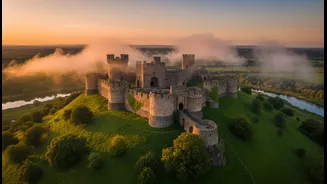
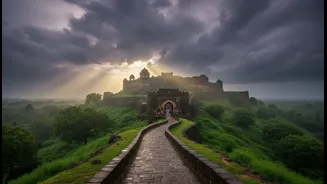
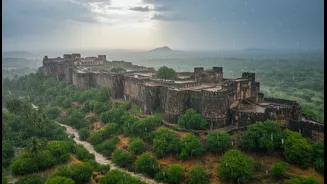
While Rajasthan is often associated with arid deserts, the monsoon transforms the Aravalli hills around Kumbhalgarh into a sea of green. This UNESCO World Heritage site, famed for its massive wall second only to the Great Wall of China, takes on an ethereal quality. The fortress, built by Rana Kumbha in the 15th century, appears to rise from the clouds. The Badal Mahal, or 'Palace of Clouds', truly lives up to its name as mist envelops its high terraces. Visiting during this season means fewer crowds and a unique opportunity to see the stark, powerful architecture contrasted against a soft, green landscape, offering a completely different perspective on the grandeur of Mewar.
Tikona, Maharashtra: The Pyramidal Peak
As its name suggests, Tikona Fort is distinguished by its triangular shape. A relatively easy trek, it's a popular choice for a quick monsoon getaway near Pune. The steps carved into the rock can become tiny rivulets of water, making the climb an exciting adventure. The fort has a rich history, having been a part of the Nizamshahi Sultanate before being captured by the Marathas. At the top, you'll find a small temple and several water cisterns. The true prize, however, is the breathtaking 360-degree view of Pawna Lake and the surrounding forts of Lohagad, Visapur, and Tung, all set against a backdrop of rain-washed skies and verdant valleys.