




Meet The New Rocket Stars
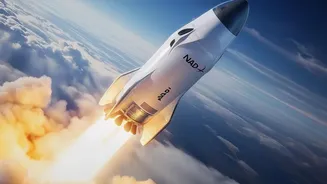
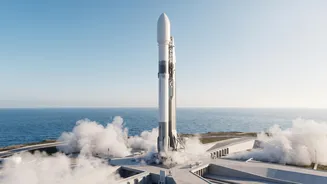
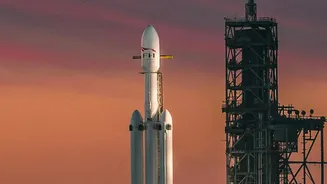
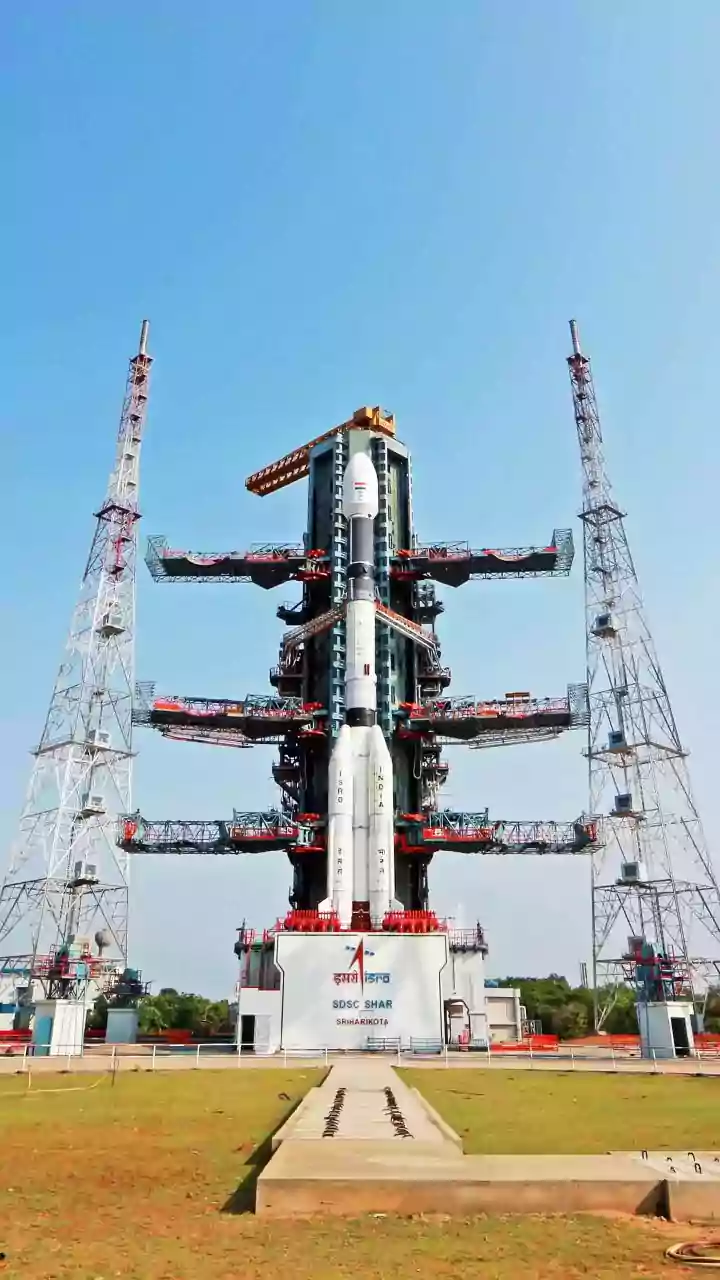
The new era of Indian spaceflight has its pioneers. Hyderabad-based Skyroot Aerospace made history in November 2022 with the launch of Vikram-S, India’s first privately developed suborbital rocket. The company followed this milestone in July 2026 by successfully
launching Vikram-1, the nation's first private orbital rocket, which placed customer payloads into orbit and made India only the third country, after the US and China, with a private orbital launch capability. Close on its heels is Agnikul Cosmos, an IIT Madras-incubated startup. In May 2024, Agnikul launched its 'Agnibaan SOrTeD' rocket, which was powered by the world's first single-piece 3D-printed engine. The launch was also significant for being India’s first from a private launchpad. These companies, along with others like Pixxel and Dhruva Space, are at the forefront of a startup boom that has seen over 400 space-tech companies register in India since the sector was opened up.
The Policy That Unlocked The Sector
This surge in private activity is no accident. It’s the direct result of a landmark policy shift. The Indian Space Policy 2023 formally opened the doors for Non-Government Entities (NGEs) to participate in end-to-end space activities. Before this, private firms were largely limited to being vendors for the Indian Space Research Organisation (ISRO). Now, they can design, build, and operate their own rockets, satellites, and ground stations. To oversee this new landscape, the government established the Indian National Space Promotion and Authorisation Centre (IN-SPACe) as an autonomous single-window agency. IN-SPACe’s role is to promote and regulate private space activities, ensuring a level playing field and streamlining the complex approval processes that were once a major barrier to entry.
ISRO’s New Role: From Monopoly to Mentor
With private players entering the fray, ISRO’s role is undergoing a fundamental transformation. Instead of handling every aspect of India’s space programme, ISRO is now transitioning to focus on advanced research and development, scientific missions, and deep space exploration. The agency is taking on the crucial role of a mentor and facilitator, sharing its decades of expertise and opening up its world-class facilities—like testing centres and launchpads—for private companies to use on a commercial basis. This symbiotic relationship allows startups to accelerate their development without having to build costly infrastructure from scratch. Meanwhile, NewSpace India Limited (NSIL), ISRO’s commercial arm, is tasked with transferring mature technologies, like the Small Satellite Launch Vehicle (SSLV), to the private sector for commercial production.
Fueling Economic Growth and Innovation
The rise of private rocketry is about more than just national pride; it’s a massive economic opportunity. India’s space economy, currently valued at around $8.4 billion, is projected to grow five-fold to over $40 billion by 2030. This growth is expected to create thousands of high-skilled jobs in engineering, manufacturing, and data analytics. Private companies are driving down the cost of launching satellites, making space more accessible for a variety of applications, from broadband communication and Earth observation to disaster management and urban planning. This competitive, innovation-driven environment is attracting significant investment and is poised to increase India’s current 2-3% share of the global space market significantly in the coming decade.
Challenges on the Final Frontier
While the trajectory is promising, India's private space sector still faces headwinds. Securing long-term funding remains a primary challenge, as developing space technology is capital-intensive. Startups must also navigate the complexities of scaling their operations from successful test flights to a regular cadence of commercial launches. Skyroot is already making strides here, having dispatched the first stage of its second Vikram-1 rocket to the launchpad just over a month after its first orbital success. Furthermore, Indian companies face stiff competition from established international players like SpaceX and Blue Origin. Sustaining momentum will require continuous innovation, a supportive regulatory environment, and the ability to prove reliability and cost-effectiveness on the global stage.