





A Pot of Liquid Gold
To call sambar a mere side dish is to do it a great injustice. It is the lifeblood of the South Indian table, a versatile, ever-present companion that gracefully accompanies breakfast, lunch, and dinner. It’s the loyal partner to fluffy idlis, the perfect
foil for a crisp vada, and the soulful gravy that transforms a simple plate of rice into a complete meal. From the grandest wedding feast to the humblest weekday dinner, sambar is the common thread, a culinary constant in a world of change. Its presence is a quiet assurance that no matter what, a comforting, nourishing meal is at hand.
The Anatomy of Perfection
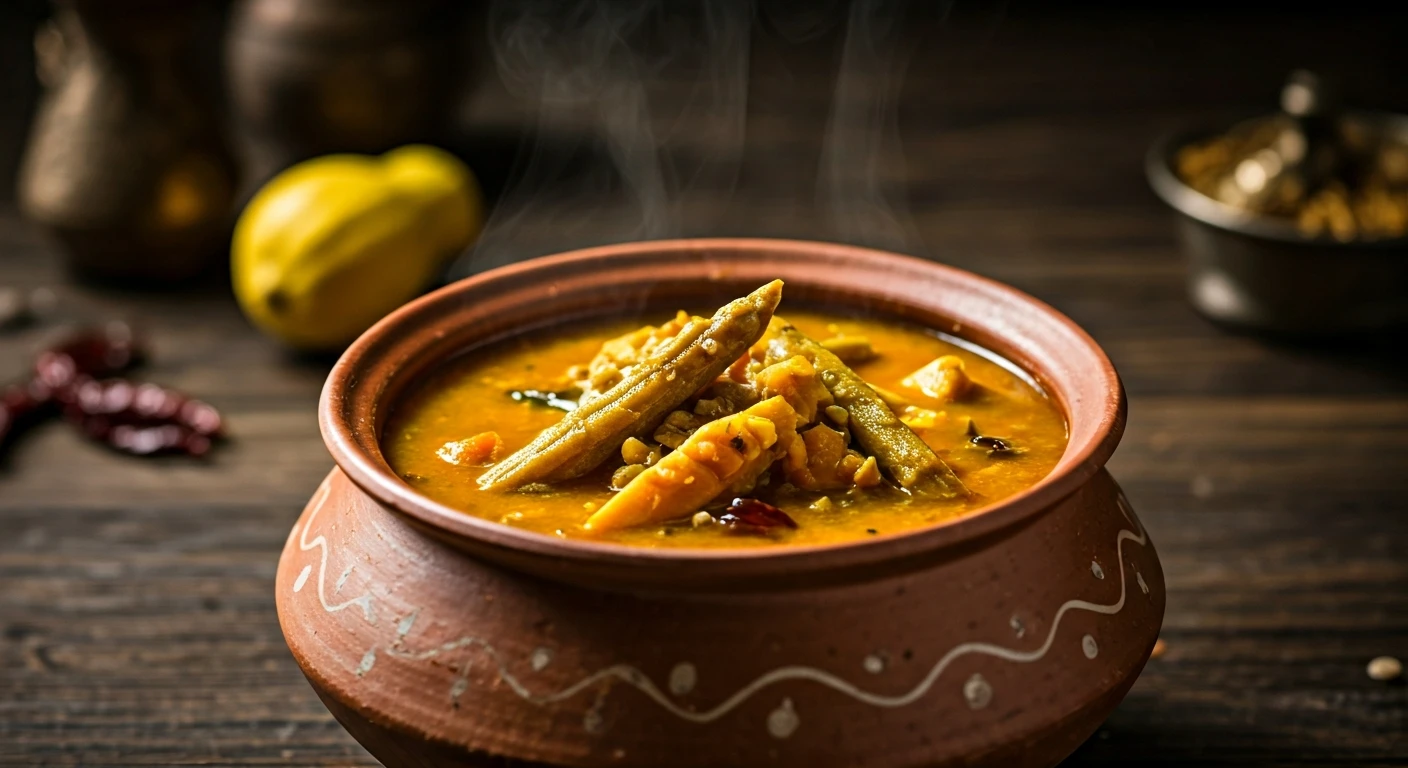
What makes sambar, well, sambar? At its heart, it’s a beautiful alchemy of a few core components. It begins with toor dal (split pigeon peas), cooked to a creamy, luscious consistency. This forms the protein-rich base. Then comes the unmistakable tang of tamarind, which cuts through the richness and brightens every spoonful. The soul of the dish, however, lies in the sambar powder—a fragrant, complex blend of roasted lentils, coriander seeds, red chillies, and other spices that varies from state to state, and even from family to family. A medley of vegetables, often including drumsticks, pumpkin, carrots, and shallots (sambar onions), adds texture, nutrition, and flavour. The final flourish, the tadka or tempering of mustard seeds, curry leaves, and asafoetida in hot ghee or oil, is the grand finale that awakens all the senses.
A Dish With Many Addresses
Sambar is not a monolith. It’s a dish with a thousand postcodes, each with its own distinct personality. The sambar you’ll find in Tamil Nadu is often sharper, with a pronounced tamarind kick. Travel to Karnataka, and you might find a version that’s subtly sweeter, thanks to a touch of jaggery and a unique spice blend known as Udupi sambar powder. In Kerala, the addition of roasted coconut can lend it a richer, thicker texture and a deeper flavour profile. The popular legend traces its origins to the kitchens of the Maratha ruler Shahuji I in Thanjavur, where an experiment to create a dish for his cousin Sambhaji resulted in this iconic lentil stew. Whether history or folklore, it speaks to the dish’s journey across regions, absorbing local tastes and ingredients along the way.
The Ultimate Comfort Food
Beyond its complex flavours and regional identities, sambar’s true power lies in its ability to comfort. It’s the taste of a mother’s care, the first thing you crave when you’re feeling under the weather, and the reliable star of countless tiffin centre menus. It’s a nutritionally balanced powerhouse, packing protein from the lentils, vitamins from the vegetables, and digestive benefits from spices like turmeric and asafoetida. In a single bowl, you get nourishment for the body and solace for the soul. It represents a culinary wisdom passed down through generations—a recipe for well-being that is both simple and profound.