




The Science of Sweat
Our bodies are brilliant at temperature regulation. When we heat up, we sweat. This perspiration then evaporates from our skin, a process that carries heat away and cools us down. It’s an efficient, natural air-conditioning system. However, this system has
a critical dependency: the air must be able to accept the moisture. In dry heat, sweat evaporates quickly, sometimes so fast we barely notice we're sweating. But when the air is already saturated with water vapour — as it is when relative humidity is high — there's nowhere for our sweat to go. Evaporation dramatically slows or stops altogether.
Why Your Wet Clothes Are Lying
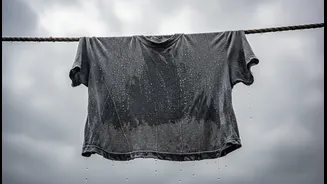
In high humidity, especially above 60%, your body continues to produce sweat in an attempt to cool down, but it can't evaporate effectively. Instead, it soaks into your clothing, leaving it damp and heavy. This is where the deception lies. We might look at our drenched t-shirt and think we haven't lost that much fluid because the fabric is still wet. In reality, the body is pumping out sweat, potentially losing one to two litres of fluid per hour during strenuous activity, but getting very little cooling benefit in return. That perpetually damp shirt isn't a sign of moderate sweating; it's a sign of inefficient cooling and continuous, unmeasured fluid loss.
The Hidden Dangers: Dehydration and Heat Illness
This masked fluid loss can quickly lead to dehydration. Thirst is not always a reliable indicator, as the body's thirst signals can be blunted in humid conditions. As you become dehydrated, your body has less fluid to produce sweat, making it even harder to cool down and raising your core temperature to dangerous levels. This can trigger a cascade of heat-related illnesses. The first signs are often muscle cramps, fatigue, and headache. If ignored, this can progress to heat exhaustion, with symptoms like dizziness, nausea, weakness, and a rapid pulse. The most severe stage is heatstroke, a life-threatening emergency where the body's temperature regulation system fails completely.
How to Truly Measure Your Hydration
Since you can't rely on your clothing, you need better ways to monitor your body's fluid status. The most reliable at-home method is checking your urine colour. A pale, lemonade-like yellow means you're well-hydrated, while dark yellow or amber is a clear sign you need to drink more fluids. Another method, particularly for athletes, is to weigh yourself before and after exercise. Any weight lost is almost entirely fluid, giving you a precise measure of how much you need to rehydrate. Most importantly, listen to your body's other signals. Unexplained fatigue, dizziness, a headache, or muscle cramps are all early warning signs of dehydration that you shouldn't ignore.
Smart Strategies for Humid Weather
Surviving and thriving in India's humid climate requires a proactive approach. Start hydrating hours before you plan to be active outdoors. During activity, drink water every 15-20 minutes, even if you don't feel thirsty. If you're sweating heavily for over an hour, you're losing electrolytes like sodium and potassium, not just water. Replenish these with a sports drink or electrolyte-rich foods like bananas and coconut water. Adjust your activities. Exercise during the cooler parts of the day, such as the early morning or late evening. Reduce the intensity of your workouts; your body is already working harder just to stay cool. Wear light-coloured, loose-fitting, and breathable clothing made from fabrics that wick moisture away from the skin, which can offer some evaporative help.