







The Impressive Headline Number
The Ministry of Finance announced that gross Goods and Services Tax (GST) revenue for July 2026 stood at a formidable ₹2,11,205 crore. This represents a significant 15.4% jump compared to the ₹1.83 lakh crore collected in the same month last year. Such
a strong, double-digit growth figure is a welcome sign, often interpreted as an indicator of sustained economic activity, better compliance, and healthy consumption. After accounting for refunds, the net GST revenue for the month was also robust, showing a 15.8% increase to ₹1.81 lakh crore. On the surface, these figures provide a dose of fiscal optimism and point towards a stable economic trajectory.
Domestic Growth vs. Import Surge
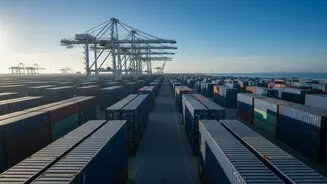
The core of the story lies in the breakdown of where this revenue came from. The data reveals a significant divergence between growth in domestic collections and growth in collections from imports. Revenue from domestic transactions (including services) saw a healthy 10.1% increase, reaching ₹1.45 lakh crore. However, this was completely overshadowed by the surge in GST collected on imported goods, which skyrocketed by 28.8% to hit ₹66,511 crore. This means that revenue from imports grew nearly three times faster than revenue from domestic economic activity. This disparity is the central question mark hanging over the otherwise positive July numbers.
What's Driving the Import GST Boom?
An increase in GST from imports isn't inherently negative; it can signal that industries are importing raw materials and capital goods for future production. However, it can also reflect other factors. A sharp rise might be driven by higher global commodity prices, such as for crude oil, which inflate the value of the import bill without a corresponding increase in volume. It could also be fueled by a rise in the import of finished goods for direct consumption, which doesn't necessarily indicate strength in the domestic manufacturing sector. Some analysts point to inflated prices for items like gold and silver and the pass-through effects of global fuel prices as significant contributors. This makes the import-led growth potentially volatile and less indicative of foundational economic strength than broad-based domestic growth would be.
A Tale of Two Economies
When GST from imports consistently outpaces domestic collections, it prompts a crucial question: Is the Indian economy being powered by what it makes and sells at home, or by what it buys from abroad? While a 10.1% growth in domestic GST is respectable, it points to a more modest expansion of internal commerce compared to the boom in imports. This pattern has been observed in previous months as well, suggesting a trend rather than a one-off event. For a truly robust and self-sufficient economic picture, policymakers and economists look for strong, synchronised growth in both domestic and import-related tax revenues, with a particular emphasis on the former as a sign of vibrant local demand and production.
What to Watch Next
While celebrating the strong headline figure is natural, the real test will be in the data for the coming months. Analysts will be closely watching to see if the growth in domestic GST collections accelerates to catch up with the pace of import-related taxes. They will also look for state-level performance, which showed an uneven picture in July. While states like Haryana, Gujarat, and Telangana showed strong growth, others saw declines, indicating that the economic recovery is not uniform across the country. The balance between these components is what truly defines the health and direction of the economy, making the revenue mix a more critical indicator than any single headline number.