






Understanding the El Niño Effect
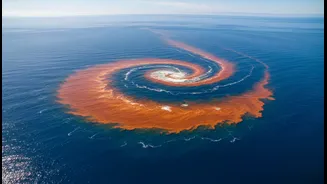
So, what exactly is El Niño? It's the warm phase of a larger phenomenon called the El Niño-Southern Oscillation (ENSO), a recurring climate pattern over the tropical Pacific Ocean. Think of it as a massive, irregular cycle where sea surface temperatures
in the central and eastern Pacific warm up significantly. This isn't just a local event; this warming of a vast patch of ocean is powerful enough to disrupt atmospheric circulation and weather patterns across the entire globe, from North America to Australia and, crucially, for India. This cycle happens every two to seven years and can last for many months, making its prediction a key focus for climate scientists worldwide.
The Monsoon's Delicate Balance
To understand how El Niño interferes, we first need to appreciate the monsoon itself. The Indian summer monsoon is essentially a giant sea breeze, driven by the temperature difference between the super-heated Indian subcontinent and the cooler Indian Ocean. This difference creates a low-pressure area over the land, which pulls in moisture-laden winds from the sea, leading to widespread rainfall. This annual weather system is the backbone of the country's agriculture, replenishes water reservoirs, and supports the livelihoods of nearly half the population. Its reliability is fundamental to India's economic and social stability.
How El Niño Disrupts the System
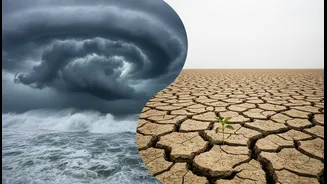
El Niño throws a spanner in these works. The unusual warming of the Pacific Ocean alters the normal flow of air in the atmosphere, known as the Walker Circulation. Typically, this circulation helps push moisture towards Asia. But during an El Niño event, the centre of warm, rising air shifts eastward, away from the Western Pacific and towards the central and eastern Pacific. This shift weakens the trade winds that would normally push moisture toward India, effectively dampening the monsoon's strength. It leads to reduced cloud formation and suppresses the development of the low-pressure systems over the Bay of Bengal that are vital for drawing in monsoon rains.
A Look at the Historical Data
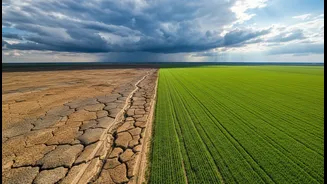
The link isn't just theoretical; it's backed by decades of data. Historically, there is a strong correlation between El Niño years and deficient monsoon rainfall in India. Several of India’s most significant drought years have coincided with strong El Niño events. However, the relationship is not one-to-one. Not every El Niño year results in a drought, and not every drought is caused by El Niño. Other factors, like the Indian Ocean Dipole (IOD)—a similar temperature variation in the Indian Ocean—can sometimes counteract El Niño's negative influence. For instance, a 'positive' IOD can help bring rain to India even during an El Niño year.
The 2026 Forecast and Its Caveats
For the current year, 2026, global meteorological agencies have confirmed that El Niño conditions are present and expected to strengthen. The India Meteorological Department (IMD) has consequently forecast a 'below-normal' monsoon for July. This has raised concerns, particularly as the initial phase of the monsoon in June already saw a significant rainfall deficit. While a developing El Niño points towards suppressed rainfall, experts caution that the final outcome also depends on its intensity and interaction with other climate drivers like the IOD, which is currently neutral. The coming weeks will be crucial in determining the monsoon's ultimate performance.
Why It Matters Beyond the Farm
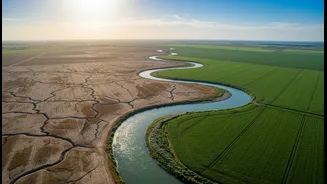
The impact of a weak monsoon extends far beyond agriculture. It directly affects rural incomes and can dampen demand for goods across the economy, from two-wheelers to fast-moving consumer goods. It threatens to push up food prices, fuelling inflation that affects every household. Furthermore, deficient rainfall can lead to drinking water shortages in cities, reduced output from hydroelectric power plants, and significant stress on water resources for industries. While recent reports suggest India's economy is becoming more resilient to monsoon variations due to structural changes and better irrigation, a severe deficit still poses a significant challenge to overall GDP growth.