





The Old Way: Expendable by Design
For most of space history, every launch vehicle was expendable, or single-use. Think of it like buying a brand new car for a single trip from Delhi to Mumbai, and then driving it into the sea at the end. For over 60 years, this was the unquestioned model.
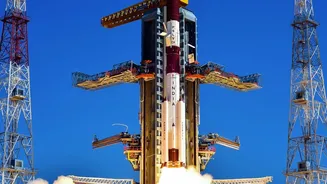
Multi-stage rockets would shed parts as they climbed, with each expensive stage—packed with sophisticated engines, fuel tanks, and electronics—burning up in the atmosphere or crashing into the ocean. This made space access incredibly expensive. The cost wasn't in the fuel, which is a tiny fraction of the total, but in the meticulously engineered hardware that was discarded every single time. Famous examples like the Saturn V that took humans to the Moon or Europe's Ariane 5 were masterpieces of engineering designed to be thrown away.
The New Way: Reusability and Propulsive Landings
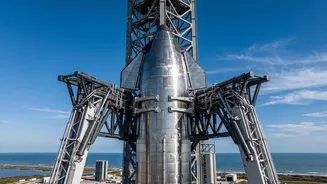
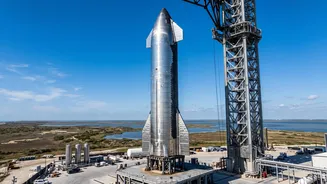
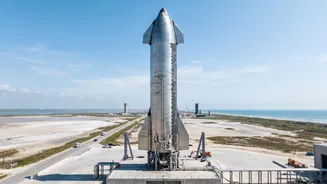
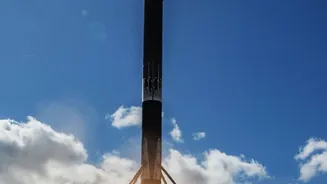
Reusable rockets turn this logic on its head. Pioneered most successfully by SpaceX with its Falcon 9 rocket, the core idea is to recover and reuse the most expensive part of the rocket: the first stage booster. Instead of being discarded, the booster separates from the upper stage, flips itself around using thrusters, and performs a series of engine burns to guide its descent. Using steerable 'grid fins' to navigate through the atmosphere, it executes a final landing burn, touching down gently on either a landing pad or an autonomous droneship in the ocean. After a flight, the recovered booster undergoes inspection, refurbishment, and is prepared for its next mission, sometimes in just a few weeks. This approach transforms the booster from a disposable piece of equipment into a piece of transport infrastructure, much like an airplane.
The All-Important Cost Equation
The primary driver behind reusability is economics. Building a new rocket for every launch is prohibitively expensive. By reusing the first stage, which can account for a huge portion of the rocket's cost, launch providers can slash prices dramatically. For example, a reusable Falcon 9 launch is priced significantly lower than a comparable expendable rocket like the ULA Atlas V. Reports suggest reusability can cut launch costs by up to 70%. This has lowered the cost to send a kilogram of payload into orbit from tens of thousands of dollars to just a few thousand. While developing reusable technology requires a higher initial investment, these costs are recouped over multiple flights. Refurbishing a landed booster costs only about 10% of the price of a new one, making the business case for reuse undeniable.
Reliability and the Environmental Question
Initially, there were concerns that reusing components could make rockets less reliable. However, the opposite has proven true. Each successful flight and landing provides valuable data, allowing engineers to inspect flight-proven hardware and make improvements, arguably increasing overall system reliability. The environmental impact is more complex. Reusability reduces the waste from manufacturing new rockets for every flight and decreases debris falling into the ocean. However, the increased launch frequency that lower costs enable could lead to a higher overall atmospheric impact from emissions. The choice of propellant—such as cleaner-burning fuels like methane versus traditional kerosene—also plays a significant role in the overall environmental footprint. The debate continues, but spreading the manufacturing impact of one rocket across dozens of launches is seen as a significant step toward sustainability.
India's Push and the Future of Spaceflight
The shift to reusability is a global one. While SpaceX and Blue Origin lead the commercial charge in the US, India's own ISRO is making significant strides. ISRO is developing its Reusable Launch Vehicle Technology Demonstrator (RLV-TD), named 'Pushpak'. Unlike the vertical-landing boosters of SpaceX, ISRO's concept is a winged vehicle that launches like a rocket but is designed to land horizontally on a runway, much like an airplane or NASA's earlier Space Shuttle. ISRO has already conducted successful landing experiments, demonstrating the autonomous technology required. By combining this advanced technology with its famously cost-effective engineering, India aims to become a major player in the global launch market. This new era, driven by reusable rockets, is enabling massive satellite constellations, plans for commercial space stations, and the ambitious goal of returning humans to the Moon and eventually reaching Mars.