








Beyond Right and Wrong Answers
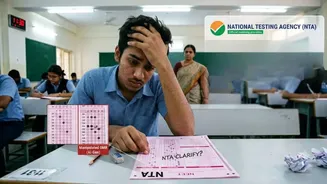
Traditional testing often feels like a final verdict on a student's ability. This type of evaluation, known as summative assessment, measures what a student has learned at the end of a unit or term. While important for grading, it often fails to provide
a crucial piece of the puzzle: the student's reasoning. A correct answer might hide a lucky guess, while a wrong one could mask a sophisticated but flawed approach. When assessment only shows the final product, teachers are left guessing about the learning gaps and misconceptions that occurred along the way. This leaves both the student and the teacher in the dark, unable to address the root cause of a struggle or truly celebrate a moment of deep understanding.
Assessment for Learning, Not Just of It
A more powerful approach is 'assessment for learning', which uses evaluation as an ongoing tool to improve teaching and learning in real-time. Often called formative assessment, this method involves frequent, low-stakes checks that monitor student progress while learning is still happening. Think of it like a chef tasting the soup while cooking, rather than only judging the final dish. The goal isn't to assign a grade, but to gather evidence of the learning process itself. This shifts the focus from a high-pressure final performance to a continuous cycle of feedback and improvement, creating a more supportive and dynamic classroom environment.
Making Student Thinking Visible
So, how does a teacher 'see' a student's thinking? It happens through intentionally designed activities that require students to explain, organize, and reflect on their thought processes. Simple techniques like 'exit tickets'—where students jot down what they learned at the end of a lesson—can reveal immediate takeaways and lingering questions. Activities like 'Think-Pair-Share' encourage students to articulate their ideas to a peer before sharing with the class, making their reasoning audible. Other strategies include asking students to draw concept maps to show connections, or using 'reasoning checkpoints' in a multi-step problem to see how they select a strategy and why. These aren't just activities; they are windows into a student's mind.
The Power of Timely Feedback
Making thinking visible is only the first step. The true power of this approach lies in the feedback that follows. When a teacher understands a student's specific misconception, they can provide targeted guidance to correct it before it becomes ingrained. This feedback is most effective when it is timely and actionable, helping students see the gap between their current understanding and the learning goal. For the student, this transforms assessment from a judgment into a guide. It helps them develop metacognition—the ability to think about their own thinking—and become active partners in their own education, able to self-monitor their progress and adjust their strategies.
A Win for Teachers and Learners
When assessment reveals reasoning, everyone benefits. Students gain confidence and a deeper sense of ownership over their learning journey. They learn to see challenges not as failures, but as opportunities for growth. Teachers, in turn, gain invaluable insights that allow them to tailor their instruction to meet the actual needs of their students. They can move beyond teaching to the middle and provide support or extension where it's needed most. This data-driven approach allows educators to make informed decisions, identify patterns of misunderstanding across the class, and ultimately foster a classroom culture where thinking is valued, shared, and refined.