








The Science of Satiety
Feeling full isn't just about having a physically full stomach; it's a complex conversation between your gut and your brain. This dialogue relies on hormones. When your stomach is empty, it produces a hormone called ghrelin, which signals hunger to your brain. As
you eat, your intestines release other hormones, like peptide YY (PYY) and glucagon-like peptide-1 (GLP-1), that tell your brain you're getting full. However, there's a crucial time delay. It takes about 20 minutes for these satiety signals to fully register in your brain. This communication lag is at the heart of why eating speed matters so much.
How Eating Speed Changes the Conversation
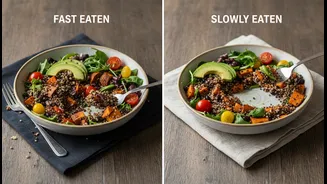
When you eat quickly, you can easily consume more food than your body needs before your brain gets the message that you're satisfied. Studies show that eating slowly allows more time for the release of these fullness hormones, enhancing the feeling of satiety. One study found that subjects who took 30 minutes to eat a meal had higher concentrations of PYY and GLP-1 compared to those who ate quickly. This doesn't mean eating fast directly causes weight gain, but it can contribute to a pattern of overeating, as you miss the subtle cues that you've had enough. Research has consistently found associations between a faster eating speed and a higher body mass index (BMI) and greater waist circumference.
Beyond the Scale: Body Composition and Habits
The focus on eating speed isn't just about managing caloric intake, but about fostering a healthier relationship with food and improving body composition. Slower eating is a cornerstone of mindful eating, an approach that emphasizes paying full attention to the experience of your meal—the tastes, textures, and your body's signals. This practice has been linked to better eating habits and a greater sense of well-being. Studies suggest that people who practice mindful eating are less prone to emotional eating and have a better awareness of their hunger and fullness cues. Over time, this heightened awareness can support better food choices and a healthier body composition, independent of a focus on weight loss itself.
Practical Tips to Slow Down Your Meals
Adopting a slower pace can feel challenging at first, but small changes can make a big difference. One of the most effective strategies is to simply set aside dedicated time for meals, ideally around 20 to 30 minutes. Turn off the TV, put away your phone, and create a distraction-free environment to help you focus on your food. Try putting your fork down between bites to create a natural pause. Chewing thoroughly is another key element; it not only slows you down but also aids in the first step of digestion. Taking sips of water throughout your meal can also help you pace yourself and improve feelings of fullness. If you're dining with others, try to match the pace of the slowest eater at the table.