
The Sun’s Ferocious Outbursts
Our modern world runs on a fragile web of technology. From the electricity that powers our homes to the satellites that provide GPS and communication, we are deeply dependent on systems that can be surprisingly vulnerable. One of the greatest threats
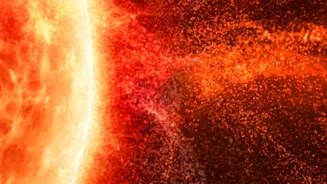
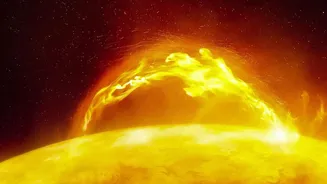
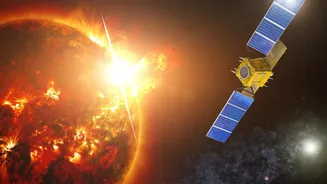
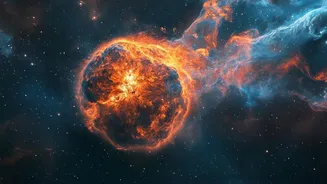
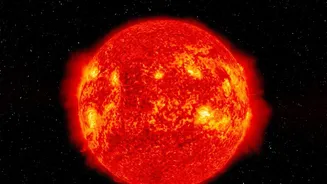
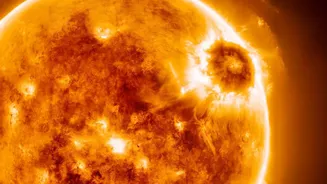
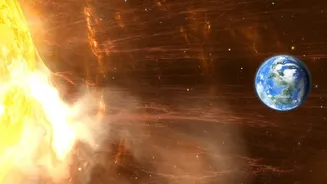
comes from 93 million miles away: our own sun. It can unleash what are known as Coronal Mass Ejections (CMEs), which are enormous expulsions of plasma and magnetic fields from its outer atmosphere, the corona. These are not small events; a single CME can eject billions of tons of material, traveling at speeds from under 250 km/s to a staggering 3000 km/s. The fastest ones can reach Earth in as little as 15 to 18 hours, carrying their own powerful magnetic fields. When an Earth-directed CME slams into our planet's magnetic shield, it can trigger a geomagnetic storm, an event with the power to cause serious disruption.
A Weather Forecast for Space
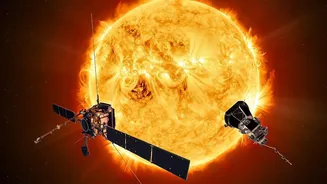
We cannot stop a CME, but we can see it coming. This is where space physics modeling becomes critical. Agencies like the U.S. National Oceanic and Atmospheric Administration (NOAA) use sophisticated computer models to predict the arrival and intensity of these solar storms. The flagship among these is the WSA-Enlil model, a complex system that acts as a space weather forecast. It works in two parts. First, the Wang-Sheeley-Arge (WSA) model uses observations of the sun's surface magnetic field to estimate the state of the solar wind near the sun. Then, the Enlil model, named after the Mesopotamian god of storms, simulates how this solar wind and any embedded CMEs will travel through the inner solar system. When satellites like the SOHO spacecraft spot a CME, forecasters input its speed, direction, and size into the model. The result is a 1-to-4-day advance warning of a potential impact on Earth, providing a crucial window to prepare.
What's at Risk on the Ground
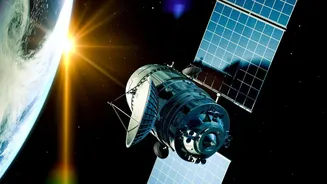
A severe geomagnetic storm isn't just an abstract scientific event; it has tangible and potentially devastating consequences. The primary threat is to our electrical power grids. Geomagnetic storms induce powerful, uncontrolled currents in long conductors like high-voltage transmission lines. These geomagnetically induced currents (GICs) can overload and damage the massive transformers that are the backbone of any grid, leading to widespread and potentially long-lasting blackouts. The 1989 blackout in Quebec, which left six million people without power for nine hours, was caused by just such a storm. Beyond power, satellites are also highly vulnerable. The charged particles can damage sensitive electronics, and the storm can increase atmospheric drag, causing satellites to lose altitude. This threatens GPS navigation, global communications, and weather forecasting services. Even pipelines can experience increased corrosion rates due to induced currents.
From Digital Warning to Physical Protection
The forecasts generated by models like WSA-Enlil are not just academic exercises; they trigger real-world actions to protect our infrastructure. Once NOAA's Space Weather Prediction Center (SWPC) issues a watch or warning, operators of critical systems spring into action. Power grid operators can take protective measures like reducing load, postponing maintenance, and adjusting their systems to better withstand the expected GICs. Satellite operators can place their spacecraft into a protective 'safe mode,' shutting down non-essential and sensitive components to ride out the storm. Airlines, which rely on high-frequency communication and are concerned about radiation exposure for crew and passengers on polar routes, can use the forecasts to reroute flights. This proactive approach, made possible by the advance warning from space physics models, is the core of our global defense against the sun's fury.