






The Legends and Their Rituals
The history of Indian cricket is filled with tales of personal rituals. The great Sachin Tendulkar, for instance, was famously known for putting on his left pad before his right one before every single match. It was a small, consistent act that became
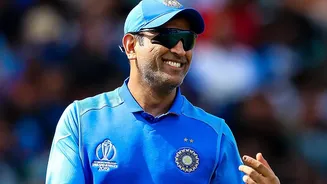
synonymous with his pre-game preparation. Following in his idol's footsteps, Yuvraj Singh also adopted the same habit. Another former captain, Sourav Ganguly, would carry a photo of his guru in his pocket for guidance and luck. More recently, Virat Kohli has spoken about his preference for batting in white shoes, which he says helps him get into his zone and feel confident. And it's not just the legends; fast bowler Zaheer Khan always kept a yellow handkerchief with him on the field, a small token he credited with some of his success. Even MS Dhoni's connection to the number 7, his birth date, is well-documented, appearing on his jersey and in major life events.
The Psychology of Superstition
So, why are these seemingly irrational behaviours so common among elite athletes? According to sports psychologists, it's all about gaining a sense of control in a high-stakes, unpredictable environment. Cricket is a game of fine margins, where a single ball can change the outcome of a match. Superstitious rituals provide a psychological anchor, a predictable routine that helps manage anxiety and build confidence. When a player performs a specific action and then succeeds, the brain can create a powerful association between the two. This ritual then becomes a mental trigger, helping the player to focus and enter a state of readiness. It’s less about magic and more about mindset; the belief that a charm or ritual works can be a self-fulfilling prophecy, boosting the player's mental state which, in turn, can enhance their physical performance.
Routine or Superstition?
There's a fine line between a healthy pre-performance routine and a potentially detrimental superstition. A routine involves controllable actions that physically and mentally prepare an athlete for competition—like specific warm-ups, visualisation exercises, or dietary habits. These actions have a direct link to performance. A superstition, on the other hand, is a belief that an object or ritual has the power to influence an outcome, even though there's no logical connection. For example, Virat Kohli's meticulous and rapid pre-batting routine—padding up, taking a quick bite, and heading to the crease without hesitation—is a picture of efficiency designed to maintain focus. However, a player who believes they will fail if they don't wear a specific pair of gloves, even if they are worn out, is relying on superstition. While helpful for providing comfort, an over-reliance on such beliefs can become a source of anxiety if the 'lucky' item is lost or the ritual is disrupted.
A Deeply Human Habit
Ultimately, the use of lucky charms and superstitions is a deeply human response to pressure. For cricketers in India, who carry the hopes of a billion people, the need for a mental comfort blanket is understandable. These rituals are not necessarily a sign of weakness or irrationality, but a practical tool for managing the immense psychological load of their profession. Whether it's Rohit Sharma's pre-match phone call to his wife, Shubman Gill carrying a red handkerchief, or R Ashwin's 'lucky' bag from the 2011 World Cup, these habits serve a purpose. They provide a moment of personal space and consistency in the whirlwind of international sport. They are a way of creating a small, controllable world when everything else feels out of their hands.