


An Old Hand and a Newcomer
In this story, there are two main characters. First is the European Space Agency’s Mars Express, a true veteran of interplanetary travel. Launched in 2003, it has been circling the Red Planet for over two decades, mapping its surface and atmosphere with
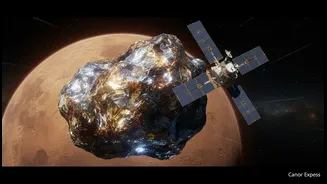
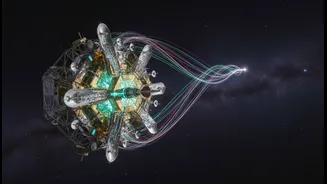
reliable precision. It’s the old hand, the one that knows the neighbourhood inside and out. The second is NASA’s Psyche, a relative newcomer on a groundbreaking quest. Launched in 2023, Psyche is headed for a destination never before visited: a metal-rich asteroid, also named Psyche, that orbits the Sun between Mars and Jupiter. Scientists believe this asteroid could be the exposed nickel-iron core of an ancient, developing planet, offering a unique window into the building blocks of worlds like our own. To get there, however, Psyche needed to make a critical pit stop.
A Gravitational Slingshot
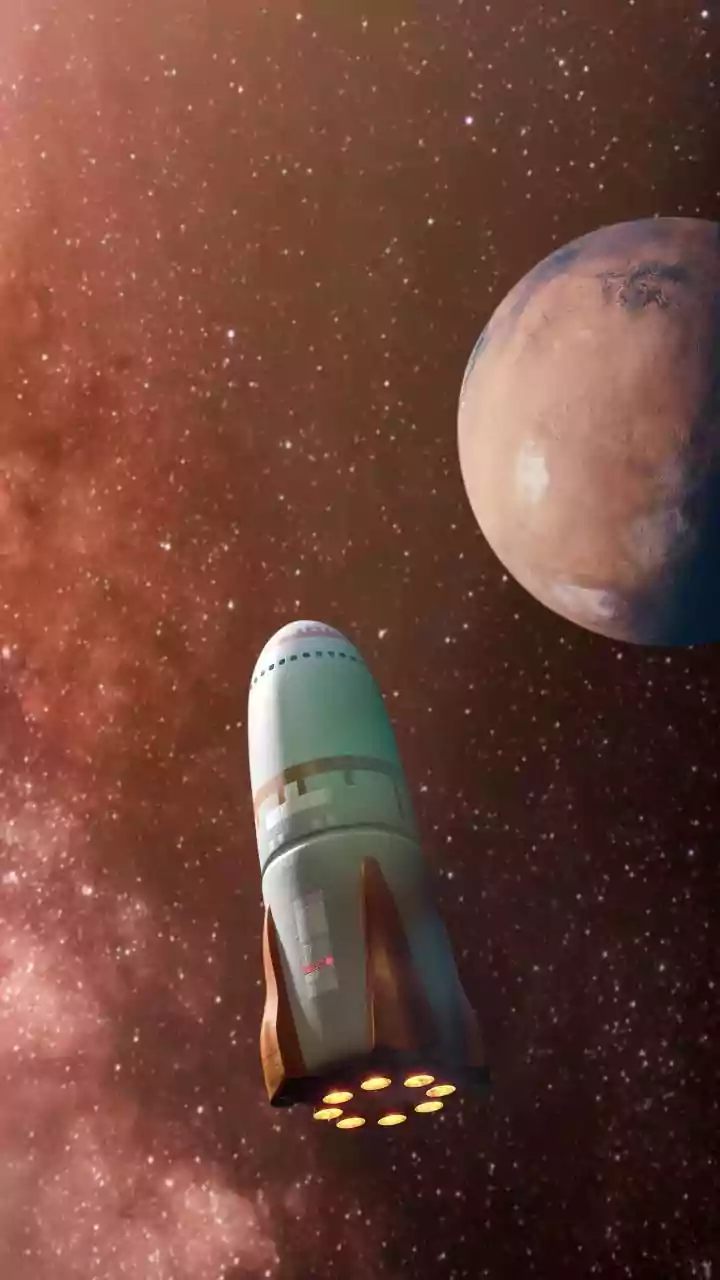
On May 15, 2026, the Psyche spacecraft executed a carefully planned flyby of Mars. This wasn't for sightseeing; it was a crucial 'gravity assist' manoeuvre. By swinging past the planet at over 19,000 kilometres per hour, the spacecraft used Mars's gravity to bend its path and gain speed, slingshotting it toward the outer Solar System. This technique is a cornerstone of modern mission design, saving precious time and, more importantly, propellant that would otherwise be needed to adjust its trajectory. Without this gravitational nudge from Mars, getting Psyche into the correct orbital plane to meet its target asteroid would be far more difficult and costly. But the flyby offered more than just a free boost; it presented a rare opportunity for a dress rehearsal.
An Interplanetary Photo Op
As Psyche prepared for its Mars encounter, the team behind Mars Express realised their orbits would align. In a beautiful display of inter-agency cooperation, teams at ESA and NASA coordinated their plans weeks in advance. They decided to have both spacecraft image the exact same patch of Martian terrain—a region in the ancient southern highlands known as Noachis Terra—at almost the same time. As Psyche flew by, it turned its multispectral imager toward the planet. Just under two hours later, Mars Express, orbiting much closer, captured the same landscape. The result was two unique portraits of the same features, taken from vastly different perspectives. Psyche was looking nearly straight down from an altitude of about 41,000 kilometres, while Mars Express was much closer at 6,000 kilometres and viewing the surface from an angle.
More Than Just a Pretty Picture
This coordinated observation was far from a simple photo opportunity. Its primary purpose was calibration. Psyche's instruments have a long journey ahead before they reach their main scientific target in 2029. The Mars flyby was the perfect chance to test them on a known subject. Mars has been studied extensively, and the data from the veteran Mars Express camera is a well-understood benchmark. By comparing the images Psyche took of Mars with the trusted data from Mars Express, scientists can fine-tune Psyche's instruments, ensuring they are working optimally when they finally arrive at the mysterious metal asteroid. It’s like a musician tuning their instrument against a known note before a big concert. This ensures that the data returned from the asteroid Psyche will be as accurate and reliable as possible.
A Blueprint for the Future
The handshake between Mars Express and Psyche is more than a feel-good story; it's a model for the future of space exploration. As we send more complex missions farther into the Solar System, the ability for spacecraft—and the agencies that run them—to work together becomes essential. Using existing assets like Mars Express to support new missions makes exploration more robust, efficient, and scientifically powerful. This event, along with other complementary observations from NASA’s fleet of Mars orbiters and rovers, demonstrates a growing ecosystem of robotic explorers that can lend each other a hand. These collaborations save money, reduce risk, and enhance the scientific return for everyone involved, proving that even millions of kilometres from home, teamwork makes the dream work.