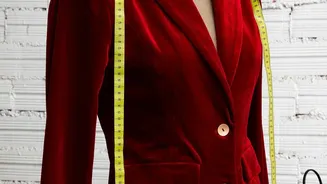







The Myth of a Standard Size
If you've ever been a size medium in one store and a large in another, you're not imagining things. There is no universal, regulated sizing standard in the fashion industry. Each brand develops its own sizing system based on its target customer and desired
fit. This leads to staggering inconsistencies. Furthermore, the phenomenon of "vanity sizing" or "size inflation" has been happening for decades. This is the practice of labeling clothes with a smaller size than their actual measurements to make shoppers feel better, a marketing tactic that can boost self-esteem and, in turn, sales. For instance, a size 14 dress from the 1930s might have had a 32-inch bust, which by the 1960s was labeled a size 8, and today could even be a size 0. This practice occurs in both menswear and womenswear, making the number on the tag an unreliable guide.
How to Measure Yourself Accurately
To shop with confidence, you need your own set of numbers. A flexible measuring tape is your best tool. Keep the tape snug but not tight, and measure over undergarments or fitted clothing for the most accurate results. For your bust, measure around the fullest part of your chest. For your waist, find your natural waistline—usually the narrowest part of your torso, typically an inch or so above your belly button. For your hips, measure around the fullest part of your seat. Finally, the inseam is measured from the crotch down to the bottom of your ankle. Keeping a 'fit kit' with these numbers on your phone or in a notebook can make online shopping significantly more successful.
Decoding the Brand's Size Chart
Once you have your measurements, the next step is to consult the specific size chart for the brand you're interested in. Never assume your size from a previous purchase, even from the same brand, as sizing can vary between different collections or styles. Look for charts that provide specific measurements in inches or centimetres rather than just general S/M/L labels. Compare your bust, waist, and hip measurements to the chart. If you fall between sizes, consider the garment's fit and fabric. For a tight-fitting item, you might size up. For a piece designed to be oversized, you might be fine with the smaller size. Also, pay attention to customer reviews, as shoppers often leave valuable feedback about whether an item runs large, small, or true to size.
Fabric and Fit Make a Difference
Your measurements are just one part of the equation. The fabric and intended cut of a garment play a massive role in how it will fit and feel. A stretchy knit fabric has a lot more give than a structured, woven material like denim or tweed. A pair of leggings and a pair of non-stretch jeans might be made for the same person, but the leggings themselves will be physically smaller to account for the stretch. The weight of the fabric, measured in grams per square metre (GSM), also affects its drape and structure; a heavier fabric creates a stiffer silhouette, while a lighter one will flow more softly. Always consider the material composition and look for clues in the product description or videos about how the garment moves and drapes.