







Your New 24/7 Study Buddy
Forget bribing a friend with coffee to run through your presentation one more time. Today’s university students are turning to a more patient, and perpetually available, practice partner: conversational voice AI. Think of tools like ChatGPT’s voice mode,
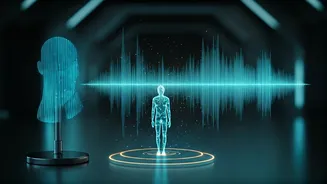
Google’s Gemini, or other language-learning apps. These aren't just text-based chatbots anymore. They can listen to you speak, respond in a natural-sounding voice, and engage in a back-and-forth dialogue. For students facing the dreaded viva voce, a panel interview, or even a basic class presentation, this technology is becoming an invaluable, low-stakes training ground.
How to Turn AI into an Examiner
The method is surprisingly simple yet effective. Students are loading their AI with specific instructions to simulate an exam environment. For instance, a law student might prompt the AI with: “You are a constitutional law professor conducting a viva for my final exam. Ask me five challenging questions about fundamental rights, and critique my answers for clarity, accuracy, and confidence.” Similarly, a management student preparing for a job interview could set the stage: “You are a hiring manager at a top consulting firm. Conduct a 15-minute behavioural interview with me. Ask me about a time I led a team and a time I failed. Give me feedback on my STAR method responses.” The AI then transforms from a general assistant into a specialised, interactive examiner, providing a mock experience that was previously hard to replicate.
The Big Advantages
The appeal is obvious. First, there's zero judgment. You can stammer, get a fact wrong, or completely blank out without the embarrassment of doing so in front of a peer or professor. This encourages repeated practice, building what experts call ‘muscle memory’ for speaking under pressure. Second, it’s available 24/7. Whether you’re a night owl cramming at 2 AM or an early bird, your AI tutor is ready. Third, it can offer instant feedback. Many users ask the AI to transcribe their answers, allowing them to spot filler words like ‘um’ and ‘ah’, analyze their sentence structure, and check the coherence of their arguments. This self-correction loop is a powerful learning tool.
The Hidden Pitfalls to Avoid
However, this new frontier isn't without its risks. The biggest danger is over-reliance. An AI can’t replicate the non-verbal cues—the subtle frown of a confused professor or the encouraging nod of an interviewer—that are crucial in real-life interactions. It lacks genuine understanding and can sometimes provide feedback that is generic or, worse, factually incorrect. Relying solely on an AI can create a false sense of security. It’s a tool for practice, not a replacement for deep subject knowledge or the nuanced feedback a human mentor can provide. Students must also be cautious about a phenomenon known as ‘prompt-polishing,’ where they spend more time perfecting their instructions to the AI than actually studying the material.
Best Practices for Smart Students
To leverage voice AI without falling into its traps, a smart strategy is key. Use it as a first-round sparring partner to build initial confidence and identify glaring weaknesses. Record your sessions and listen back to them yourself—your own ears are often the best critic. Always follow up AI practice with a session in front of a real person, even a friend, to get feedback on eye contact, body language, and presence. Treat the AI as a supplement, not a substitute. Use it to rehearse answers you've already formulated through genuine study, not to generate answers for you. The goal is to train your own brain, not the AI’s.