








Why August is Saturn's Month
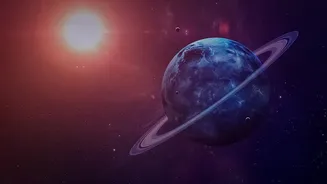
Throughout August, Saturn will be getting progressively brighter and easier to spot. This is all leading up to its 'opposition' on October 4, 2026. Opposition is a special celestial alignment that happens once a year for planets farther from the Sun than
Earth. It’s when Earth passes directly between the Sun and Saturn. Think of it as a celestial lineup: Sun-Earth-Saturn. This alignment means Saturn is at its closest point to Earth for the year, making it appear larger and more brilliant in our sky. While the official opposition is in October, the entire period from late August onwards offers prime viewing opportunities as the planet brightens steadily. In August, Saturn will be visible for most of the night, rising in the east in the evening and gliding across the sky until dawn. It's the perfect time for both seasoned astronomers and curious first-timers to turn their gaze toward this distant world.
When and Where to Look in India
Finding Saturn in August 2026 is straightforward. The planet will be in the constellation Pisces, an area of the sky that doesn't have many other bright stars, making Saturn stand out. In early August, look towards the eastern horizon from around 10:30 PM local time. As the month progresses, Saturn will rise earlier each evening. To get the best view, wait until it has climbed higher in the sky, well above any trees or buildings—ideally after 11 PM or around midnight. At this time, it will be a brilliant, steady, yellowish point of light. For the best experience, try to find a location with minimal city lights. Light pollution can wash out fainter celestial objects, but Saturn is bright enough to be seen even from urban areas, though a darker sky will always enhance the view.
What to Expect: From Naked Eye to Telescope
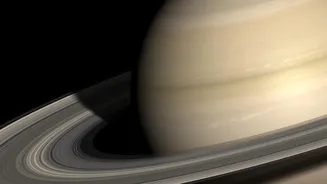
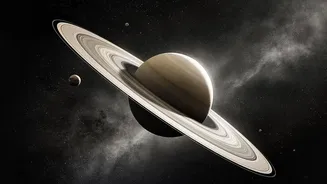
How you see Saturn depends entirely on your equipment. With just your eyes, Saturn will appear as a bright, star-like object that shines with a steady light, unlike twinkling stars. It will have a noticeable yellowish hue. If you have a decent pair of binoculars, you might be able to discern that it's not a perfect point of light but slightly elongated or oval-shaped—a hint of its famous rings. You might even spot its largest moon, Titan, which looks like a tiny star very close to the planet. However, the real spectacle is revealed through a telescope. Even a small beginner's telescope with 25x to 50x magnification can show the rings as a distinct structure separate from the planet itself. A larger amateur telescope can reveal more stunning details, like the Cassini Division, which is the prominent gap between Saturn's main A and B rings. Seeing the rings for the first time is an unforgettable experience.
Don't Miss the Perseid Meteor Shower
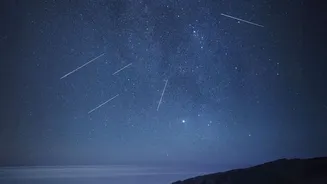
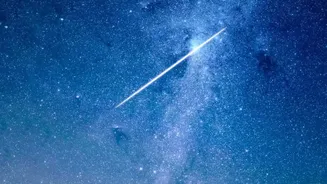
While Saturn is the headliner, August has another major celestial event: the Perseid meteor shower. This is one of the most beloved meteor showers of the year, known for producing bright and plentiful meteors. The peak is expected on the night of August 12-13, 2026. This year's shower will be especially good because the peak coincides with a new moon, meaning the skies will be exceptionally dark without any moonlight to interfere. In ideal conditions, away from city lights, you could see 50 to 100 meteors per hour. The best time to watch in India will be in the pre-dawn hours of August 12 and 13, between about 2:00 AM and 4:30 AM IST. So, while you're out looking for Saturn, be sure to take some time to watch for these spectacular shooting stars radiating from the constellation Perseus. The main challenge for viewing in India could be monsoon clouds, with clearer skies more likely in high-altitude or rain-shadow regions like Ladakh or parts of Rajasthan.