








An Unnatural Phenomenon
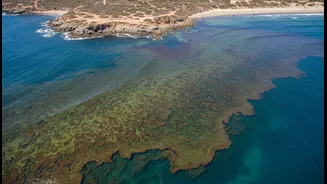
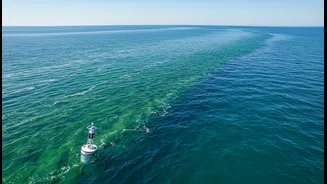
An algal bloom is a rapid increase in the population of algae in an aquatic system. While some blooms are natural and harmless, many are becoming more frequent, intense, and dangerous. These are known as Harmful Algal Blooms (HABs). They are often triggered
by a combination of factors, including nutrient pollution from agricultural runoff and untreated sewage, warming water temperatures linked to climate change, and slow-moving water. When excess nitrogen and phosphorus flood waterways, they act like a super-fertiliser for certain types of algae, allowing them to grow out of control. Some of these species produce powerful toxins that can be harmful to marine life and humans. The problem is global, with the Arabian Sea seeing a noticeable increase in HAB outbreaks over the last decade, a trend impacting India's western coast.
The Ripple Effect on Coastal Life
The impact of a massive HAB extends far beyond discoloured water. As the dense bloom covers the surface, it blocks sunlight, killing off plant life below. When the algae die and decompose, the process consumes vast amounts of oxygen, creating 'dead zones' where fish and other marine life cannot survive. This leads to mass fish kills, devastating local fishing industries. The toxins produced can accumulate in shellfish, making them unsafe for human consumption and leading to long, costly closures of commercial and recreational fisheries. For coastal communities in states like Kerala, Tamil Nadu, and Maharashtra, where fishing and aquaculture are cornerstones of the local economy, the economic losses can be profound. The effects also hit the tourism sector hard, as respiratory irritants from aerosolized toxins can make beach visits unpleasant, and the sight of dead fish washing ashore repels visitors.
The Challenge with Traditional Monitoring
For decades, monitoring for HABs has been a reactive and labour-intensive process. It has traditionally relied on reports of discoloured water from the public or fishermen, followed by manual water sampling. Scientists would then have to analyse these samples under a microscope to identify the specific algae species and determine if it is toxic. This process is slow, expensive, and provides a very limited snapshot of a rapidly evolving situation. By the time a bloom is confirmed, significant damage may have already occurred. This reactive approach leaves coastal authorities with little time to issue warnings, close beaches, or protect aquaculture farms, highlighting the urgent need for a more proactive system.
A New Era of Smart Surveillance
Fortunately, a revolution in ocean monitoring technology is underway. The new approach combines satellite imagery, artificial intelligence (AI), and a network of advanced sensors to create a powerful early-warning system. Satellites from agencies like NASA and the European Space Agency can now detect the unique colour signatures of different algae species from orbit, even through thin clouds. AI algorithms then analyse these vast datasets in near real-time to identify and track the spread of blooms with incredible speed and accuracy. This is complemented by in-water technologies like autonomous sensor-laden buoys and underwater drones that provide continuous, real-time data on water quality parameters like temperature, salinity, and nutrient levels that can signal when conditions are ripe for a bloom.
From Prediction to Actionable Intelligence
The power of this 'smarter' monitoring lies in its ability to move from reaction to prediction. By combining satellite data with hydrodynamic models that predict water currents, scientists can forecast not just where a bloom is, but where it is heading. This gives authorities the crucial lead time needed to take preventative action. For example, an early warning can allow officials to temporarily close specific shellfish harvesting areas before toxins reach dangerous levels, protecting public health and preventing broader, more damaging closures. It can alert desalination plants—a key source of freshwater in many coastal regions—to shut off intake valves before a bloom contaminates their systems. It also enables targeted public health warnings for specific beaches, minimising disruption while maximising safety.