






The Promise of Seamless Travel
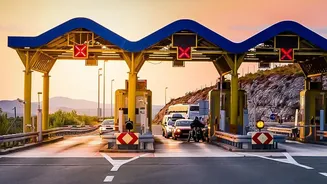
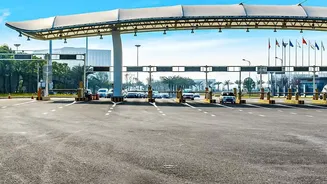
Barrier-free tolling, based on Multi-Lane Free Flow (MLFF) technology, is designed to make highway travel faster and more efficient. Instead of traditional booths, overhead gantries use a combination of Radio Frequency Identification (RFID) readers and high-resolution
Automatic Number Plate Recognition (ANPR) cameras. As your vehicle passes through at speed, the system is meant to scan your FASTag, identify your vehicle, and automatically deduct the toll from your linked wallet, all without you needing to slow down. This innovation aims to reduce congestion, save fuel, and cut down on travel time, representing a major leap in modernising India's highway infrastructure.
Why Your FASTag Might Fail
Despite the advanced technology, several common issues can lead to a failed transaction. The most frequent problem is an insufficient balance in the linked wallet; many systems will blacklist a tag if the balance falls below a minimum threshold. Another major reason is a damaged or improperly placed tag. Exposure to sun, rain, or even harsh windshield cleaning can degrade the RFID chip over time, preventing scanners from reading it correctly. However, one of the most significant and increasingly common hurdles is incomplete or outdated Know Your Customer (KYC) details, which can lead to your tag being deactivated by the issuer.
The 'One Vehicle, One FASTag' Rule
To improve efficiency and prevent misuse, the National Highways Authority of India (NHAI) now strictly enforces the 'One Vehicle, One FASTag' initiative. This rule mandates that each vehicle can have only one active FASTag. If you have multiple tags linked to a single vehicle registration number, all older tags will be automatically deactivated, leaving only the most recently issued one active. This policy was introduced to tackle issues like using one tag for multiple cars, which caused financial mismatches and delays at toll plazas. It also ensures that every active tag is linked to a verified vehicle and owner, aligning with RBI norms.
How to Check Your FASTag Status
Before you head out, a quick health check of your FASTag can save you a lot of trouble. You can check your tag's status through the official portal of your FASTag issuer, which could be a bank or a dedicated provider like IHMCL. Simply log in with your registered mobile number. Navigate to the 'My Profile' or a similar section, where your KYC status will be displayed as 'Active', 'Pending', or 'Incomplete'. This dashboard will also show your current balance, allowing you to ensure you have sufficient funds for your trip. If the status is anything other than active, you need to take action to avoid issues at the toll plaza.
Updating Your FASTag KYC Details
If your KYC is incomplete, updating it is a straightforward process. For FASTags issued by NHAI, you can log into the IHMCL portal (fastag.ihmcl.com), go to the 'My Profile' section, and click on the 'KYC' tab to upload your documents. For bank-issued FASTags, you can log into your bank's net banking portal or mobile app, find the FASTag section, and follow the instructions to update your KYC. You will typically need to provide your Vehicle Registration Certificate (RC), a passport-sized photograph, and a valid ID and address proof like an Aadhaar or PAN card. The process is usually completed within a few working days.
Avoiding Penalties and Delays
A non-functional FASTag doesn't just cause delays; it can also be expensive. According to National Highways Fee Rules, if you enter a FASTag lane with an invalid or zero-balance tag and pay in cash, you are liable to be charged double the applicable toll fee. While recent rules have introduced an option to pay 1.25 times the toll via UPI in some cases, this is still an unnecessary extra cost. Taking a few minutes to confirm your FASTag balance and KYC status is a small investment that ensures you can take full advantage of the speed and convenience of barrier-free tolling, keeping your journey smooth and penalty-free.