




The Plastic Problem We Can't Ignore
India's battle with plastic waste is visible on every street corner and shoreline. The rise of food delivery and e-commerce has only intensified the problem, adding mountains of single-use containers, films, and cutlery to our already strained landfills.
In response, the Indian government has taken significant steps, implementing a ban on 19 single-use plastic items since July 2022, including cutlery, straws, and wrapping films. Regulations have also tightened on the thickness of plastic bags to encourage reuse. These measures have created an urgent and massive market opportunity for sustainable alternatives. While paper and corn-based bioplastics have emerged, they come with their own challenges, from deforestation to competition with food crops. This has pushed innovators to look for a better, more holistic solution—one they found in the ocean.
An Unlikely Hero: How Algae Becomes Packaging
At first glance, seaweed seems an improbable replacement for plastic. But this abundant marine plant is a powerhouse of natural polymers. The process is surprisingly straightforward: specific types of seaweed are harvested, dried, and ground into a powder. This powder is then processed to extract its natural polymers—like alginate and carrageenan—which are transformed into a gel-like substance. This biopolymer slurry can then be cast into flexible films, coated onto paper to make it grease-proof, or moulded into solid forms like trays and cups. The final products are not only biodegradable but often home-compostable, breaking down in weeks without leaving behind harmful microplastics. Unlike land-based crops, seaweed requires no freshwater, pesticides, or fertile land to grow. It also absorbs significant amounts of carbon dioxide during its rapid growth, making it a climate-positive resource.
Meet India's Algae Innovators
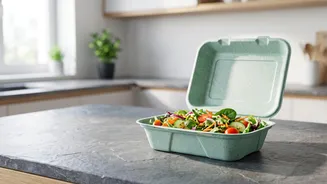
Several Indian startups are at the forefront of this green revolution. Zerocircle, founded by Neha Jain, is making waves by creating fully biodegradable and ocean-safe packaging from seaweed. The company works on a business-to-business model, supplying its materials to brands looking to ditch plastic. They've already partnered with companies like food delivery giant Zomato to introduce plastic-free takeaway containers. Zerocircle's materials are designed to run on existing plastic and paper manufacturing machinery, making the switch easier for large-scale producers. Another key player is the Bangalore-based Sea6 Energy. Founded in 2010 out of IIT Madras, the company is a pioneer in large-scale mechanised ocean farming. While its initial focus was on agricultural products, Sea6 has developed compostable films, grease-proof coatings for paper, and bioplastic straws from seaweed, aiming to tackle the single-use plastic crisis head-on. Pune-based Go Do Good also incorporates seaweed alongside agro-waste to create eco-friendly products like bubble wrap and inks.
The Hurdles on the Path to Scale
Despite its immense potential, algae-based packaging faces significant challenges. The most immediate hurdle is cost. Currently, these sustainable alternatives can be more expensive than their petroleum-based counterparts. Zerocircle, for instance, notes its product is at a premium, though it expects to reduce costs as it scales. Ensuring performance is another issue. While great for many applications, some early algae-based materials struggle with moisture and heat resistance, which is critical for packaging hot or liquid foods. Finally, there's the question of scale. To replace even a fraction of the millions of tonnes of plastic used annually, seaweed cultivation and processing must become vastly more efficient. Companies like Sea6 Energy are tackling this directly by developing mechanized 'sea combines' to automate farming and harvesting. Securing investment and creating a robust supply chain by empowering coastal farming communities are crucial next steps for these startups.