



A New Ecosystem Takes Flight
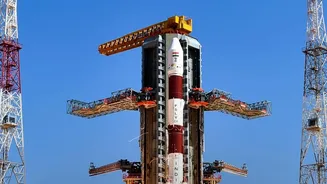
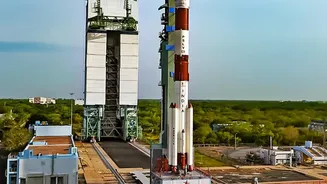
The dramatic rise of India's private space industry is no accident. It's the result of a deliberate policy shift to open the sector, which was once the exclusive domain of the Indian Space Research Organisation (ISRO). The establishment of the Indian National
Space Promotion and Authorisation Centre (IN-SPACe) in 2020 was a pivotal moment. IN-SPACe acts as a single-window agency, helping private companies gain access to ISRO's facilities, expertise, and technologies, while also authorising their missions. This has created a fertile ground for entrepreneurs, attracting significant private investment and enabling a diverse ecosystem to form. These startups are not just launching businesses; they are building the pillars of India's future multi-billion dollar space economy.
The Rocket Builders: India's Private Launchers
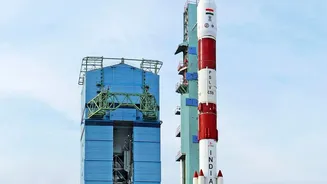
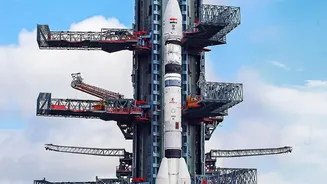
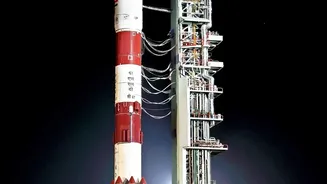
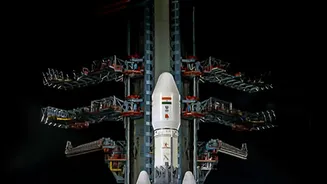
A critical piece of the space puzzle is launch capability. Several startups are racing to build India's first privately developed orbital rockets. Hyderabad-based Skyroot Aerospace made history in November 2022 with the launch of Vikram-S, the country's first private suborbital rocket. The company has since developed Vikram-1, an orbital vehicle designed for the small satellite market which successfully launched in July 2026. Meanwhile, Chennai's Agnikul Cosmos is pioneering a different approach with its Agnibaan rocket. A key innovation is the Agnilet engine, the world's first single-piece, 3D-printed semi-cryogenic rocket engine. After a successful suborbital test in May 2024, Agnikul aims to provide an affordable, on-demand launch service for small satellites up to 100 kg.
Satellite Makers: From Buses to Constellations
Beyond just getting to space, companies are building the hardware that operates in it. Dhruva Space, based in Hyderabad, offers full-stack space engineering solutions. The company has developed a portfolio of modular satellite platforms, from tiny CubeSats to larger MicroSats, which can be adapted for various commercial, scientific, and defence missions. They provide everything from the basic satellite structure (the bus) to launch integration and ground station services. This 'one-stop-shop' approach allows customers to focus on their payload, whether it's for communications or Earth observation, while Dhruva handles the complex engineering of building and operating the satellite itself.
The Component Experts: Propulsion and Subsystems
A deep space ecosystem requires specialists that build critical components. Bengaluru-based Bellatrix Aerospace is a leader in in-space propulsion. The company develops a range of advanced thrusters, including electric and environmentally friendly 'green' propulsion systems. These thrusters are vital for satellites to manoeuvre in orbit, adjust their position, maintain their altitude, and eventually deorbit safely. By creating efficient and diverse propulsion solutions, from Hall-effect thrusters to orbital transfer vehicles, Bellatrix is providing the 'engines' that give satellites mobility and extend their operational life in space.
Harnessing Data: The View from Above
Perhaps the most impactful area is the downstream sector, where companies use satellite data to solve problems on Earth. Bengaluru's Pixxel is at the forefront of this revolution. The company is building a constellation of hyperspectral imaging satellites. Unlike standard cameras that see in red, green, and blue, hyperspectral sensors capture information across hundreds of bands of light, revealing details invisible to the naked eye. This technology can monitor planetary health by detecting crop diseases, identifying mineral deposits, tracking pollution, and assessing forest health with incredible precision. With its 'Fireflies' satellite constellation launched and operational, Pixxel provides AI-powered analytics to industries like agriculture, mining, and environmental management.