
A New Window on the Universe
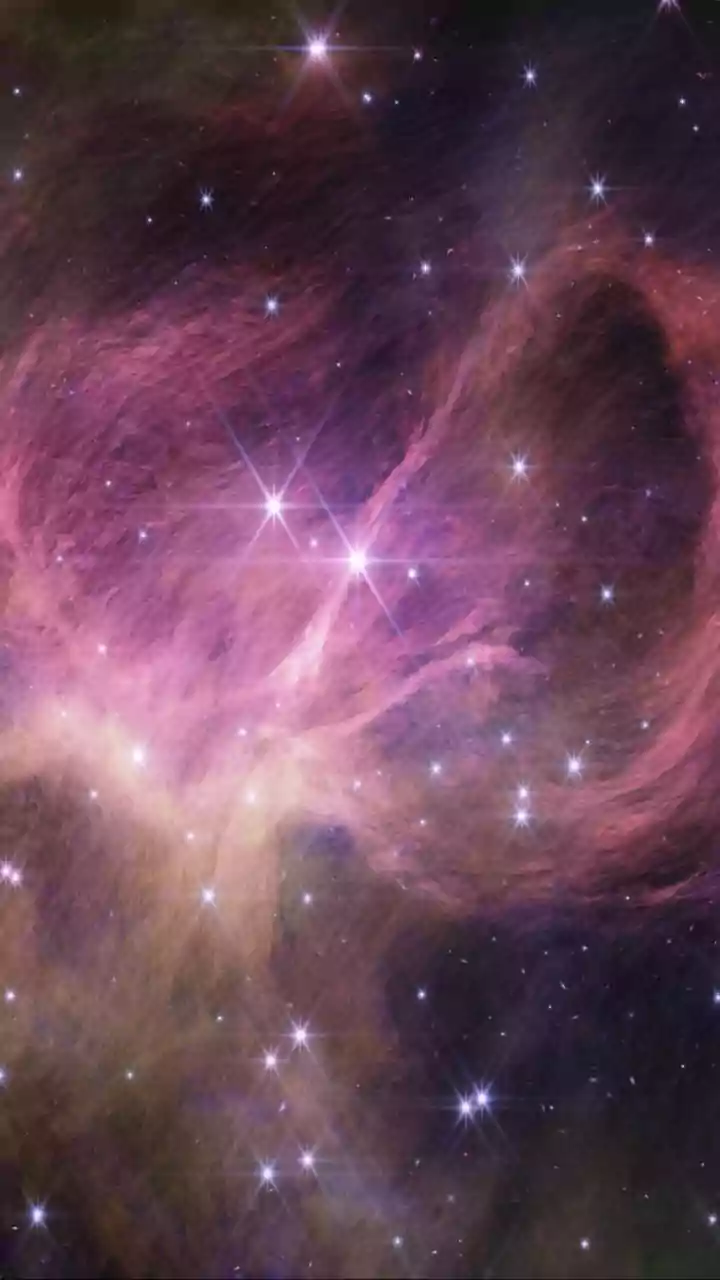
The latest chapter in astronomy is being written by instruments like the James Webb Space Telescope (JWST). Unlike its famous predecessor, Hubble, which primarily sees visible light, JWST is designed to capture infrared light. This is a game-changer for
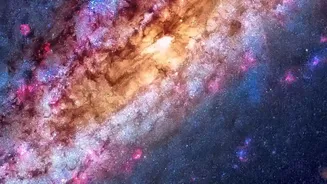
two reasons. First, as the universe expands, light from the most distant objects gets stretched into longer, redder wavelengths, eventually shifting into the infrared spectrum. To see the universe's first moments, we need infrared eyes. Second, infrared light can pierce through the dense clouds of cosmic gas and dust that hide the birth of stars and galaxies, regions that are opaque to visible light telescopes. This gives us an unprecedented, unclouded view of stellar nurseries and galactic cores.
The Puzzle of 'Impossible' Early Galaxies
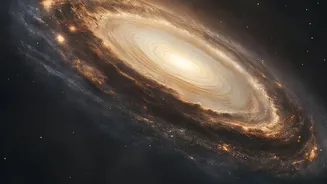
Before JWST, our theories of cosmic evolution were well-established. They predicted that the first galaxies, formed a few hundred million years after the Big Bang, would be small, chaotic, and still getting their act together. But when the first images from JWST came back in 2022, astronomers were stunned. The telescope revealed galaxies that were far brighter, larger, and more structured than models said should exist so early in the universe's history. Objects like 'Maisie's Galaxy' and JADES-GS-z14-0 appeared shockingly mature, suggesting they formed much faster and more efficiently than anyone predicted. These findings created a wonderful problem: the story of the early universe needed a rewrite.
Rewriting the Cosmic Storybook
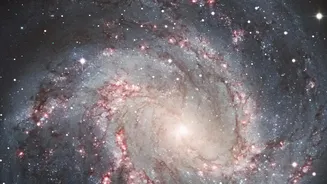
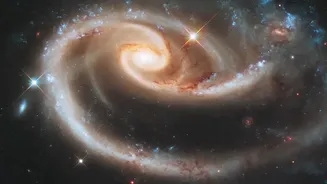
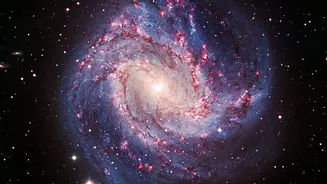
The data from JWST is forcing scientists to fundamentally rethink their models. The existence of massive galaxies so early on suggests that star formation may have been far more vigorous and efficient in the infant cosmos. Some findings indicate that early galaxies were converting nearly all of their available gas into stars, a rate far higher than the 10% typically seen today. Another major discovery concerns the structure of galaxies. For the first time, scientists have been able to distinguish between 'thin' and 'thick' galactic disks in galaxies from 10 billion years ago. The observations show that galaxies first formed chaotic, thick disks of older stars and only later developed the calm, thin disks—where younger stars like our Sun reside—that are common in modern spiral galaxies like our own Milky Way.
More Than Just Pretty Pictures
While visually stunning, these images are incredibly rich datasets. Astronomers don't just look at the pictures; they analyze the light itself using a technique called spectroscopy. By splitting a galaxy's light into its component colors, scientists can read its chemical signature. This allows them to measure a galaxy's distance, age, and composition. For instance, recent JWST analysis of 'teenage' galaxies found they had surprising chemical makeups, with widely varying oxygen levels but low amounts of sulfur and argon. This points to a different type of stellar life cycle than seen in our local universe, indicating these early systems were chemically 'immature' and still had a lot of growing up to do. These details are crucial pieces of the puzzle, helping us build a more accurate timeline of cosmic evolution.