

A Sweet Offering for Janmashtami
Krishna Janmashtami, which will be celebrated on September 4, 2026, marks the divine birth of Lord Krishna, the eighth avatar of Vishnu. It's a festival of joy, devotion, and, of course, food. A central tradition is the preparation of 'bhog'—a food offering
made to the deity with love, which is later shared as prasad. Milk-based sweets are particularly significant, rooted in stories of Krishna's childhood in Vrindavan, where he was known for his love of milk, butter, and curd. Among the many sweets prepared, the peda holds a special place. It is believed to be one of Krishna's favourite sweets, making it an essential offering during the festival.
The Legacy of Mathura Peda
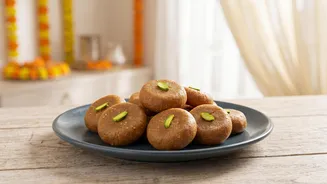
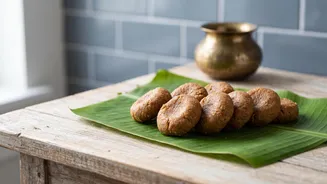
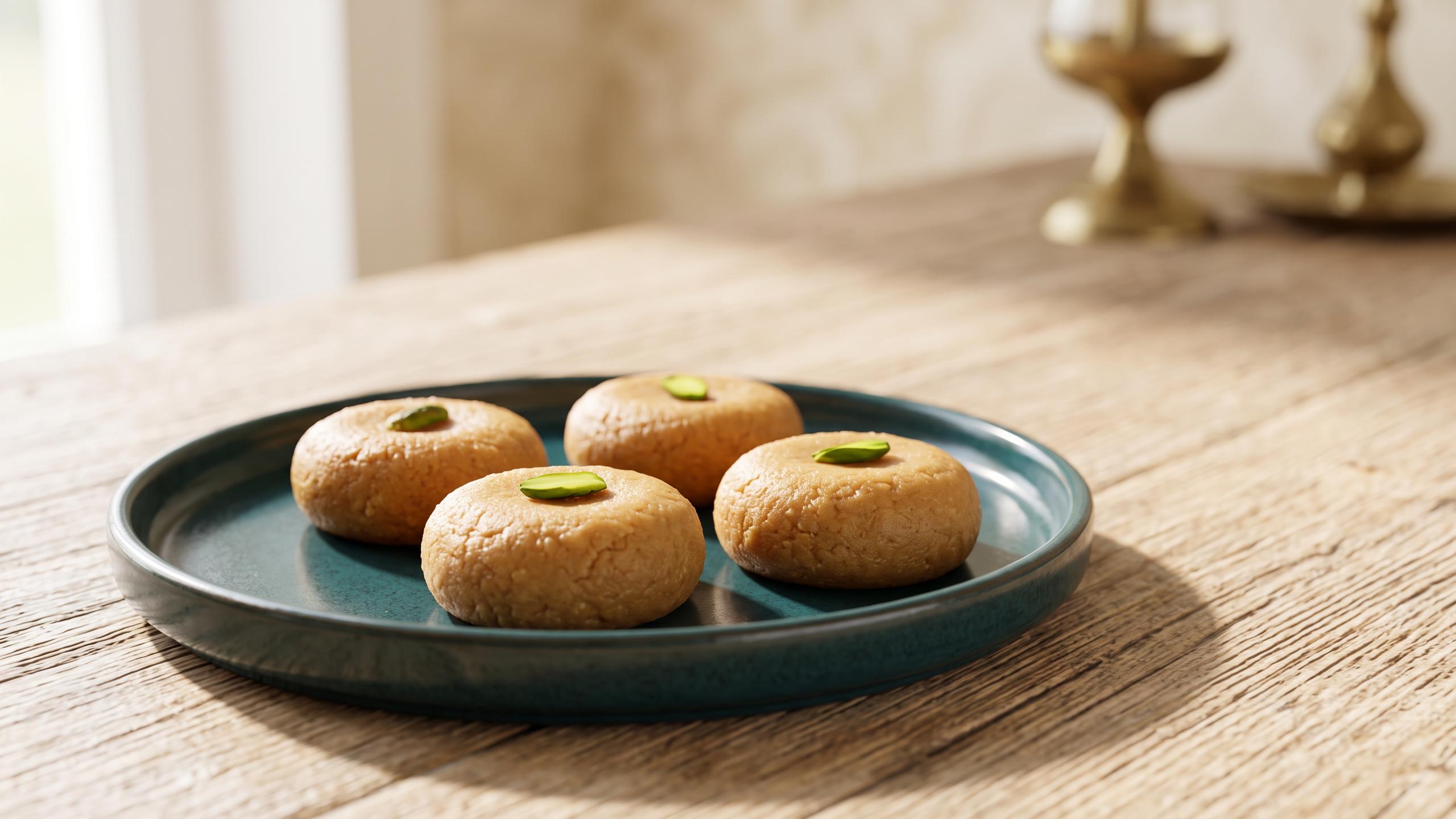
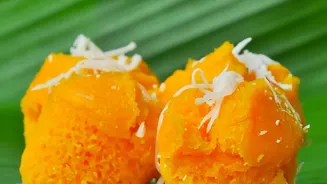
While peda is enjoyed across India, the variety from Mathura, Krishna's birthplace, is iconic. What sets Mathura Peda apart is its unique texture and flavour. Unlike its paler cousins, Mathura Peda has a distinctive brownish colour and a slightly grainy, melt-in-the-mouth consistency. This comes from the process of slow-roasting 'khoya' (milk solids) until it caramelises, developing a deep, nutty, and irresistible flavour. This sweet isn't just a dessert; it's a taste of tradition, deeply connected to the temples and cultural heritage of the holy city of Mathura. Making it at home is a rewarding way to connect with the spirit of the festival.
Gather Your Ingredients
Making authentic Mathura Peda requires just a few key ingredients. For the best flavour and texture, try to source high-quality components. Here is what you will need: Khoya (Mawa): 250 grams, preferably the 'danedar' (grainy) variety. If using a block, make sure to grate it evenly. Tagar (Bura Sugar): 100 to 125 grams, or to taste. This special form of sugar is less fine than icing sugar and gives the peda its signature texture. If unavailable, you can use powdered sugar, but tagar is recommended for authenticity. Ghee: 2-3 tablespoons. Cardamom Powder: ½ teaspoon, from freshly ground pods for the best aroma. Milk: 1-2 tablespoons, if needed to bind the mixture. Extra Tagar or Powdered Sugar: For coating the finished pedas.
The Method: Step by Step
Follow these steps carefully to create perfect Mathura Pedas in your own kitchen. 1. Roast the Khoya: Crumble or grate the khoya. In a heavy-bottomed pan or kadai, add one tablespoon of ghee and the khoya. On a low to medium flame, begin to roast the khoya, stirring continuously to prevent it from sticking or burning. 2. Achieve the Golden-Brown Colour: This is the most crucial step and requires patience. Continue roasting the khoya for 25-30 minutes. It will first melt, then become pasty, and finally, it will start to dry out and turn a deep golden-brown colour, releasing a rich aroma. 3. Cool the Mixture: Once the khoya is well-roasted and has a crumbly texture, turn off the heat and transfer it to a separate plate or bowl. Spread it out to help it cool down completely. It must be at room temperature before you add the sugar, or the sugar will melt and ruin the texture. 4. Combine and Flavour: When the roasted khoya is cool to the touch, add the tagar (bura sugar) and cardamom powder. Mix everything thoroughly with your hands, breaking up any large lumps. The mixture should feel like coarse, sandy crumbs. If it feels too dry to shape, add a teaspoon or two of milk, but be careful not to make it moist. 5. Shape the Pedas: Take small portions of the mixture and press them firmly between your palms, shaping them into small, round, slightly flattened discs. The heat from your hands will help bind the peda. 6. Coat and Serve: Roll each freshly shaped peda in the extra tagar or powdered sugar for the classic finish. Your homemade Mathura Pedas are now ready to be offered as bhog or enjoyed by your family.
Tips for Perfect Pedas
To ensure your pedas turn out just right, keep these pointers in mind. Use a heavy-bottomed pan to prevent the khoya from burning and ensure even cooking. Continuous stirring is non-negotiable; do not leave the khoya unattended while roasting. The colour is key—don't rush the roasting process, as the deep brown hue is what defines Mathura Peda. Finally, always let the khoya cool completely before adding sugar. This prevents the sugar from melting and ensures the peda has its characteristic grainy texture. Store the pedas in an airtight container; they stay fresh for up to a week at room temperature.