




What Exactly Is Physical AI?
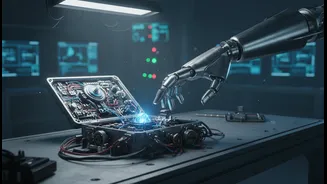
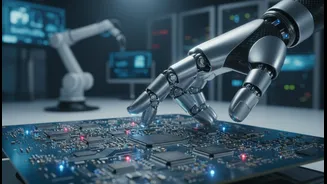
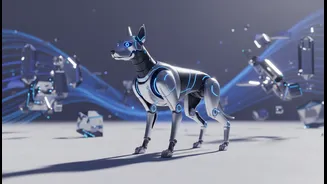
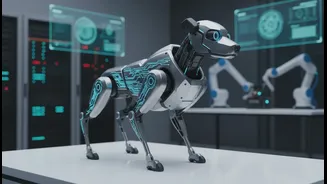
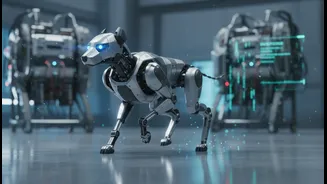
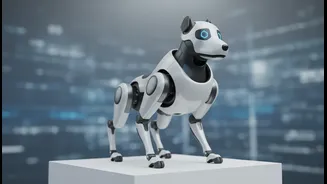
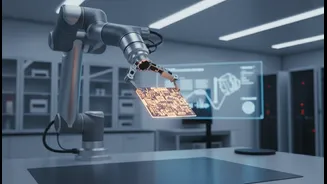
At its core, Physical AI refers to artificial intelligence that can perceive, reason about, and physically interact with the real world through a body, usually a robot. Unlike the AI in chatbots like ChatGPT, which exists purely in the digital realm,
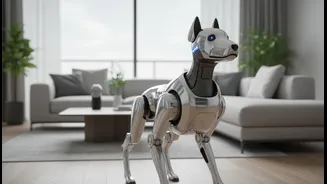
Physical AI gives intelligence a physical form. This is also called “embodied AI.” The goal is to move beyond robots that just repeat pre-programmed tasks in a cage, towards autonomous systems that can adapt to changing conditions and navigate spaces designed for humans. Companies like Boston Dynamics, Figure AI, and Tesla are at the forefront, developing humanoid robots they claim will one day handle everything from factory work to household chores.
The Grand Promises
The vision sold by proponents is transformative. We hear claims of humanoid robots addressing global labor shortages, taking over dangerous and repetitive jobs in manufacturing and logistics, and eventually assisting in our homes. Companies like Boston Dynamics are now producing their Atlas robot for industrial use, with plans to build tens of thousands of units a year. Figure AI has deployed its robots in a BMW manufacturing plant and recently signed a deal for a major distribution center. Meanwhile, Tesla’s Elon Musk suggests the market for his Optimus robot could be astronomical, with the robot eventually able to do “anything that humans don’t want to do.” These are not just science fiction dreams; they are business plans backed by billions in investment.
The Hard Reality of the Physical World
Despite the impressive videos, the gap between a controlled demo and reliable, real-world performance is enormous. The physical world is messy and unpredictable. Lighting changes, objects have different weights and textures, and floors aren't always perfectly flat—all things humans handle subconsciously but are immense challenges for a robot. This is known as the “sim-to-real gap,” where skills learned in a perfect simulation often fail in reality. Furthermore, fundamental hardware limitations remain. Battery life is a major constraint, with many robots only able to operate for a few hours at a time. The cost is also a huge barrier, with manufacturing costs for a single humanoid robot estimated to be anywhere from $30,000 to $150,000. Safety is another paramount concern; a robot performing thousands of actions a day needs near-perfect reliability to operate safely around people.
The 'Intelligence' in the Machine
A key challenge is the difference between performing a demonstrated task and true generalization. Many of the most impressive demos still involve a human operator controlling the robot (teleoperation) or tasks in highly structured, predictable environments. A robot that can sort specific blocks in a lab may be completely lost in a cluttered bedroom. The AI models that power these robots, often called vision-language-action (VLA) models, are a major breakthrough, allowing them to connect language commands to physical actions. However, they require massive amounts of data from real-world interactions to learn and adapt, which is slow and expensive to collect. While the AI is advancing rapidly, the ability to handle novel situations with common-sense reasoning is still in its infancy. True autonomy, where a robot can solve problems it has never seen before, remains a distant goal.
How to Watch a Robot Demo Like an Expert
So, the next time you see a viral video of a robot, here are a few questions to ask to separate the hype from the reality: Is it a real-time demo or sped up? Time-lapses can hide awkward pauses and slow decision-making. Is the environment structured or unstructured? A robot performing a task on a clean, empty factory floor is very different from one navigating a busy kitchen. Is the task simple or complex? Picking up a solid, known object is far easier than handling something fragile, deformable, or unfamiliar. Is the robot autonomous or teleoperated? Look for disclosures about whether a human is guiding the robot's actions. Often, impressive manipulation tasks are still guided by people behind the scenes. Paying attention to these details will give you a much better sense of where the technology truly stands.