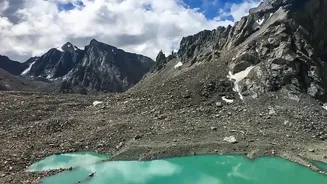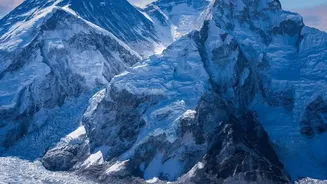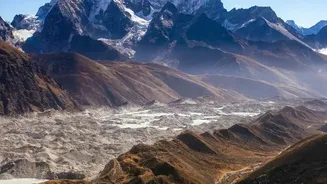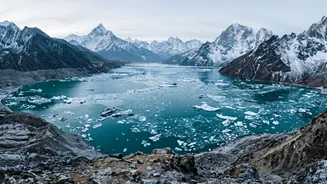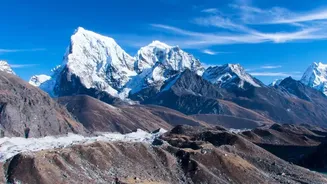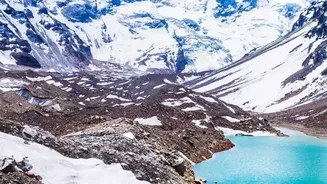






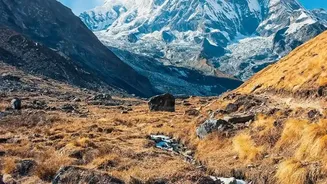
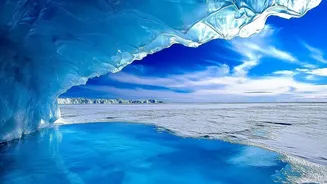
High in the Himalayas, new threats are emerging from beneath the ice. As glaciers melt at an alarming rate, they are forming vast, unstable lakes. Recent UN reports now sound the alarm on these ticking time bombs and the rising risk of catastrophic floods.
What is a Glacial Lake Outburst Flood?
Imagine a massive lake held back not by a concrete dam, but by a loose wall of earth, rock, and ice left behind by a retreating glacier. This natural dam, or moraine, can be incredibly unstable. A Glacial Lake Outburst Flood, or GLOF, occurs when this moraine dam fails suddenly. This can be triggered by a number of events, including avalanches, landslides falling into the lake, or even just the pressure of the ever-increasing volume of water. The result is a catastrophic flash flood, releasing millions of cubic metres of water, mud, and boulders downstream in a matter of hours, destroying everything in its path. These events are far more destructive than regular river floods because of the immense volume and power they unleash from high altitudes.
A 'Third Pole' in Peril
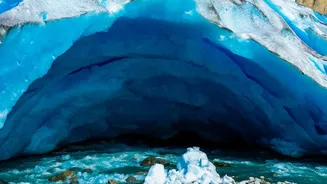
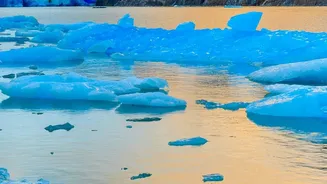
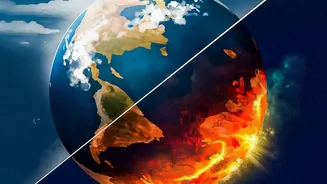
The Hindu Kush Himalaya region is often called the 'Third Pole' because it holds the largest volume of ice and snow outside the Arctic and Antarctic. These glaciers are the lifeblood for nearly two billion people, feeding Asia's most important rivers. However, this critical water tower is in grave danger. New reports released ahead of the COP31 climate summit confirm that Himalayan glaciers are melting 65% faster than they did a decade ago. The region is warming significantly faster than the global average; a 1.5°C global temperature rise could mean up to a 2.2°C rise in the Himalayas. This accelerated melt is causing existing glacial lakes to expand rapidly and new ones to form, dramatically increasing the GLOF risk. A UN-led study identified a fivefold increase in the frequency of GLOF events since 1950.
The UN's Stark Warning for India
Recent UN-backed studies paint a particularly grim picture for India. A pre-publication report analysing data from 1835 to 2025 found that while India ranked third in the number of GLOF events in the Hindu Kush Himalaya region, it suffered the highest number of deaths, with over 6,100 fatalities recorded. The country also experienced the most severe displacement from these floods. The reports, including 'State of the Cryosphere 2026', stress that overshooting the 1.5°C warming target will lead to irreversible impacts on the world's frozen regions. Scientists have identified hundreds of potentially dangerous glacial lakes across the Himalayas, with dozens posing a very high risk to downstream Indian communities in states like Sikkim, Uttarakhand, and Himachal Pradesh.
The Devastating Human Cost
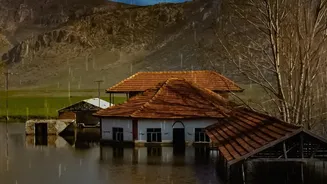
The threat of GLOFs is not theoretical. The 2023 disaster at South Lhonak Lake in Sikkim serves as a powerful and tragic reminder. Heavy rains and a landslide triggered a breach, releasing a torrent that destroyed the Teesta III hydropower dam, washed away 14 bridges, killed dozens, and affected nearly 90,000 people. This event, which sent a wall of water surging downstream, showed how infrastructure and communities located miles away can be devastated with little warning. These floods not only cause immediate loss of life but also destroy homes, farms, and critical infrastructure like roads and power plants, crippling local economies and setting development back by years.
In response to the growing threat, the United Nations is calling for urgent action. The primary focus is on developing robust early warning systems that can provide downstream communities with precious time to evacuate. This involves using satellite technology and on-site sensors to monitor the most dangerous lakes. In some cases, more direct engineering solutions are being explored, such as carefully siphoning or pumping water out of high_risk lakes to reduce pressure on their fragile moraine dams. However, UN officials warn that technology alone cannot prevent all loss, especially given the scale of the threat. The reports emphasise that the most crucial actions are global emissions cuts to slow glacier melt and enhanced cross_border cooperation, as a flood starting in one country can easily devastate another downstream.