


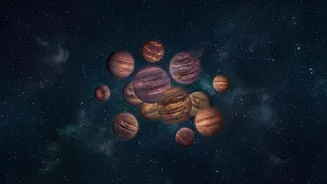
In the vast cosmic theatre, some objects don't quite fit their roles. Meet the brown dwarf: too small to be a star, too massive to be a planet. New data from NASA’s SPHEREx telescope is pulling back the curtain on these celestial misfits.
The 'Failed Stars' of the Cosmos
Imagine an object
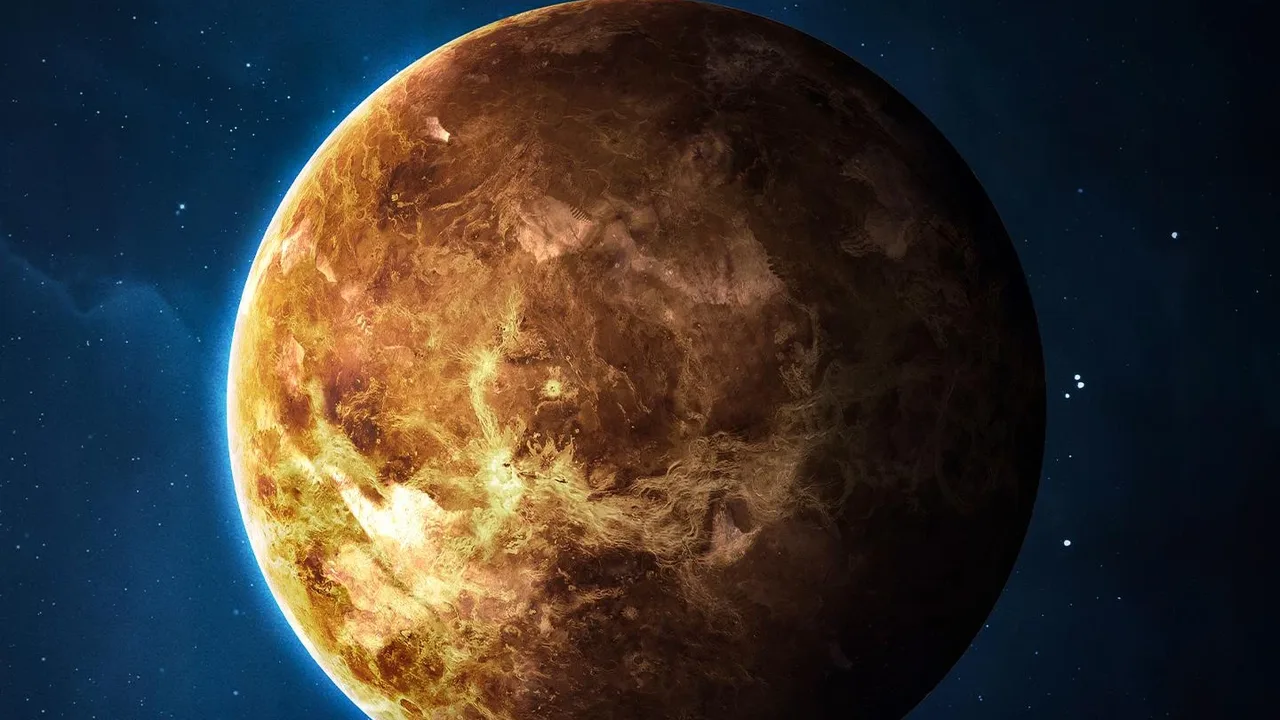
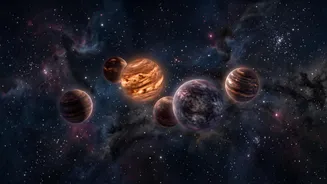
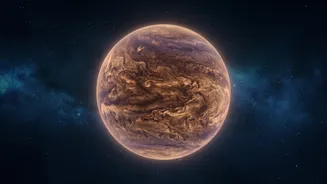
that begins its life just like a star, born from a collapsing cloud of gas and dust. It gathers mass, grows hotter, and begins to glow. But then, it stalls. It never accumulates quite enough mass—less than about 7.5% of our Sun's—to ignite stable hydrogen fusion, the nuclear engine that powers stars for billions of years. This is a brown dwarf. Often called 'failed stars', these objects occupy a fascinating grey area. They are more massive than Jupiter, typically between 13 and 80 times its mass, but they aren't stars. Instead of shining with the steady light of fusion, they are heated from within by leftover energy from their formation and the limited fusion of deuterium, a heavy form of hydrogen. Over time, they slowly cool, dim, and fade, wandering through the galaxy as solitary, smouldering embers.
SPHEREx: A New Eye on the Infrared Sky
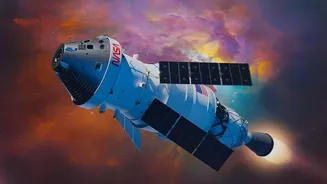
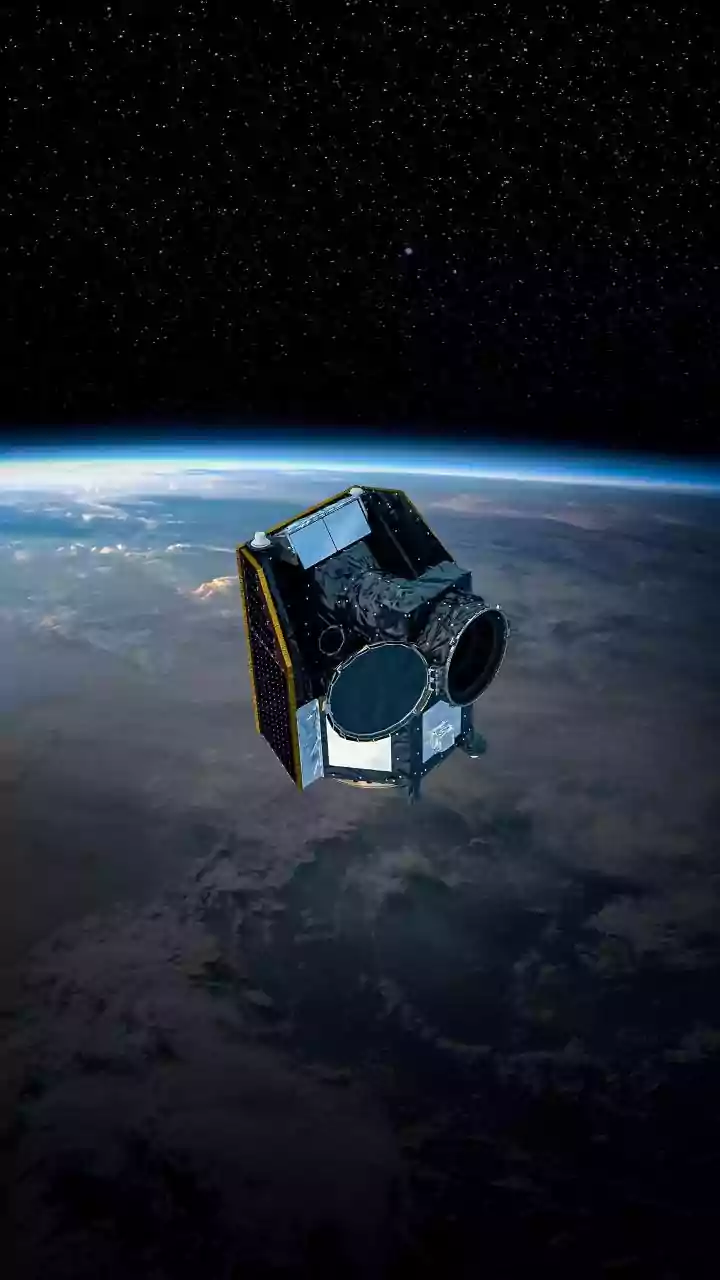
Studying brown dwarfs is tricky. They are faint and emit most of their light in the infrared spectrum, much of which is absorbed by water in Earth's atmosphere. This is where NASA’s SPHEREx (Spectro-Photometer for the History of the Universe, Epoch of Reionization, and Ices Explorer) comes in. Launched in 2025, this space telescope is on a mission to map the entire sky in infrared light, observing it in 102 different colours. This capability allows scientists to create detailed chemical fingerprints, or spectra, for celestial objects. While its main goal involves studying the early universe, SPHEREx is also perfectly suited to hunting for the faint glow of brown dwarfs. By observing them from space, the telescope bypasses the obscuring effects of our atmosphere, giving astronomers an unprecedentedly clear view of their composition.
A Surprising Spectrum of Chemicals
The latest study focused on 37 nearby brown dwarfs, and the findings have been eye-opening. The SPHEREx data revealed that their atmospheres are chemically rich, containing molecules like water, methane, carbon monoxide, and carbon dioxide. More importantly, the study showed significant variety among them. Two brown dwarfs, even if they have the same temperature, can have strikingly different chemical spectra. This discovery challenges existing models, which often struggle to accurately predict the atmospheric conditions of these objects, especially during transitional phases as they cool. "No two brown dwarfs are alike," noted Zafar Rustamkulov, the study's lead author. This chemical diversity suggests that their formation histories or the environments in which they were born are more varied than previously thought.
Why This Cosmic Variety Matters
This discovery is more than just a cosmic curiosity; it has profound implications for our understanding of how both stars and planets form. The chemical makeup of a brown dwarf is a fossil record of its birthplace. The observed diversity suggests some might form in isolation like stars, while others could form within a disk of material surrounding a larger star, more like planets, before being ejected. Studying these objects provides a unique laboratory. Because they are often found floating freely in space, they can be observed without the blinding glare of a host star that complicates studies of exoplanets. This makes them excellent proxies for understanding the atmospheres of gas giant exoplanets. As coauthor J. Davy Kirkpatrick put it, the work has turned the science team into 'accidental meteorologists', trying to understand the complex atmospheric phenomena on these distant worlds.