

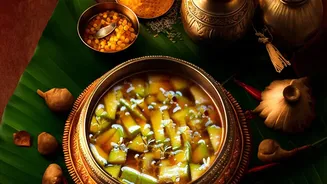
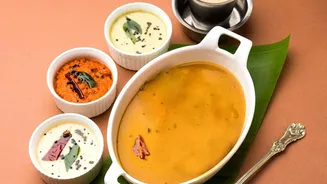
What Makes a Sadya Special?
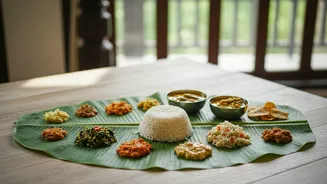
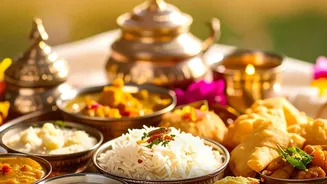
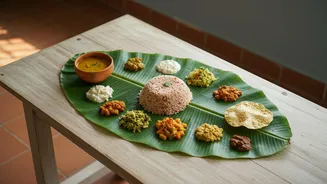
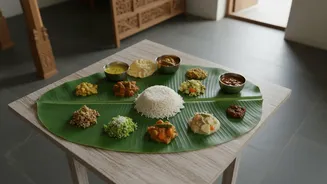
An Onam Sadya is a traditional vegetarian banquet served on a fresh banana leaf, featuring a multitude of dishes that touch upon all six flavours: sweet, salty, sour, pungent, bitter, and astringent. This elaborate meal is the centrepiece of Onam, Kerala's
harvest festival. While a full Sadya can feature over 26 dishes, the goal for a home cook is not to replicate a massive spread but to capture its spirit. It's about abundance, balance, and sharing a carefully prepared meal with loved ones. The key is in the variety of textures and flavours, from tangy pickles and creamy pachadis to hearty curries and crunchy chips.
Curating a Manageable Menu
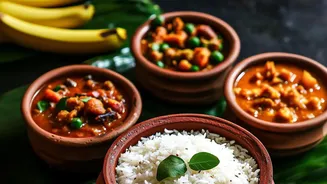
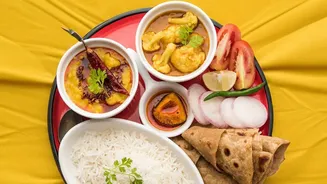
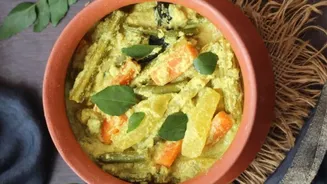
You don't need to make every dish. A well-rounded home Sadya can be built around a few essential categories. Aim for about 12 key items for a fulfilling experience. Must-Haves: Start with Kerala Matta Rice, Sambar (a hearty lentil and vegetable stew), and Avial (mixed vegetables in a coconut-yoghurt gravy). Core Curries: The feast begins with Parippu, a simple moong dal curry served with ghee. Also include a cooling yoghurt-based curry like Kaalan or Pulissery. Dry Vegetable Sides (Thoran): A simple stir-fry of finely chopped vegetables like cabbage or beans with grated coconut is essential. Accompaniments: These add punches of flavour. You'll want Inji Puli (a sweet and sour ginger-tamarind chutney), at least one pickle (mango or lime), and a creamy yoghurt-based side like Pachadi or Kichadi. * Crunch and Sweets: No Sadya is complete without Pappadam and banana chips (upperi). For dessert, a simple Palada Payasam (rice flake pudding) or Ada Pradhaman is a perfect finale.
Your Two-Day Prep Plan
The secret to a stress-free Sadya is planning ahead. Staggering your tasks over two days makes the process enjoyable rather than overwhelming. Two Days Before: This is for shopping and making items that keep well. Purchase all your vegetables, coconuts, spices, and banana leaves. You can also prepare the pickles and the Inji Puli, as their flavours often improve after a day or two. If you're making banana chips or Sharkkara Varatti (jaggery-coated chips) from scratch, do it now and store them in an airtight container. One Day Before: This is your main prep day. The biggest task is chopping vegetables. Cut the veggies for Avial, Sambar, and Thoran, storing them in separate airtight containers in the fridge. You can also grate coconut, which is used in many dishes, and refrigerate it. Some cooks also prepare the Sambar and Erissery (a pumpkin and bean dish) a day in advance.
Cooking on the Day of the Feast
On Onam day, focus on cooking the fresh dishes and assembling everything. Start with the dishes that take longer or are served at room temperature, like Avial. Many dishes use a base of ground coconut, green chillies, and cumin, so you can grind this paste in bulk and divide it among different preparations. Similarly, you can prepare a single large tempering (tadka) of mustard seeds, red chillies, and curry leaves in coconut oil and add it to multiple dishes towards the end. Cook the rice last so it is hot and steaming when served. Keep the Payasam for the end as well, so it's warm. The goal is to work smart, using your stovetop efficiently to handle multiple dishes simultaneously.
The Art of Serving
Serving the Sadya is a ritual in itself. The banana leaf is placed with its narrow tip pointing to the left of the guest. All the accompaniments and side dishes are served on the top half of the leaf. Start from the leftmost tip, placing a pinch of salt, a small banana, pappadam, and banana chips. Moving to the right, add the pickles, Inji Puli, Pachadi, Kichadi, Olan, and other vegetable dishes like Avial and Thoran. The bottom half of the leaf is reserved for the rice, which is served only after the guests are seated. The meal proceeds in courses, starting with Parippu and ghee poured over the first serving of rice. This is followed by Sambar, and then Rasam and a cooling buttermilk dish like Moru Curry.