






For Colonial Ambiance: Landour, near Mussoorie
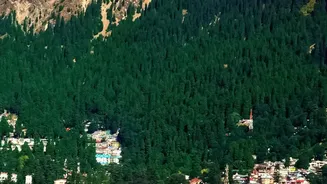
Just a winding, scenic walk or a short drive from the bustling streets of Mussoorie lies Landour, a quiet cantonment town that feels preserved in time. While Mussoorie is the 'Queen of Hills', Landour is its quieter, more contemplative counterpart, established
by the British military as a convalescent station. The entire town adds a layer of historical context, with its colonial-era architecture, stone churches like St. Paul's (built in 1839), and the Kellogg Memorial Church, which once housed a school where the British learned Hindi. A walk along the 'Upper Chakkar' or 'Gol Chakkar' loop takes you past old cemeteries, deodar forests, and landmarks like Sisters Bazaar, named for the nurses who served here. Unlike the commercial buzz of its larger neighbour, Landour's context is in its quiet, preserved atmosphere, offering a glimpse into the origins of the British hill station.
For Agricultural Roots: Fagu, near Shimla
About a 45-minute drive from Shimla, Fagu offers a different kind of mountain experience, one rooted in agriculture and nature. While Shimla was the grand summer capital of the Raj, Fagu provides the context of the region's agrarian life. Situated at an altitude of 2,500 meters, it is known for its sprawling apple orchards and potato fields. The name itself is believed to derive from the word 'fog', as the hamlet is often enveloped in mist, creating a serene, dreamy landscape. Visiting Fagu helps you understand the rural economy that sustains these mountain communities. It’s less about colonial monuments and more about the natural world, with opportunities for treks through pine and cedar forests that offer panoramic views of the Giri Valley. It’s a peaceful stop that showcases the working landscape of the Himalayas.
For Trade and Spiritual History: Kalimpong, near Darjeeling
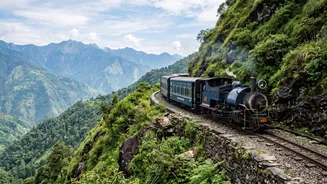
While Darjeeling is globally famous for its tea and the Himalayan Railway, the nearby town of Kalimpong provides a fascinating context of trade, religion, and botany. Situated at a lower altitude, Kalimpong was once a crucial gateway on the trade route between India and Tibet. This history is palpable in its diverse population and numerous monasteries, such as the Zang Dhok Palri Phodang. The town offers a quieter, less commercialised alternative to Darjeeling. It's also a hub for horticulture, renowned for its orchid and cactus nurseries that supply flowers across India. A visit here adds layers to a Darjeeling trip, revealing the region's role as a cultural and commercial crossroads, influenced by Nepali, Tibetan, and Bhutanese cultures.
For a Quieter Nilgiris: Kotagiri, near Ooty
Ooty may be the most famous hill station in the Nilgiris, but Kotagiri, about 30 kilometres away, offers a more peaceful and arguably more authentic experience of the region. Historically, Kotagiri was the first Nilgiris hill station developed by the British; John Sullivan, the founder of Ooty, first settled here in 1819. Visiting provides a 'prequel' to the Ooty story. The town is surrounded by sprawling tea estates and offers stunning trekking routes and viewpoints like Kodanad View Point, without the overwhelming crowds of its neighbour. It also provides access to the Longwood Shola, a rare patch of ancient, protected forest that represents the endemic ecosystem of the Western Ghats. A trip to Kotagiri adds context by showing what the Nilgiris were like before mass tourism arrived, focusing on its natural beauty and tea-growing heritage.