


The Universe in Your Pocket
The simplest entry point into modern stargazing is the device you already own. Smartphone apps like Star Walk 2, SkyView, and Stellarium Mobile have transformed how we interact with the night sky. Using your phone's GPS and orientation sensors, these
apps create an augmented-reality window to the cosmos. Point your phone at a bright dot in the sky, and the app will instantly identify it, whether it's a planet, a distant star, or the International Space Station flying overhead. Many provide detailed information on mythology, brightness, and distance, turning a simple glance upward into an educational experience. Features like a red-light mode protect your night vision, and calendars notify you of upcoming celestial events like meteor showers or eclipses, ensuring you never miss a show.
Smart Telescopes, Smarter Viewing
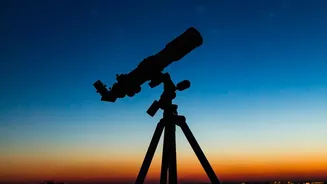
Beyond apps, a new category of hardware is completely changing the game: the smart telescope. Devices from companies like Celestron, Vaonis, and ZWO are all-in-one systems that combine a telescope, a camera, and a computer. They automate the most challenging parts of amateur astronomy: finding, tracking, and imaging faint objects. Instead of squinting through an eyepiece, you connect the telescope to your smartphone or tablet and see the images it captures in real-time. These devices can take multiple long-exposure images of a faint galaxy or nebula and 'live stack' them, building up a detailed, colourful picture on your screen that would have been impossible to see with a traditional eyepiece, especially from a light-polluted city. This makes breathtaking astrophotography accessible to beginners, turning a complex hobby into a simple, shareable experience.
From Hobbyist to Citizen Scientist
This technological leap is not just for personal enjoyment; it's empowering a new generation of citizen scientists. With powerful, easy-to-use tools, amateurs are no longer just passive observers. Smart telescope networks allow users to contribute their observation time to professional research projects, helping to discover exoplanets or track asteroids. Even without a telescope, anyone with a computer can contribute. Platforms like Zooniverse host projects such as Galaxy Zoo, where volunteers help classify galaxies from massive datasets that would be impossible for professional astronomers to sort through alone. In India, the RAD@home collaboratory is a prime example, training students and citizens to analyze astronomical data, leading to genuine discoveries like a uniquely shaped radio galaxy. This democratization of data means that a keen eye in a home office can now spot things that automated algorithms might miss, contributing to real scientific progress.
Reconnecting with the Cosmos
Ultimately, the rise of digital astronomy is about more than just technology; it's about reconnecting with a fundamental human curiosity. For many, the technical hurdles and the encroachment of city lights have made the universe feel distant and inaccessible. Traditional telescopes can be complicated and expensive, often leading to frustration. Digital tools are lowering that barrier to entry dramatically. They provide a guided, interactive, and rewarding experience that encourages learning and exploration. By making it easier to see and understand what's happening in the sky above us, these tools are fostering a renewed sense of wonder and perspective. They remind us of the vast and beautiful universe we are a part of, a view that is increasingly important in our fast-paced, screen-focused world.