

In a world of fast fashion, the fabrics we choose tell a story. Indian handloom textiles, rich with heritage, stand apart from their machine-made counterparts. But what truly separates a fabric woven by hand from one made by a machine?
The Weaver's Hand vs. The Automated Arm
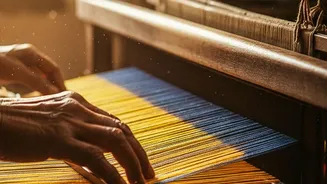
The most fundamental
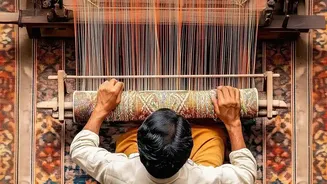
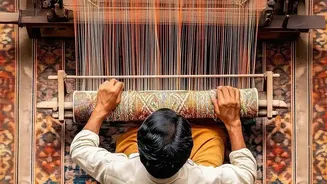
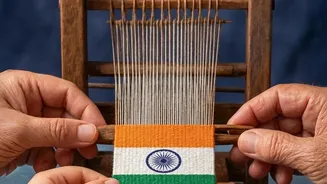
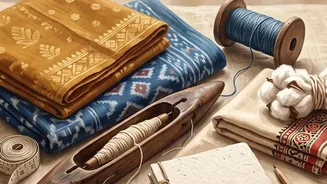
difference lies in the creation process. Handloom fabrics are woven on looms operated entirely by the skill and physical effort of an artisan. The weaver controls the shuttle, beats the weft, and manages the thread tension by hand and foot, a rhythmic process that can take days or even months to produce a single saree. In stark contrast, machine-made or 'powerloom' textiles are produced on automated looms driven by electricity. This allows for mass production at a speed that is many times faster than hand-weaving, creating large quantities of fabric quickly and efficiently.
The Beauty of Imperfection
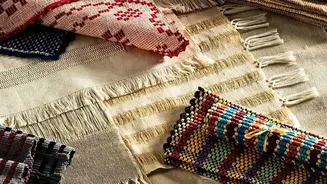
A key characteristic of handloom fabric is its 'flaws'. These are not defects but signatures of the human touch. You might notice slight variations in the weave density, minor inconsistencies in colour, or tiny knots where a thread ended and a new one began. The selvedge, or the finished edge of the fabric, is often slightly uneven or has small loops where the weft thread turned. Machine-woven fabrics, by contrast, are defined by their uniformity. The weave is perfectly even, the patterns are identical, and the selvedge is flawlessly straight. This consistency is a hallmark of mechanical precision, but it lacks the unique character that makes every handloom piece one-of-a-kind.
Texture, Drape, and Feel
Run your hand across a handloom cotton or silk, and you will often feel a softer, more breathable texture. These fabrics tend to have more character and a better drape, which is the way the fabric hangs and flows. Many handloom fabrics, especially cottons, grow softer with each wash. Machine-made fabrics often have a smoother, more uniform surface that can sometimes feel stiffer or less breathable, especially if made with synthetic blends. While a high-quality powerloom fabric can be very durable, handloom textiles are renowned for their longevity, often becoming heirloom pieces passed down through generations.
Design, Complexity, and Cost
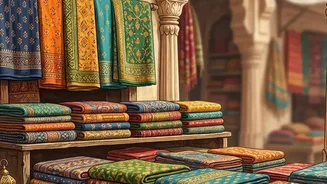
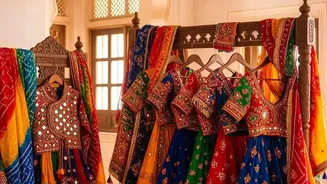
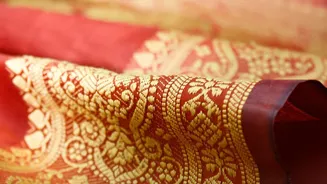
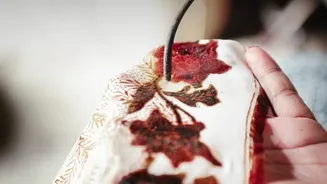
Handloom weaving allows for incredibly intricate and non-repetitive designs. Weavers can incorporate traditional motifs like the peacocks of a Paithani saree or the complex geometry of an Ikat weave directly into the fabric. These patterns are often just as clear on the reverse side as they are on the front. Powerlooms are excellent at producing simple, repetitive patterns at scale, but complex, multi-coloured designs are much more difficult and costly to program. The result is that handloom fabrics are generally more expensive, reflecting the immense skill, time, and labour-intensive artistry required for their creation.
A Story of Culture and Sustainability
Beyond the technical differences, handloom textiles are carriers of cultural heritage. India's handloom sector is the second-largest employer in the country after agriculture, providing a crucial livelihood for millions of artisans, a majority of whom are women in rural areas. Choosing handloom supports these artisan communities and helps preserve generational skills. Furthermore, the handloom process has a smaller environmental footprint, consuming no electricity and often using natural fibres and dyes. While powerlooms enable affordable and accessible fashion, handlooms represent a more sustainable, story-rich choice rooted in tradition.