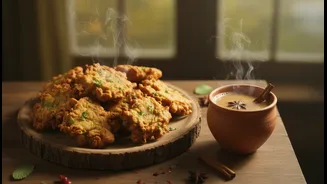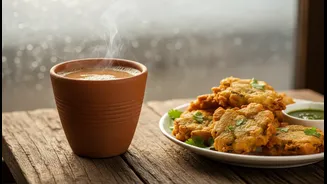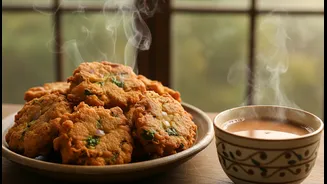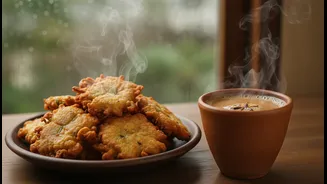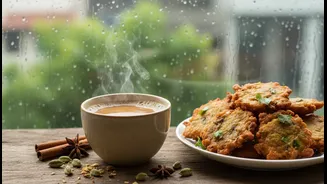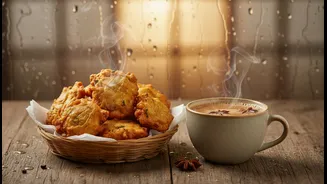



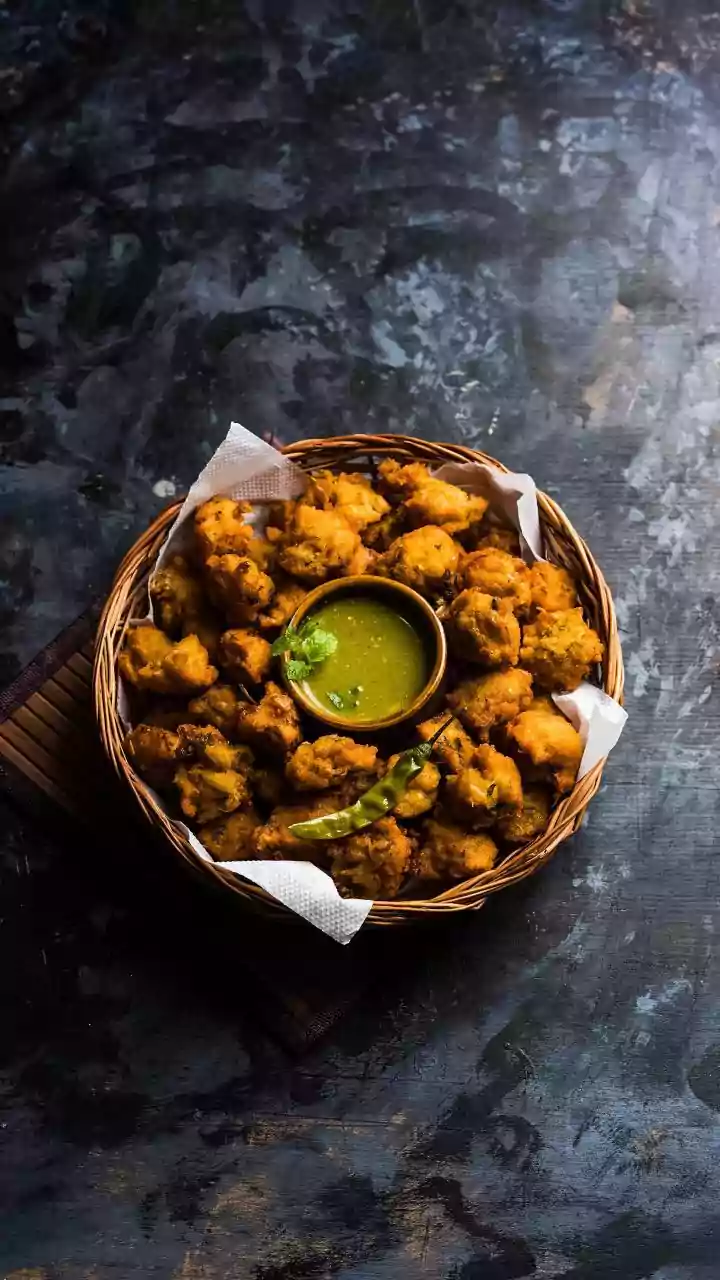



A Ritual Steeped in Nostalgia
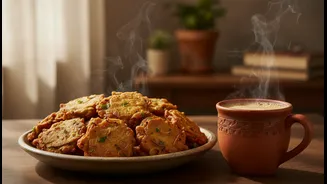
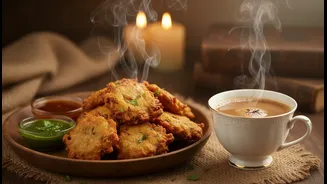
For countless people in India, the connection between rain and pakoras is deeply emotional. The sound of sputtering oil, the scent of gram flour and spices, and the warmth of a teacup are woven into the fabric of monsoon memories. This association often
begins in childhood, where rainy days meant a break from outdoor play and a special treat from the kitchen. Families gathering to share a platter of freshly fried snacks is a powerful image, creating a sense of comfort and security. Over time, this ritual becomes a form of psychological conditioning. The brain learns to link the sensory experience of rain—the sound, the cool air, the earthy smell of petrichor—with the rewarding feeling of eating these comfort foods. It's a tradition that transforms an ordinary grey afternoon into a moment of shared joy and connection.
The Science of a Gloomy Day
There's a real biological reason why a cloudy sky sends you searching for snacks. Rainy days mean less sunlight, which can cause a dip in the brain's production of serotonin, a neurotransmitter that helps regulate mood. Lower serotonin levels can lead to feelings of sadness, lethargy, or irritability. To counteract this, the brain often triggers a craving for carbohydrates. Foods like pakoras—made from gram flour—are rich in carbs, which can help temporarily boost serotonin levels and improve your mood. It's your body's natural, albeit temporary, way of self-medicating to find balance on a gloomy day. This is why you’re more likely to want a filling, starchy snack rather than a light salad when it’s pouring outside.
Warmth in a Chilly Breeze
Beyond mood, there’s a simple, practical reason for our monsoon cravings: temperature. Rain and wind cause a drop in the ambient temperature, and our bodies instinctively seek ways to stay warm. Eating hot and energy-dense foods is an effective way to generate internal heat. The act of sipping hot, spiced chai directly warms you, while the calories from deep-fried pakoras provide your body with the fuel it needs to maintain its core temperature. This craving for warmth is a primal survival instinct. The crispy texture and spiciness of pakoras offer a satisfying contrast to the cool, damp weather, creating a powerful sensory experience of comfort and coziness.
The Practical Use of Comfort
So, what is the 'practical use case' mentioned in the headline? It’s the idea that this craving isn't a random indulgence but a multi-faceted coping mechanism. Emotionally, it connects us to positive memories and feelings of security, alleviating the loneliness or boredom that can accompany being stuck indoors. Biologically, it's a tool to regulate our mood by increasing serotonin and to manage our body temperature in a cooler environment. This combination of psychological comfort and physiological response makes the chai-pakora ritual a highly effective way for our minds and bodies to adapt to the environmental shift brought on by the rain. It’s an integrated system that uses food to create a sense of well-being when external conditions are less than ideal.